

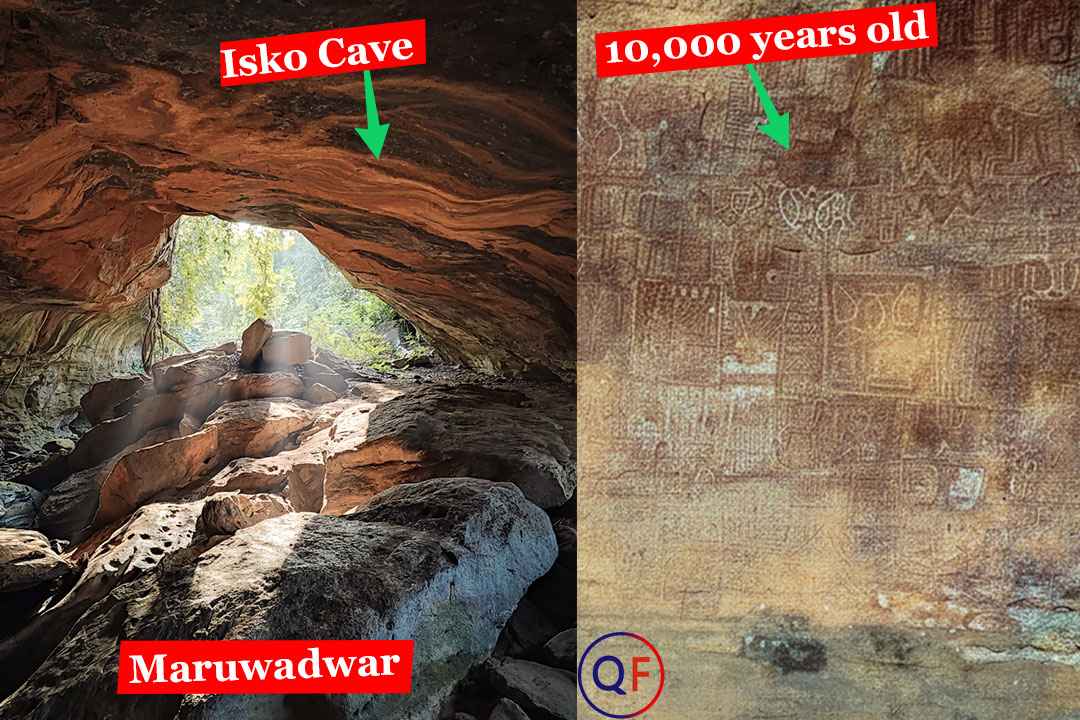
Isko Cave is an ancient archaeological site featuring a primitive cave known as Marwaduwar, as well as a Mural place known as Isko Rock Shelter, whose painted walls display 10,000-year-old prehistoric iconic rock art depicting various motifs (picture or design) in the form of pictograph and petroglyph, including humans, animals, the sun, plants, and abstract geometric patterns. It is believed that these artworks date back to the Mesolithic period, which began about 11,700 years ago, the time when the Neolithic Revolution began, and humans took their first steps into agriculture, village life, and settled communities.
important Pictograph is a pictorial representation of a word or symbol using painting, while in a Petroglyph, a symbol or word is represented using carving on stone.
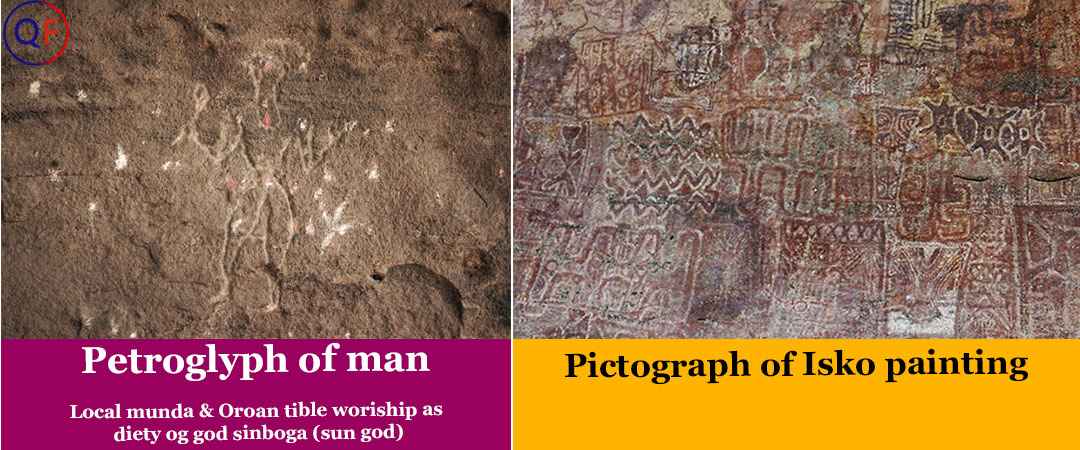
Isko Rock Arts is considered the earliest known depiction of human life in this region and serves as evidence that thousands of years ago, humans lived in this area and expressed their lifestyle, beliefs, and surroundings through these artworks.
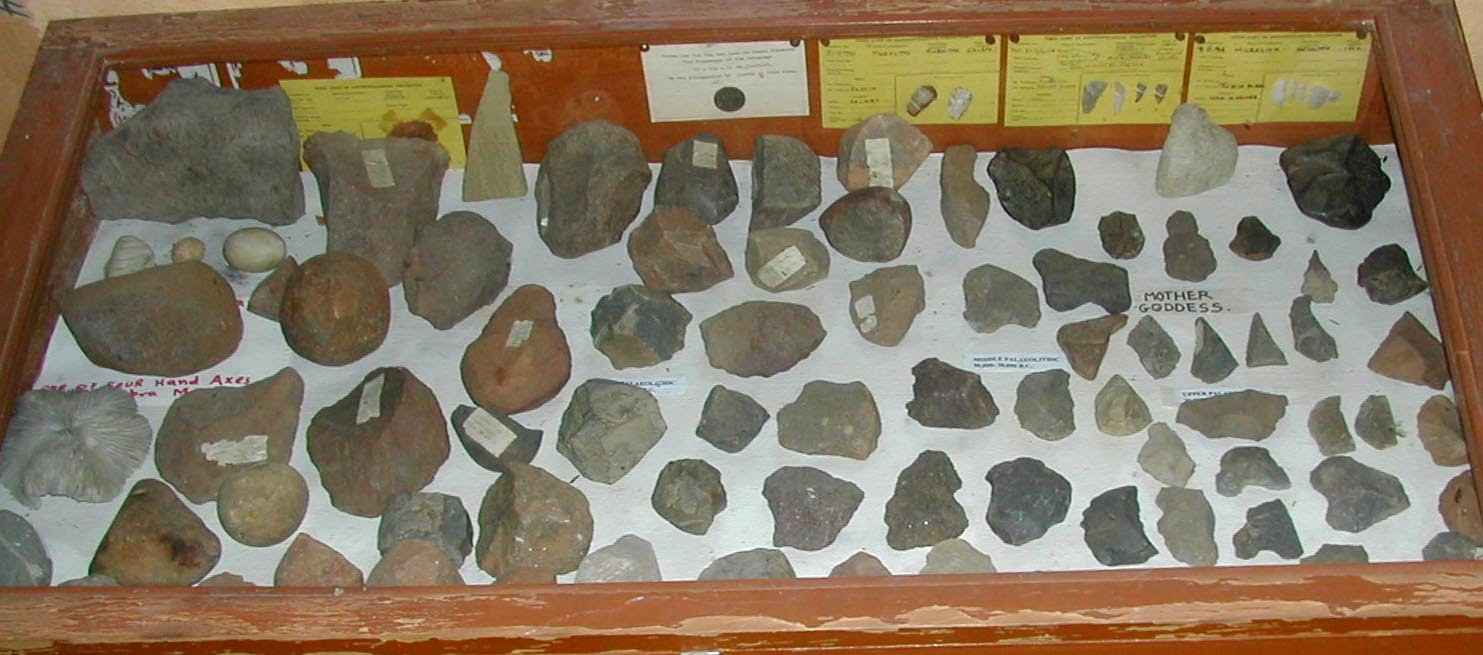
important According to the ASI Ranchi Circle, this rock art belongs to the Meso-Chalcolithic period, dating approximately between 7000 and 3000 BCE. The discovery of numerous stone tools such as hand axes, choppers, microliths, blades, points, and scrapers suggests that this site was active during the late Mesolithic period (around 10,000–6,000 BCE) and the beginning of the Chalcolithic period (around 3000 BCE).
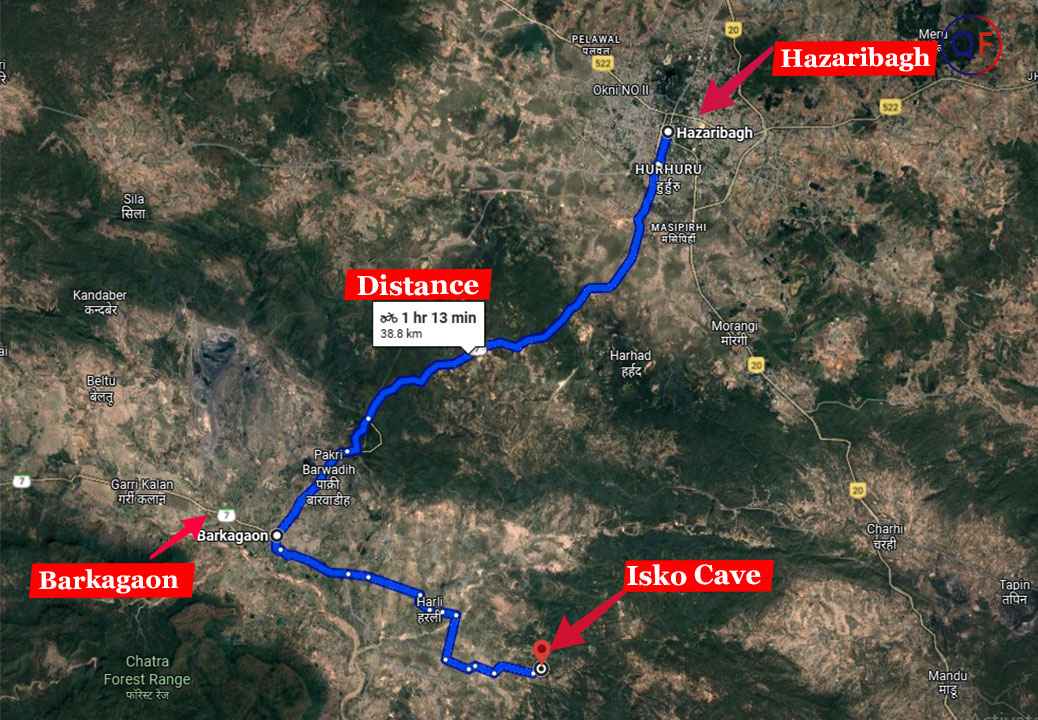
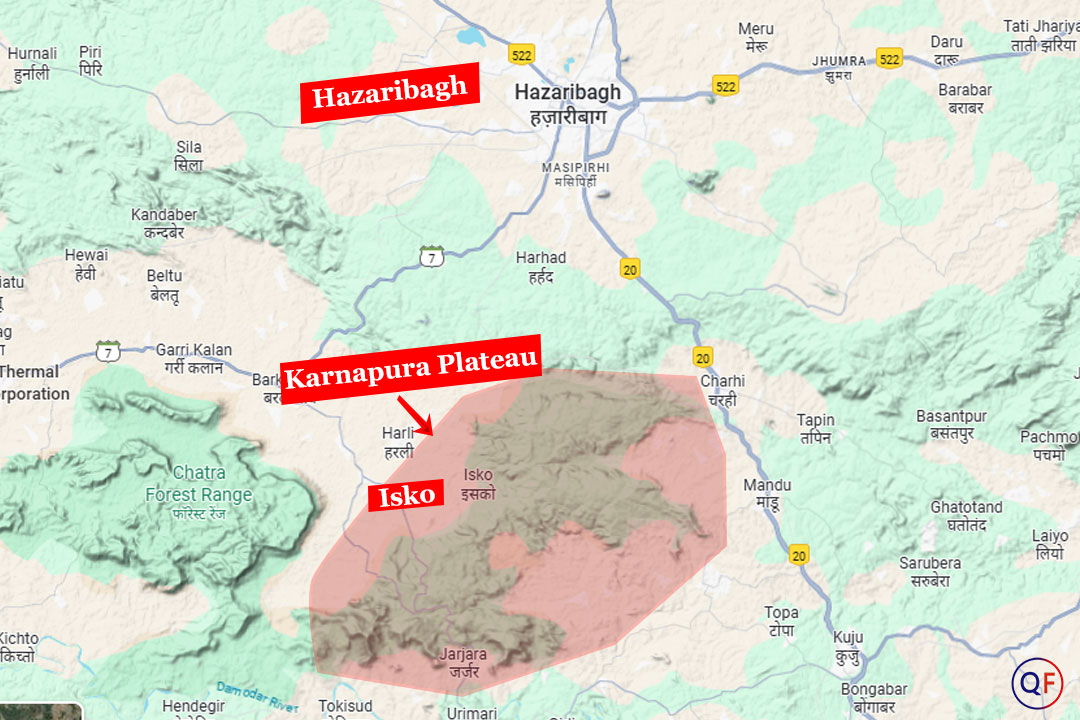
This cave site is located in Isko village, about 40 km from Hazaribagh and 14 km from the Barka Gawn block in Jharkhand.
important Isko Cave was first identified by Jesuit Father Tony Herbert in the 1990s and later, in 1991, extensively researched and popularized by environmentalist and Padma Shri awardee Shri Bulu Imam, who made exhibitions in various countries like Rome, UK, Australia, and promoted these discoveries internationally, linking them to the local Sohrai and Khovar art traditions of Hazaribagh. To promote local arts and help tribal women, he established the TRIBAL WOMEN ARTISTS COOPERATIVE (TWAC) in 1993. He also established the Sanskriti Museum & Art Gallery in Hazaribagh in 1991, where he preserves his research work and a rich collection of artifacts, along with tribal arts (Kohbar and Sohrai) and the region’s handicrafts. Bulu Imam received the Padma Shri award from the President Sri. Kovind in 2019 for his contribution to environmental protection and preservation of tribal art and cultural heritage.

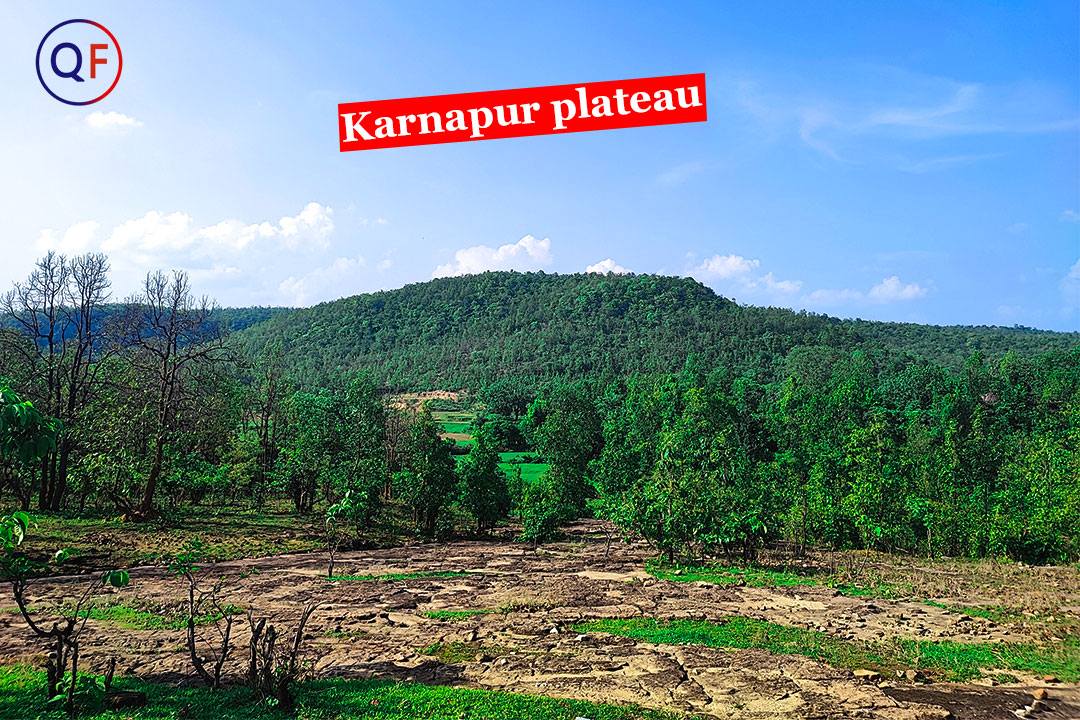
Isko ancient site, is nestled between the lush greenery of the North Karnapura plateau near Isko village, stands as one of the most important and oldest rock shelters in eastern India that continues to attract archaeologists, travelers, and history enthusiasts who come to explore Jharkhand’s rich ancient art and culture.
important The oldest known rock art in India is found at Bhimbetka rock shelter, in Raisen district of Madhya Pradesh, dating back around 30,000 years.
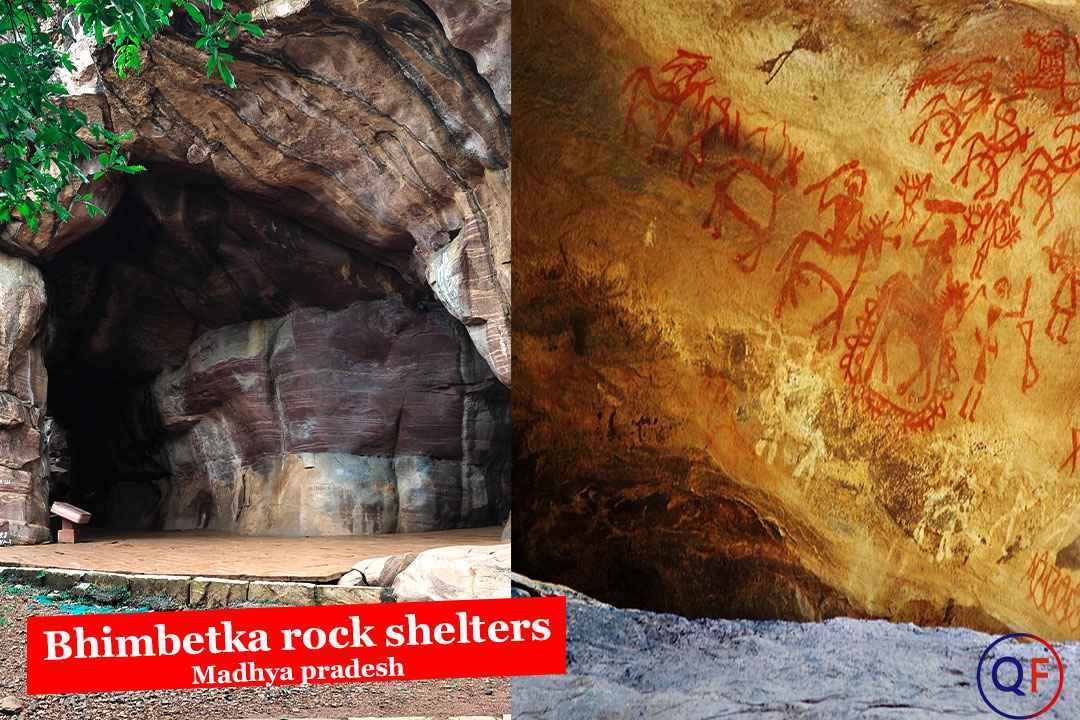
When we look at the rock art of Isko Cave, many questions arise in our minds: Why were these paintings made in this forest, and by whom? Were they part of rituals, worship, or daily life? Could they hold hidden meanings or messages for the future? And how are these ancient artworks linked to the local culture we see today?
Let’s visit Isko Cave and explore the paintings of Isko rock shelter based on various past research studies and findings.
Table of contents
1.What to expect after the visit?
- Marwaduwar Isko Cave
- Isko Rock shelter (painting)
- Scenic Beauty of Karnpura Valley
2. History and Significance
- Kohbar painting
- Sohrai Painting
4. Research and Preservation
5. How to Reach
6. Best Time to Visit
7. Precaution
8. Nearby Attractions
9. Conclusion
1. What to expect after the visit?
The Isko Cave site mainly has three things that you will explore.
(i) Isko Cave (Marwaduwar)
The famous Isko Cave is, prehistoric cave hidden within a big sandstone hill, looking a grand and mysterious appearance. The cave features a wide natural arch-shaped entrance made of reddish-brown rock, with its interior filled with large weathered boulders and smooth layers shaped by centuries of erosion and rainwater flow.
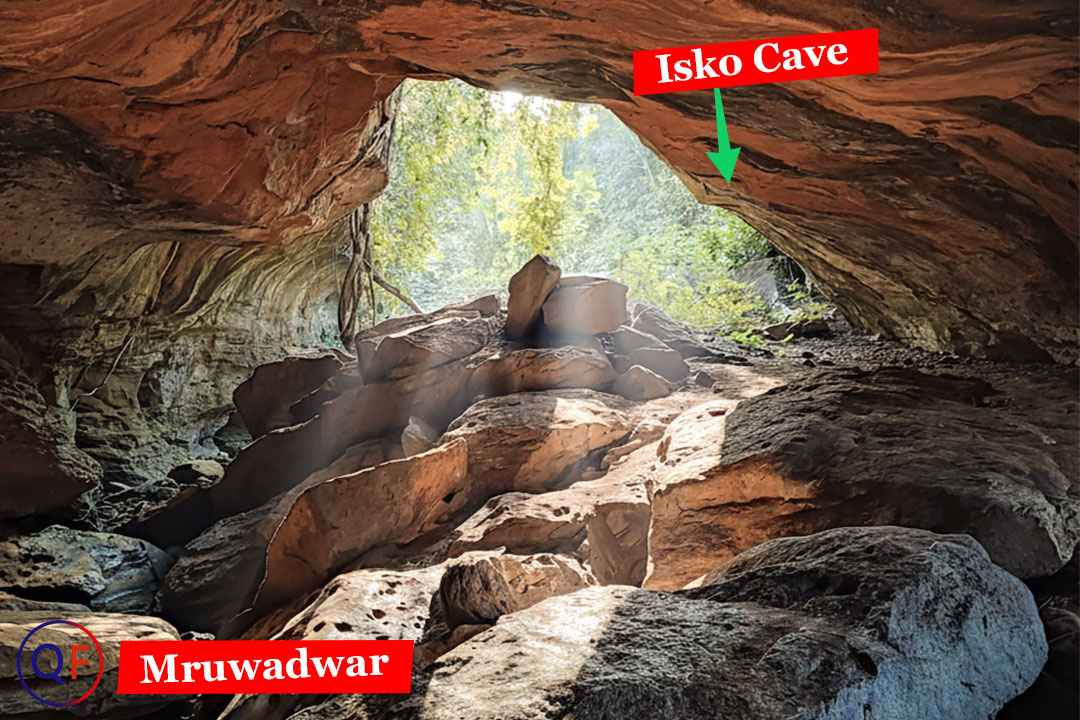
Sunlight filtering through the entrance creates a dramatic glow, hinting that early humans may have used this site for shelter, protection, or ritual purposes. A small river, Marwartri, also passes through the cave, which may be a source of water during that time.
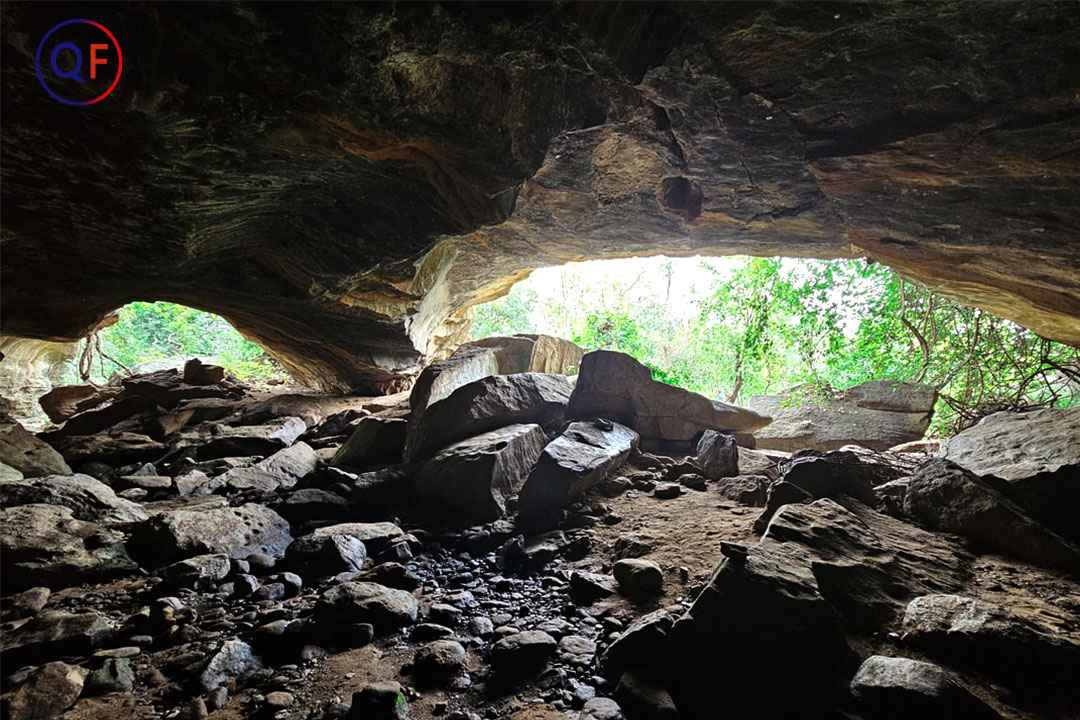
Marwaduwar- the marriage place of the king & queen
Locally, the place is known as Marwaduwar, which translates to “the place of marriage ceremonies” or “where the bride and groom were married.” According to local legend, a tribal king was married here in prehistoric times, and the royal couple lived inside this cave. The Munda and Oraon of Isko regard the king as their ancestor, and the cave is considered a sacred site. The Munda tribe and other local communities still associate deep spiritual importance with Marwaduwar, worshipping here during festivals. Inside the cave, one can also find shrines and altars dedicated to newly established deities, showing how the site continues to evolve as a living place of worship.
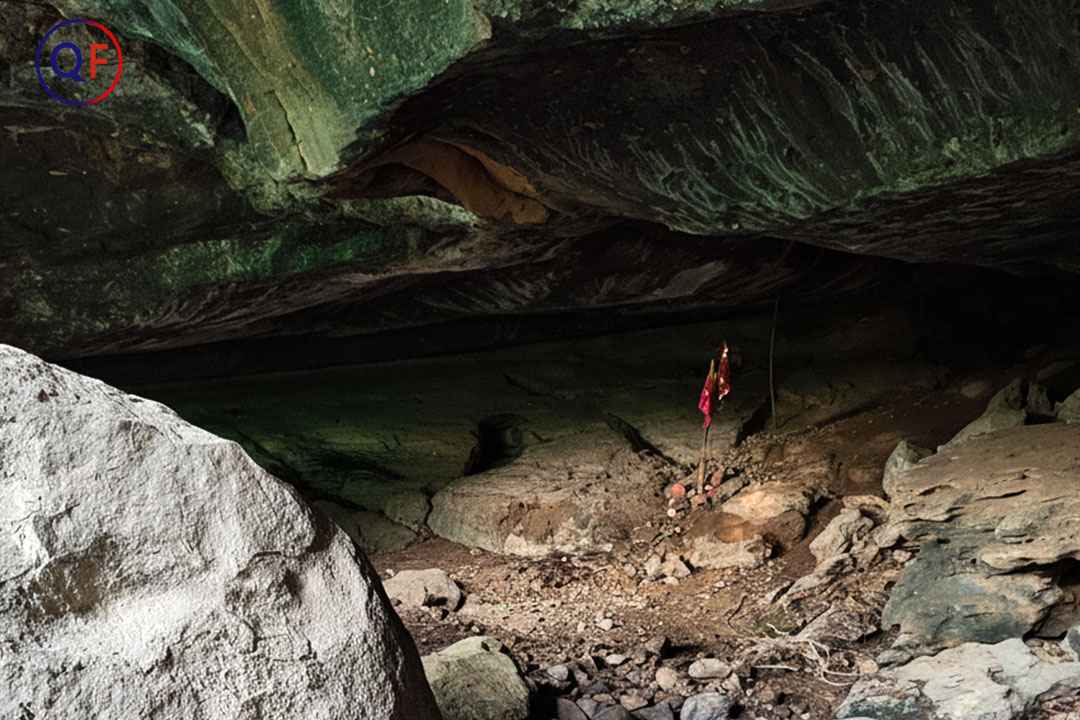
A mysterious tunnel inside the cave
Inside the cave, there is a narrow tunnel that adds a sense of mystery to Marwaduwar. It is believed that this passage once led to the other side of the cave, but it is now blocked after a few meters. Many locals believe it might have been a secret route used to reach the cave in ancient times. Some curious visitors try to look inside out of excitement, wondering what lies beyond - but it is not recommended, as entering the tunnel can be dangerous. It’s best to observe it from a safe distance.
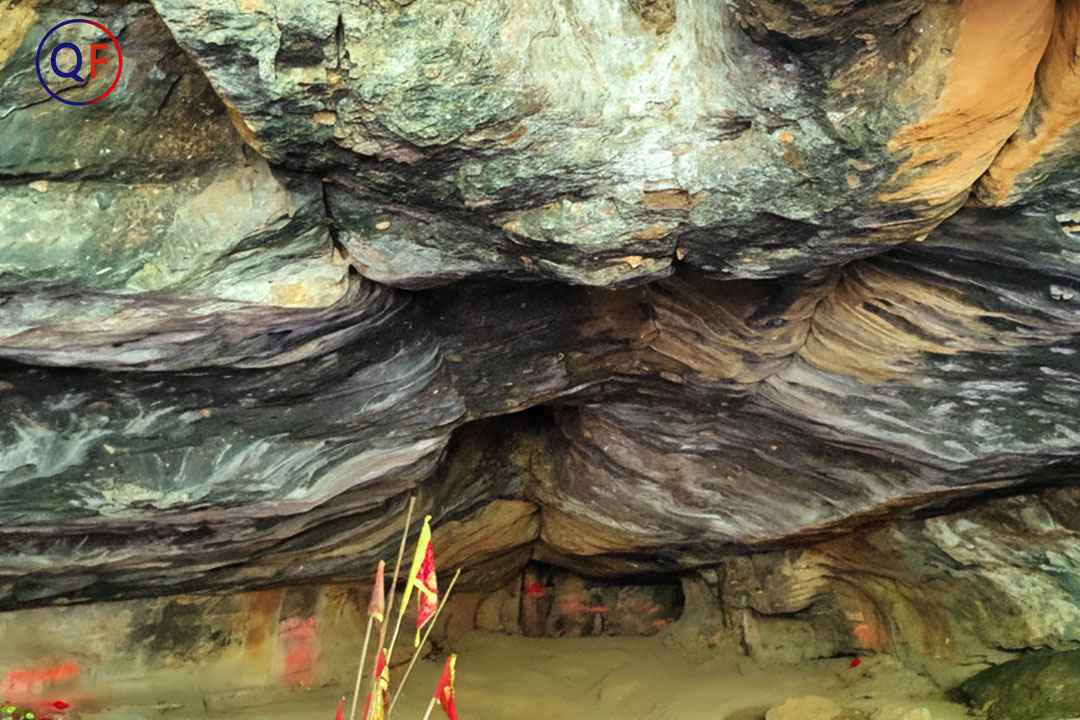
On the opposite side of the cave, there are also a few small openings that are believed to have once served as alternate entrances to the main cave, though they too are blocked.
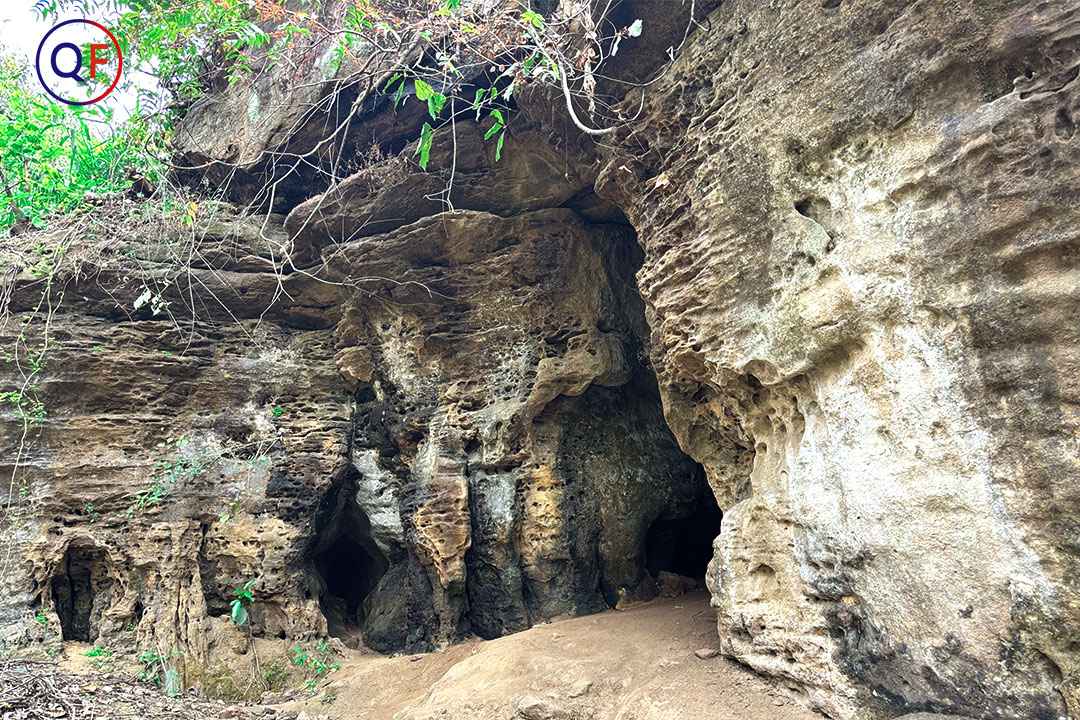
important It’s important to note that there are no rock art carvings inside this cave. Many visitors often confuse Marwaduwar Cave with the rock painting site nearby, but the actual Isko Rock Shelter, where ancient rock paintings can be seen, is located about 1..4 kilometers away from Marwaduwar.
(iii) Isko Rock Shelter - The Crown Jewel of Isko
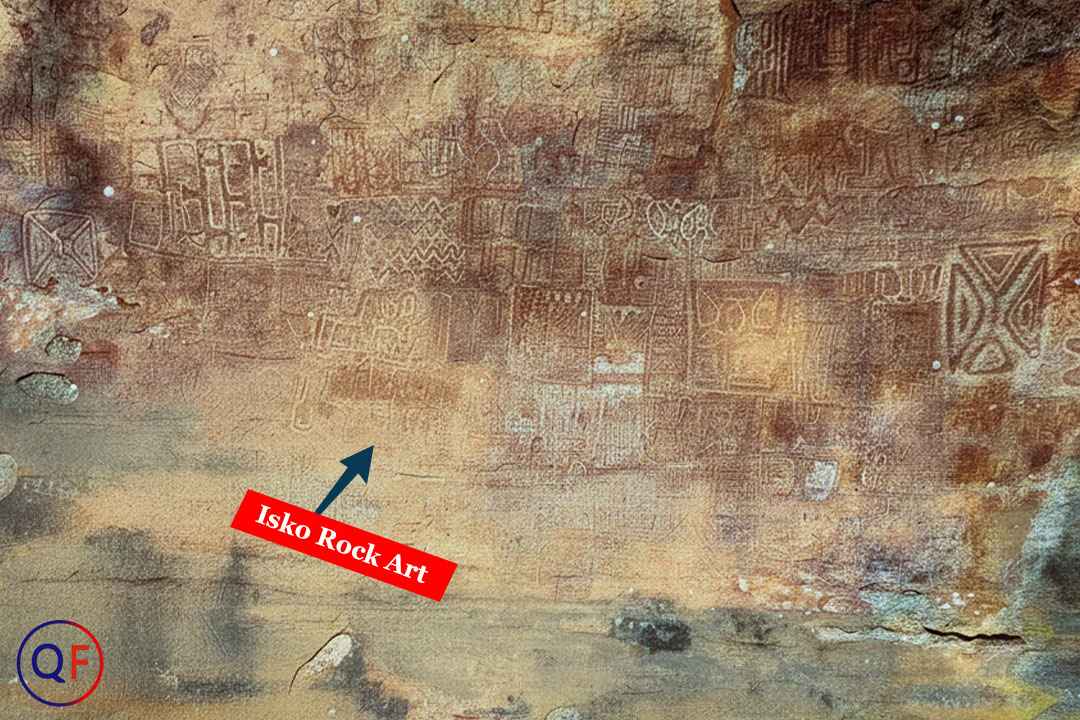
About 1.4 kilometers away from Marwaduwar Cave, the Isko Rock Shelter, where the edges of the rocks are carved and the 30-meter walls display ancient paintings, is considered the crown jewel of this heritage site.
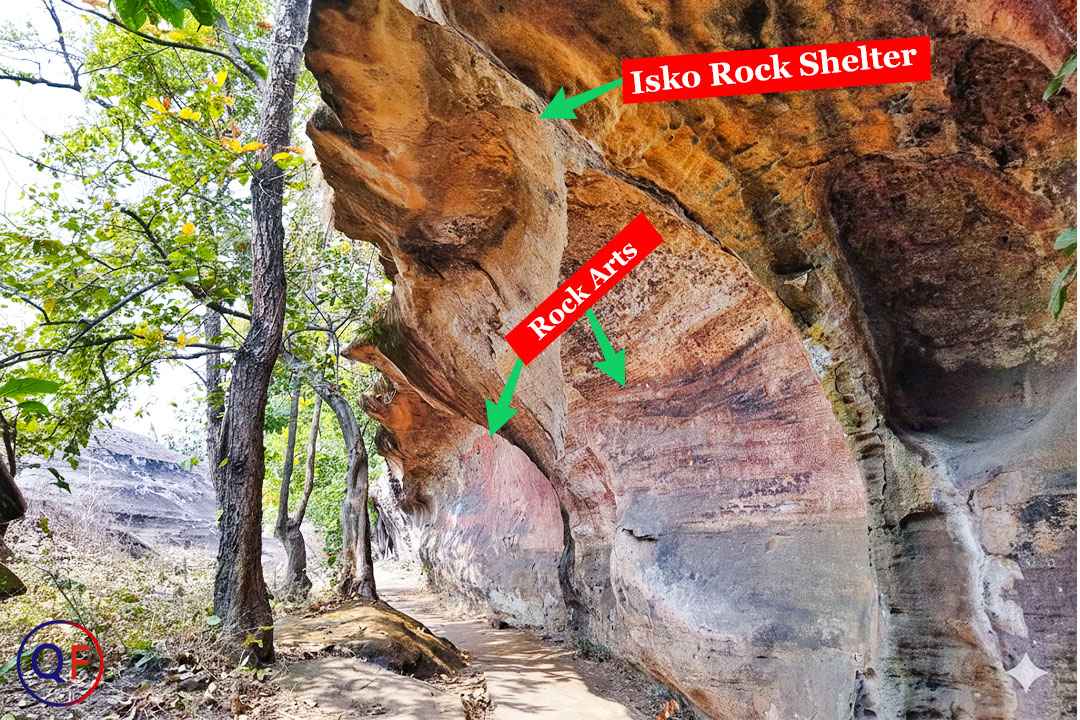
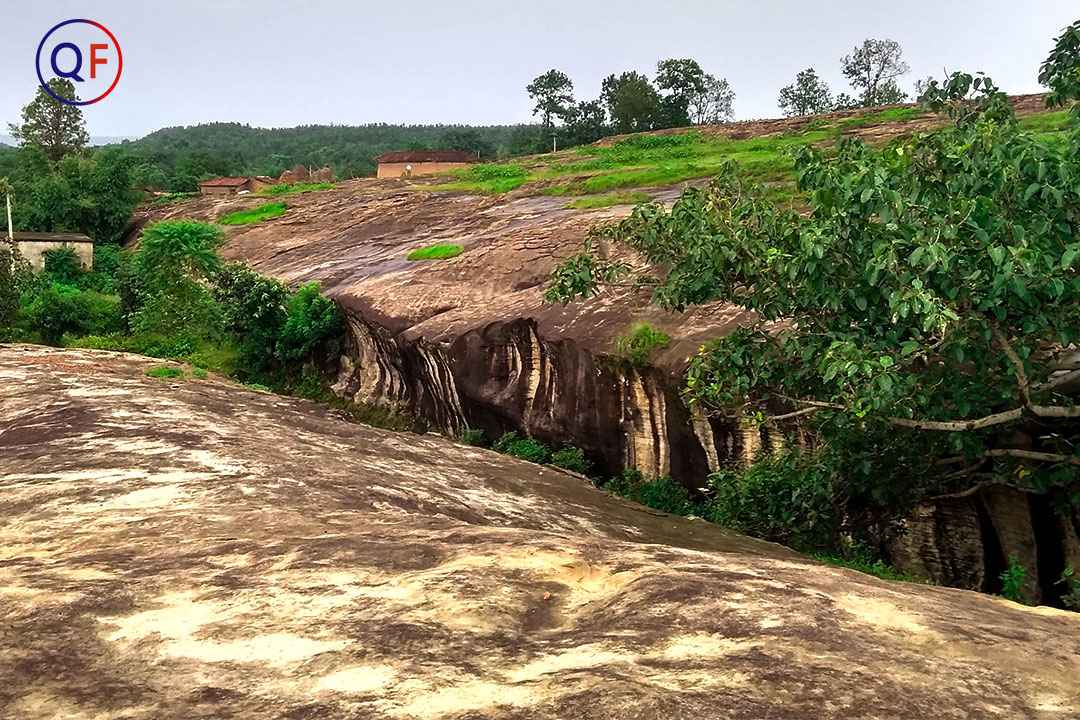
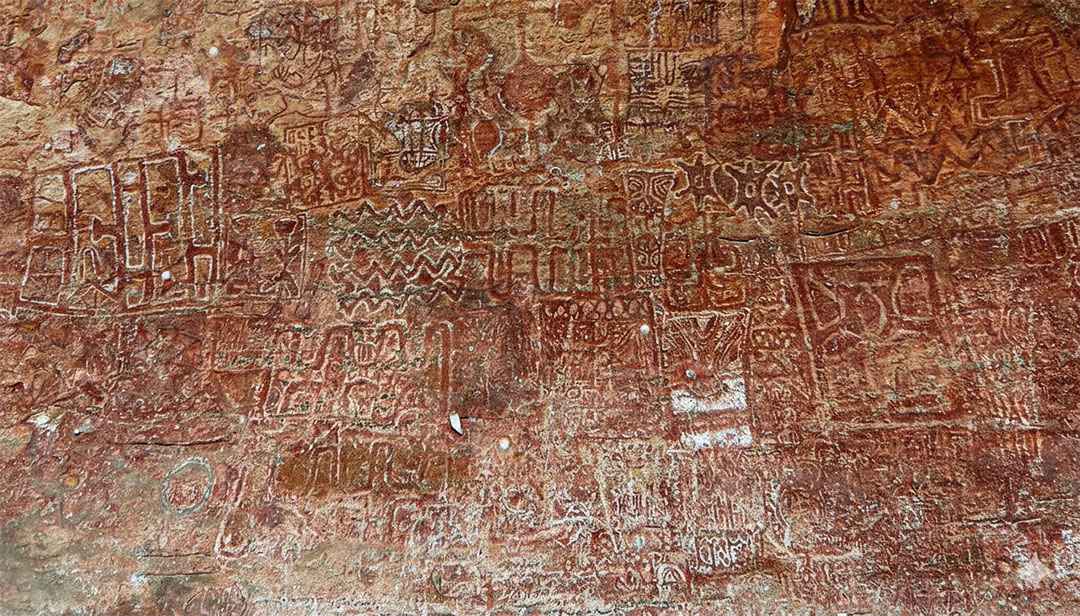
According to research, on the mural of this rock arts, there are more than 408 individual motifs at this site.
Important A mural is a wall painting depicting a scene or story, while a motif is a single object or repeated design with symbolic meaning.
The rock art depicts a figurative and non-figurative representation of subjects, including Animals such as deer, turtles, and bison represent the prehistoric environment and the community’s connection to nature.
I have tried to extract non-figurative symbols using Google AI Studio. Here is the result.
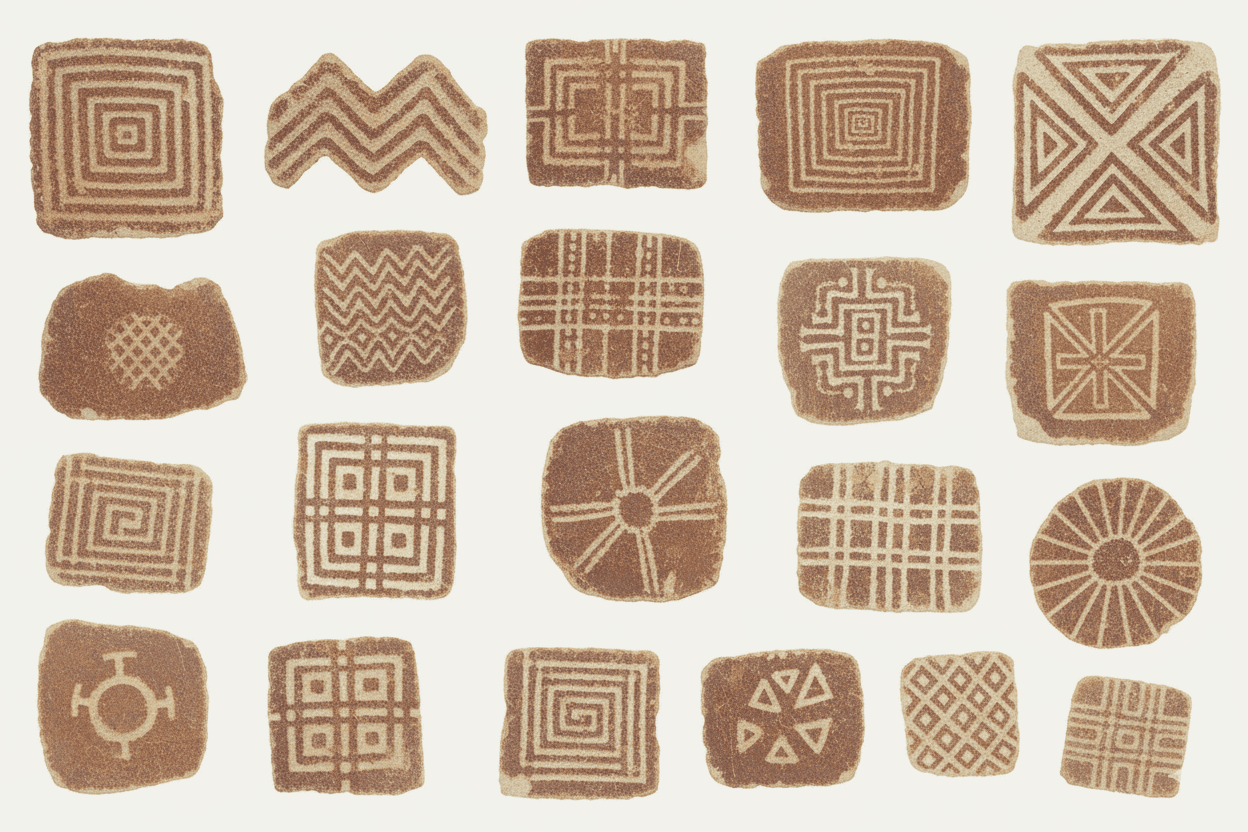
important A figurative motif is a symbol or design that represents or relates to real things such as humans, animals, or objects, and therefore carries a recognizable meaning. a non-figurative motif (or abstract motif) does not depict any real-life form, it consists of shapes, lines, or patterns that are mainly decorative and do not have a specific representational meaning.
- Figurative = representational (real forms, meaningful)
- Non-figurative = abstract (no direct meaning, just design)
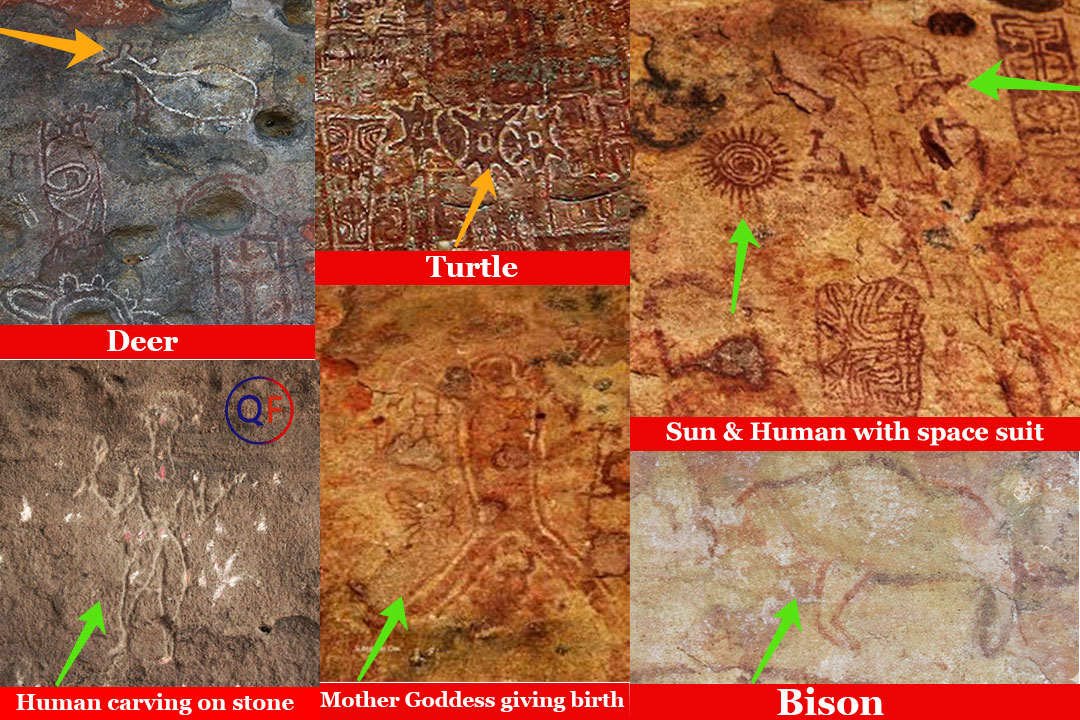
figurative motifs like Human figures, often shown hunting, dancing, or performing daily activities, give insight into their social and cultural life. Natural symbols like the sun, present many times in the mural, indicate their spiritual beliefs and reverence for nature.
The motif of the Mother Goddess giving childbirth represents that the people understood the importance of fertility, symbolizing life, creation, and the nurturing power of nature.
What is the possible meaning of the isko rock painting?
These paintings show that art was not only a form of expression but also a way to record life, celebrate important events, and convey beliefs, making Isko Rock Shelter a living testament to human creativity from thousands of years ago.
(iii) Scenic Beauty of Karnapura Valley
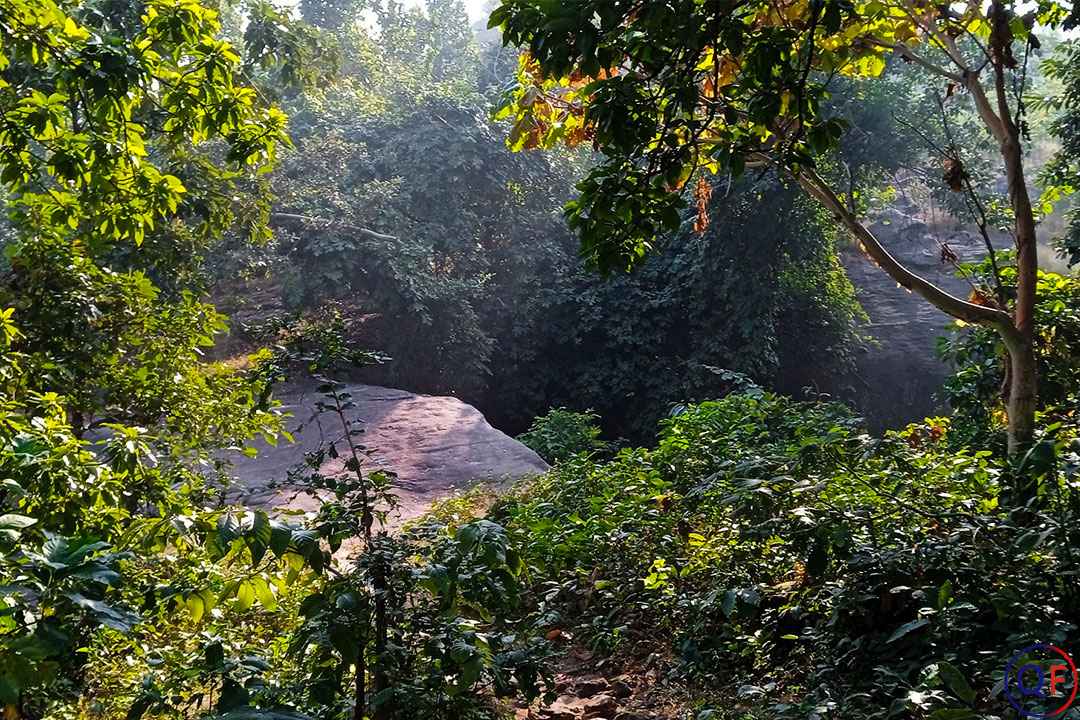
The Karnpura Plateau, which is surrounded by Sal trees for years, is part of the Gondwana system. The hills of this region spread around the village, creating a very scenic and captivating landscape. The Damodar River flows about 12 kilometers from here. This area is known for coal mining
2. History and Significance
According to the ASI survey, many Mesolithic and Chalcolithic stone objects have been found in this area, clearly indicating that humans inhabited this region. They created murals here, and the history of this region dates back around 7,000-3,000 years, spanning the Mesolithic-Chalcolithic period.
It was during this time that the early humans living here first expressed their lives through pictographs. Without these rock paintings, we might never have known how they lived in this region thousands of years ago.
On the cave walls, they depicted various animals - such as deer, turtles, and the sun - all of which likely held special significance in their lives. In one particular scene, a woman is shown giving birth, perhaps representing the celebration of a newborn, which they chose to immortalize on the rock surface.
They first created a white border and then used red hematite stones to produce natural pigments, demonstrating a remarkable understanding of colors and the properties of stones found in their surroundings.
Isko rock painting in Today’s Local Arts
According to Bulu Imam, the famous environmentalist and heritage conservationist, the artistic traditions seen in Isko and nearby villages are directly connected to the ancient rock art of Isko Cave. He believes that the Kohbar and Sohrai paintings practiced by local tribal communities today have their roots in the same artistic expressions created by their ancestors thousands of years ago.
Kohbar Painting
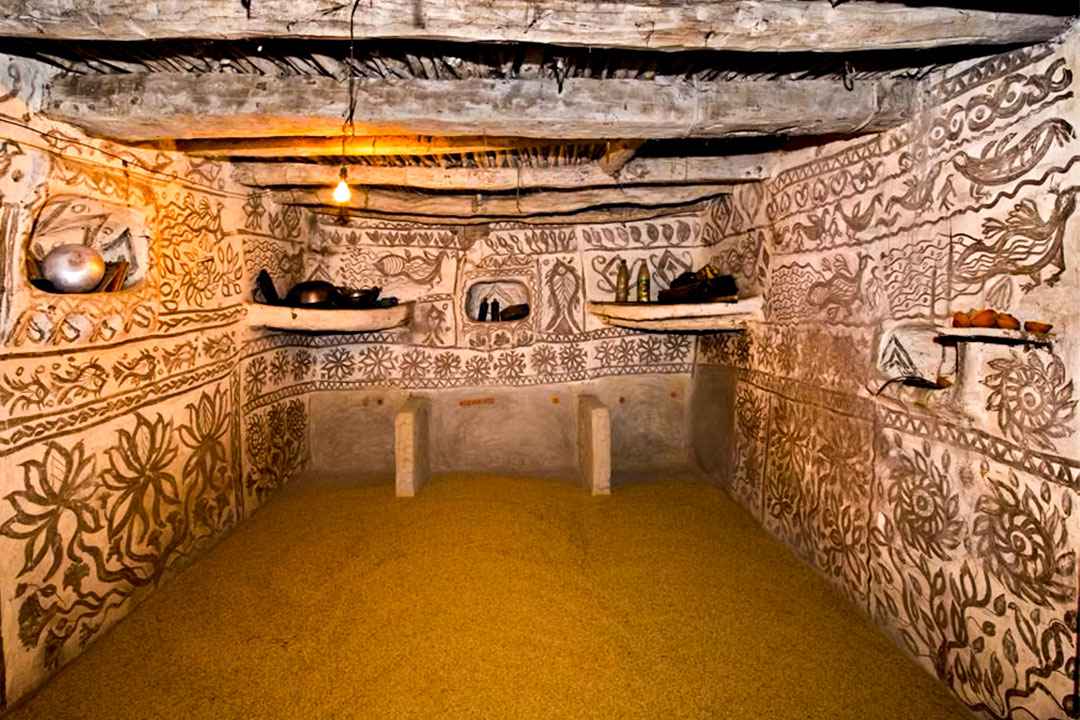
Kohbar painting is a traditional cultural and religious ritual art form. The word Kohbar means the bride’s room, which is decorated by the bride’s mother or aunt. In this room, Kohbar paintings are made, featuring drawings of flowers, temples, and animals like peacocks. These paintings are created in the villages of Hazaribagh, mainly during the wedding season.
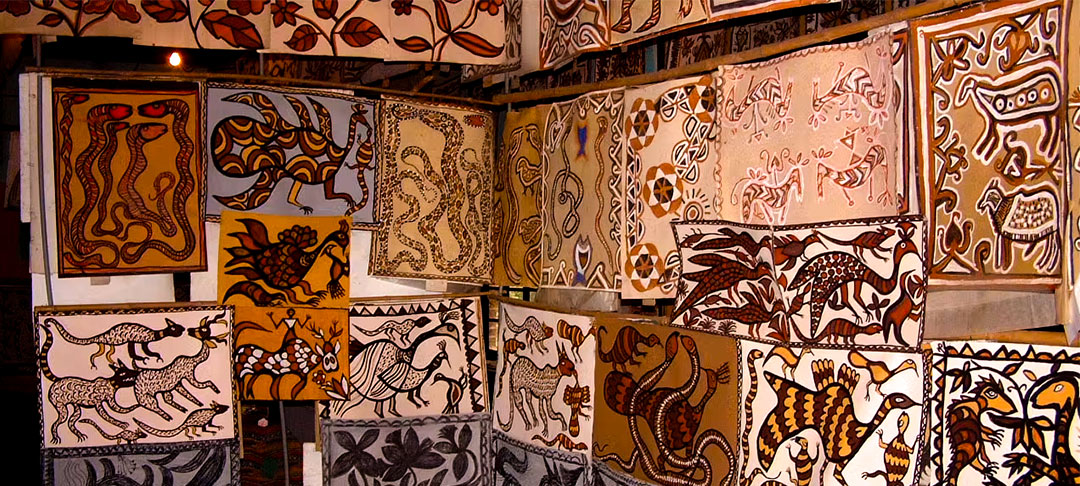
Sohrai Painting
Sohrai painting is associated with agriculture and cattle domestication. It is created during the Sohrai festival just after the day of Diwali, which celebrates the return of cattle from the fields after harvest. Villagers decorate their walls with beautiful motifs of flowers, animals, and natural symbols, expressing gratitude to nature and celebrating harmony with their environment.
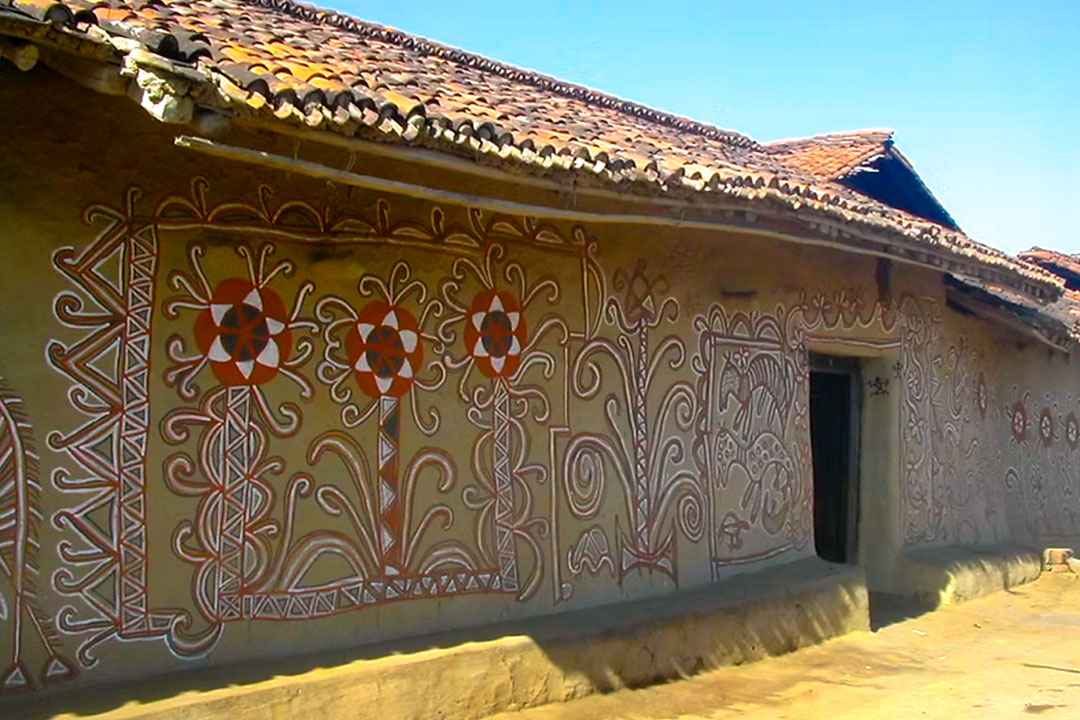
Although Kohbar and Sohrai paintings are not the same as the ancient rock paintings of Isko, they share a deep spiritual and cultural similarity. Both forms express the rhythm of daily life, fertility, and connection with nature - themes that existed ten thousand years ago and still live on today. Despite the passage of centuries, this artistic tradition continues to survive and evolve, keeping the spirit of the Isko rock art alive in the hearts of the local people.
3. The Discovery, Research, and Preservation
According to Bulu Imam, in 1991, Father Tony Albert, a priest from the Australian Jesuit Church, first informed him about the site. Soon after, Bulu Imam visited the place along with his daughter Juliet and Cherry to explore it further
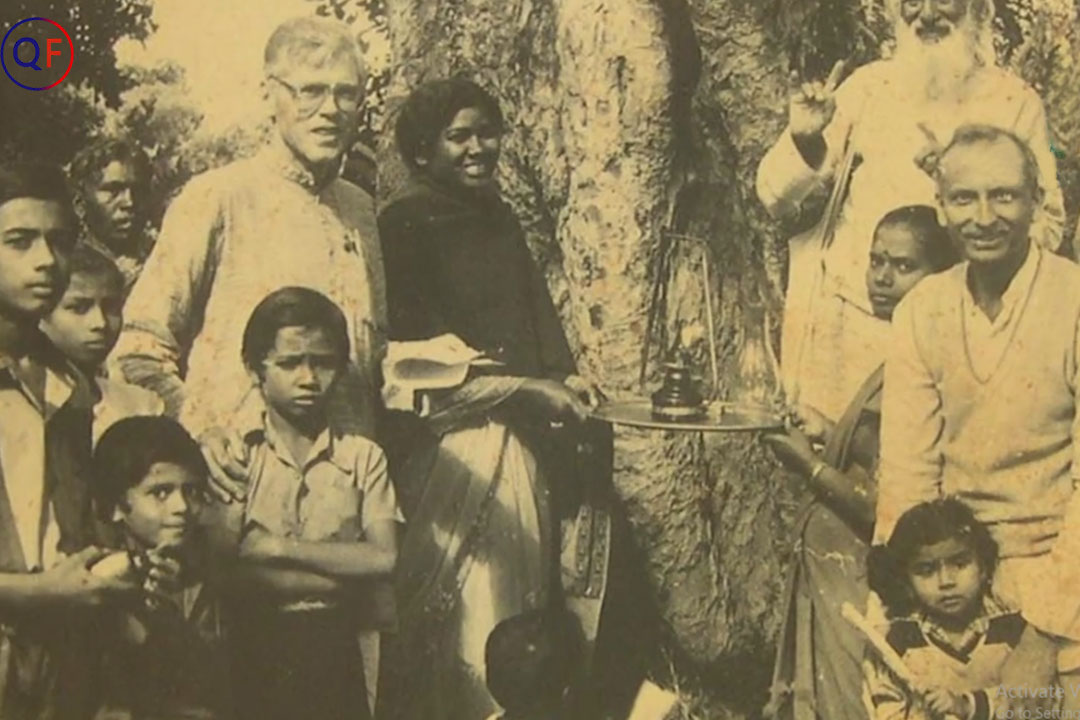
During this exploration, they also came across the local folk art traditions of Kohbar and Sohrai paintings in nearby villages. These art forms had existed for generations, but their connection to the ancient rock art of Isko and their global importance were not yet known.
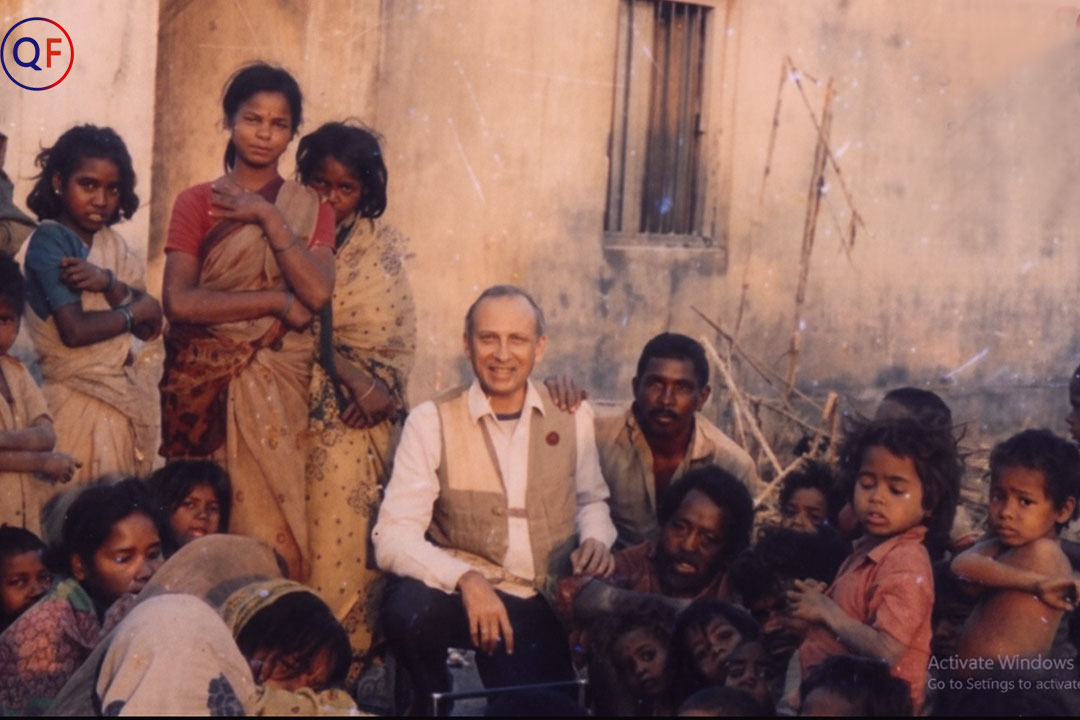
Bulu Imam conducted detailed research on the site and discovered that the artistic traditions visible at Isko Rock Shelter were still alive in the villages of Hazaribagh around the north Karanapura hills. While Father Tony Albert was the first to bring attention to Isko, it was Bulu Imam who connected it to the broader cultural heritage of Jharkhand, making it a significant chapter in the region’s history.
Bulu Imam later organized international exhibitions of Kohbar and Sohrai paintings in Australia and Mumbai, London, and Rome, giving these tribal art forms global recognition and linking them to the ancient artistic legacy of Isko Rock Art.
Following his discovery, officials from the Archaeological Department visited the site and conducted the survey.
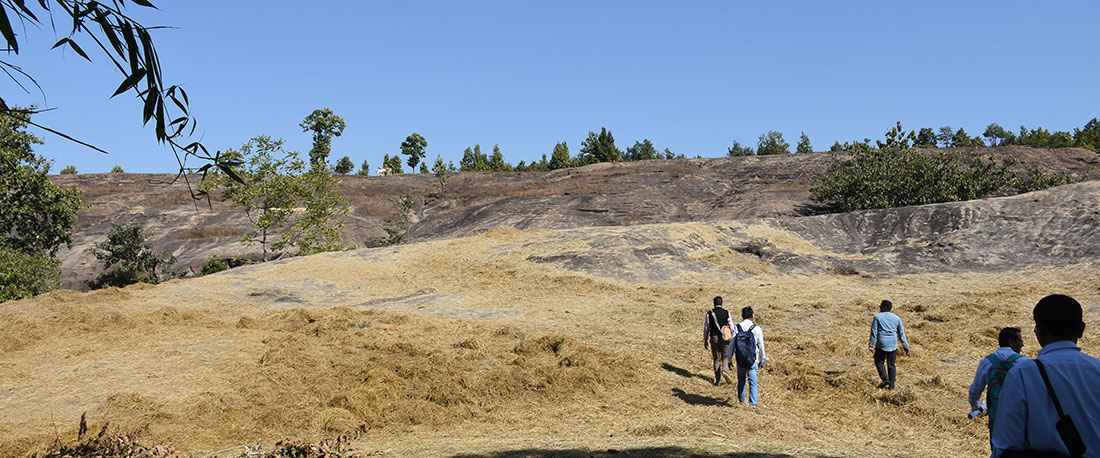
The Jharkhand Tourism Department has since declared Isko a tourist destination, building infrastructure such as an entrance pathway and resting area for visitors. However, the ancient rock paintings themselves are slowly fading due to a lack of preservation. There is an urgent need to protect and conserve these artworks before they are lost forever.
Important Painted Rock Shelter was declared a Centrally Protected Monument in 2025 by ASI.
4. How to Reach Isko Cave
From Hazaribagh:
To reach Isko village, I have divided it into four steps
1. Hazaribagh to Barkagaown (24.4 km)
Take the Hazaribagh-Barkagaown road to reach the Barkagaown block, which is approximately 26 kilometers.
2. Barkagaown to Napokhurda (12.7 km)
Take the Pasi Tola Road from Barkagaon, and near Sanrah, you’ll find two routes to reach Napokhurda. One is the Barkagaon-Badam Road, which goes straight, and the other is the Barkagaon-Sayal Road, which turns right from Sanrah. The total distance is approximately 12.7 kilometers.
3. Napokhurdato isko village (3 km)
From Napokhurda, it is just 3 kilometers away. Take the road that goes toward Isko village.
4 isko village to isko cave and rock painting
From Isko village, near a pond, you’ll see an entry gate built by the Jharkhand Tourism Department.
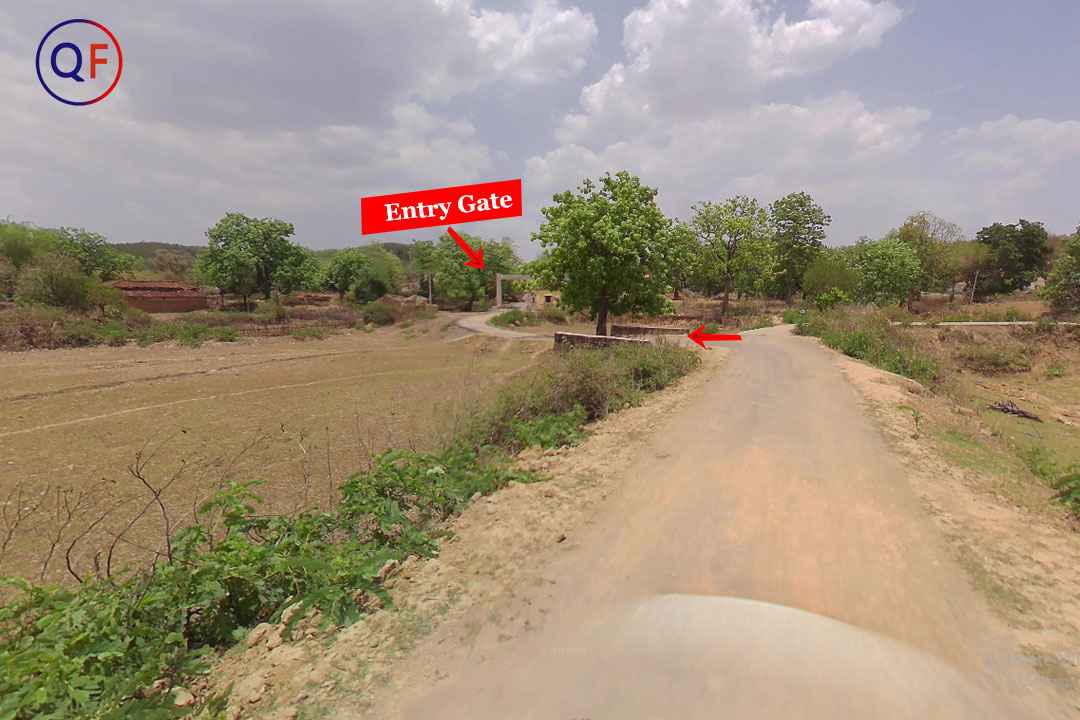
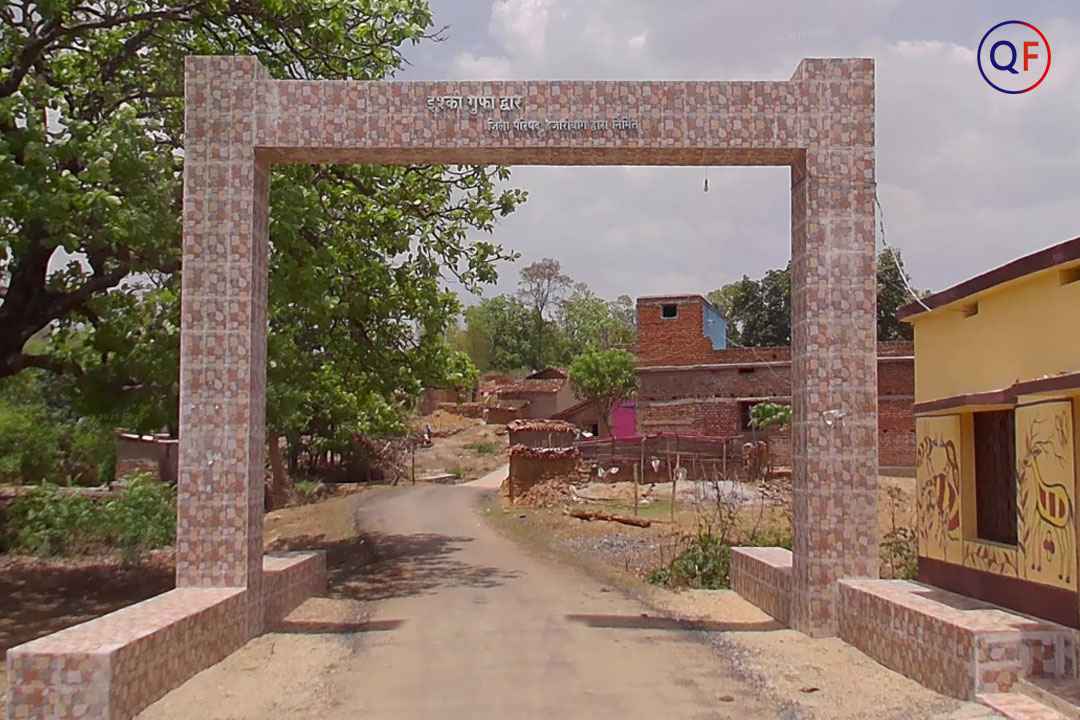
From the main gate, the Isko Cave is a very short distance away. You can also ask the local villagers to guide you on the trek to the cave.
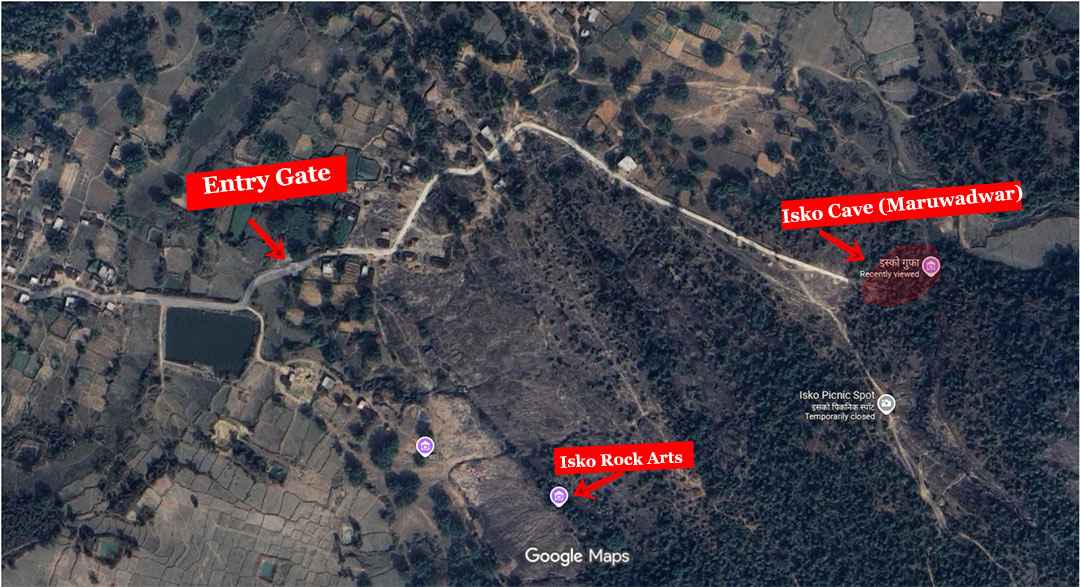
Navigation Tips:
Use Google Maps for guidance, but note that the location of the cave is unmarked, and the path is filled with stones and bushes. So don’t hesitate to ask villagers for directions; the locals are friendly and familiar with the site.
Distance from Major Locations
From Hazaribagh: 40 km
From Barkagaon: 14 km
From Ranchi: 78 km
From Chatra: 80 km
6. Best Time to Visit
Basant Ritu (October to February):
This is the best season to visit Isko Cave. The weather remains pleasant and cool, making it ideal for trekking, exploring the cave, and enjoying the natural surroundings. During this period, the nearby villages and forests are lush and vibrant, adding to the charm of the journey.
Avoid visiting during the monsoon season (July to September), as the pathways can become slippery and muddy, making travel difficult.
7. Advice to Travelers
- Footwear: Wear sturdy shoes suitable for rocky terrain.
- Guides: Hiring a local guide can enhance understanding of the paintings.
- Photography: Bring a camera; natural light works best inside the cave.
- Supplies: Carry water and light snacks, as facilities near the cave are limited.
- Respect the Site: Do not touch the paintings, as they are fragile and ancient.
8. Conclusion
Isko Cave is not just a travel destination; it’s a window into India’s ancient past. Its prehistoric paintings, natural surroundings, and mysterious aura make it a must-visit for history buffs, culture enthusiasts, and adventurers alike. Whether you are exploring the art, uncovering its mysteries, or simply enjoying the scenic journey, Isko Cave offers an unforgettable experience.
Frequently Asked Questions (FAQs)
1. Is Isko Cave a tourist site?
Yes. Isko Cave, located in Hazaribagh district of Jharkhand, is a recognized heritage and travel site known for its prehistoric rock art and natural beauty. It attracts visitors interested in history, archaeology, and rural tourism.
2. Where is Isko Cave located?
Isko Cave is situated near Isko Village, close to Barkagaon block in the Hazaribagh district of Jharkhand, India. It lies about 40 kilometers from Hazaribagh town.
3. Is the Isko Rock Art inside the cave?
No. The Isko Rock Art is not located inside the main cave. The rock paintings are found on the walls of the Isko Rock Shelter, which is about 1.4 kilometers away from the Marwaduwar Cave (main cave site).
4. Where exactly are the Isko rock paintings?
The rock paintings are situated at the Isko Rock Shelter, 1.4 km from the main cave area. It is an open rock formation where ancient people created pictographs using red hematite pigment around 10,000 years ago.
5. Are there more caves near the main Isko Cave?
Yes. There are a few small caves and tunnel-like openings near the main Marwaduwar Cave. Locals believe these may have been secret or alternate entrances in ancient times, though many are now blocked or partially collapsed.
6. How far is Isko Cave from Hazaribagh?
The cave is approximately 40 kilometers from Hazaribagh, and the drive takes about 1 hour by car or bike.
7. How far is Isko Cave from Barkagaon?
Isko Cave is roughly 14 kilometers from Barkagaon, which can be reached in about 20 minutes.
8. Is it safe for teenagers to visit Isko Cave?
Yes, the site is generally safe for teenagers and families. However, visitors should avoid entering blocked tunnels or steep cave areas and should ideally explore with a local guide or adult supervision.
9. Is Isko Cave worth visiting?
Absolutely. Isko Cave is one of the most fascinating prehistoric heritage sites in Jharkhand, offering a rare glimpse into early human life and tribal culture. It’s an excellent destination for history lovers, explorers, and photographers.
10. Can we go for a picnic near Isko Cave?
Yes, you can enjoy a quiet picnic near the site. The surroundings are peaceful and scenic, but make sure to keep the area clean and avoid damaging the rocks or cave walls, as they are of archaeological importance.
important --About Author- QueryFlag Travel - Branch of Queryflag | Explore Places Across the World. Written by Vinay Kumar Chabuey, Write for Travel, Tech, History, Biography