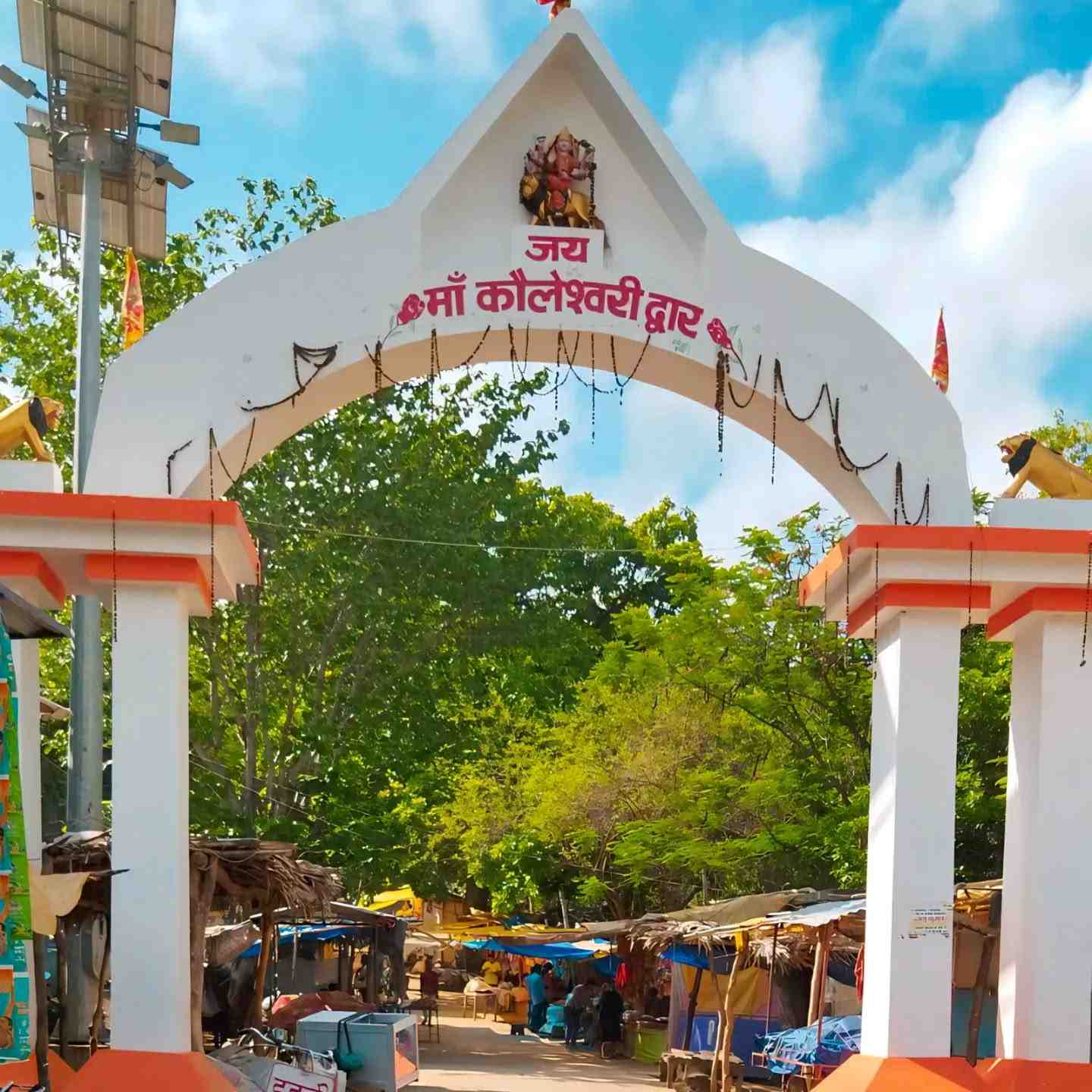
About 170 kilometers from Ranchi, the Maa Kauleshwari Temple is located in the Hunterganj block of Chatra district, Jharkhand, where the goddess Maa Kauleshwari in Shakti form is present, who is known as the protector of the clan
important कुलं रक्षति कौलेश्वरी - Kul ki Raksha Krne Wali- Kauleshwaril Devi.
important Those who are struggling to have children come here with prayers and hopes, and by the grace of the Goddess, their wishes are fulfilled. People also come here to perform the mundan ceremony when their child grows a little.
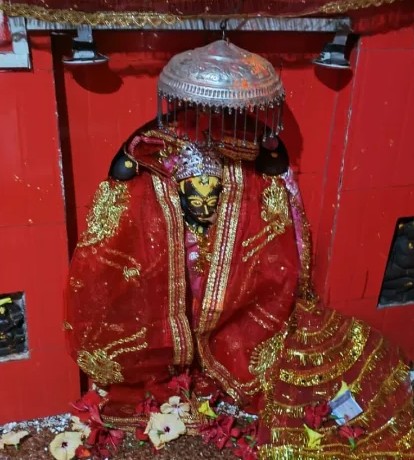
The temple is situated on the top of Kolhua Pahad, at a height of about 1,575 feet (around 450 meters), almost half a kilometer, which is an extended part of Vindhyanchal Perwatmala.
This place is not only a center of faith for Hindu devotees but is also considered an important pilgrimage site for followers of Buddhism and Jainism. In this way, it is a spiritual site for all three religions - Hinduism, Buddhism, and Jainism.
So let us have the holy darshan of the Goddess kuleshwari devi and learn in detail about her greatness and this sacred place.
It is believed that Maa Sati’s body parts fell at 108 different places on the earth, and those spots became known as Shaktipeeths. On this Kolhua hill, it is said that her womb (garbha) fell, and hence the goddess is worshipped here as Maa Kauleshwari - meaning "the one who protects the family lineage (Kul)."
important In the Durga Saptashati kavacham Shalok No-28, “Kauleshwari” is mentioned as the one who protects the womb while residing within it.
हस्तयोर्दण्डिनी रक्षेदम्बिका चाङ्गुलीषु च।
नखाञ्छूलेश्वरी रक्षेत्कुक्षौ रक्षेत्कुलेश्वरी॥२८
अर्थात
- हस्तयोः दण्डिनी रक्षेत् - हाथों की रक्षा देवी दण्डिनी करें
- अम्बिका च अङ्गुलीषु - अंगुलियों की रक्षा देवी अंबिका करें
- नखान् शूलेश्वरी रक्षेत् - नखों (नाखूनों) की रक्षा शूलेश्वरी करें
- कुक्षौ रक्षेत् कुलेश्वरी - पेट (उदर) की रक्षा कुलेश्वरी करें
Temple History
There is no archaeological or inscriptional proof confirming the exact age of the temple's foundation or the original placement of the idol (Murti Sthapana).
However, according to local beliefs, the original temple of Maa Kauleshwari was established during the Mahabharata era, which dates back to pre-500 BCE So it can be over 2,500 years old. but there is no evidence it is only a mythological belief.
It is also believed that Lord Buddha came to this hill for meditation, suggesting that the site was recognized as sacred even during ancient times.
Some stone sculptures and carvings found at the site are believed to belong to the Harshavardhana period, around 645 CE, further supporting its historical significance.
This makes it clear that Kolhua Hill has been a spiritually important place since ancient times, including the pre-Buddhist (BCE) era.
The present-day built temple (with cement and bricks) is commonly said by locals and priests to be rebuilt in the late 19th or early 20th century, which is almost 150 years old.
According to oral tradition legends, during the Mahabharata era, King Virat of the Matsya Mahajanapada was a devotee of Maa Kauleshwari, and it is believed that he had installed her idol on this hill.
Mythological Belief
There are many legendary stories of the greatness of Maa Kauleshwari, and beliefs about the temple is famous among local people.
Maa Kauleshwari and the Demon Kaul
There is a local belief behind the name Kauleshwari. Long ago, a powerful and cruel demon named Kaul started troubling people and disturbing prayers and yajnas around Kolhua hill. People got scared and prayed to Maa Shakti for help. Maa took a fierce form and appeared on Kolhua hill. She fought the demon Kaul and killed him, bringing peace to the region. Since then, she is known as Kauleshwari - the one who killed Kaul and protects the Kul (family lineage).
Abhimanyu and Uttara’s marriage at Mandwa Mandai
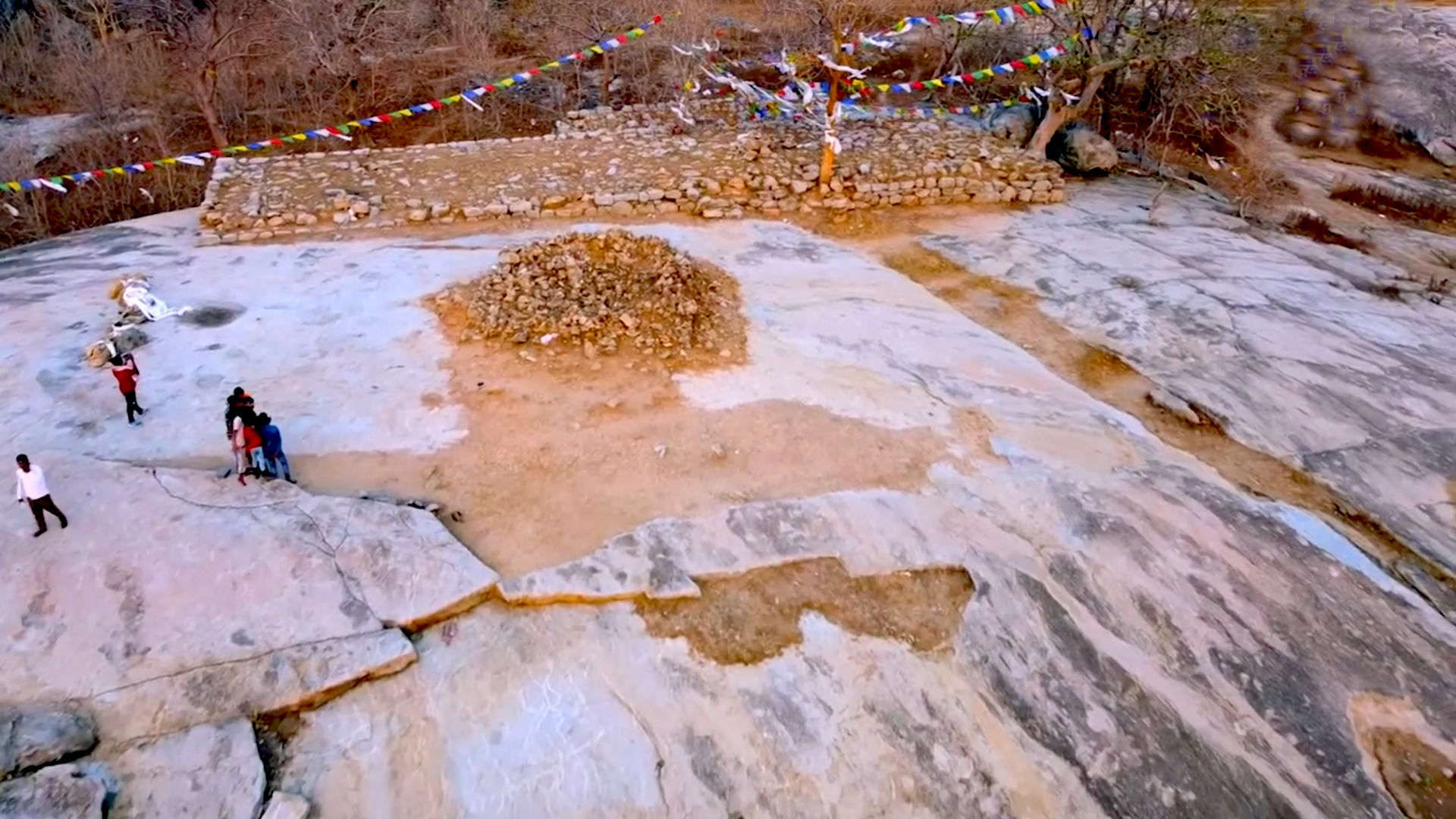
Mandwa Mandai is a place near the temple where, according to local belief, the Pandavas met King Virat during their exile. Some people also say that Abhimanyu and Uttara’s marriage took place here. However, this is not historically accurate, as their marriage happened in the capital of the Matsya kingdom, which is present-day Binda (Viratnagar) in Rajasthan. it is only a local legend story.
Maa Kauleshwari ki Mahima
Kauleshwari Mata's temple is not only a Shakti Peeth but also a Siddh Peeth.
important What is Siddh Peeth?- A Siddh Peeth is a highly sacred and powerful place in Hinduism, where people believe that prayers and wishes are fulfilled. It is filled with divine energy. Many saints, yogis, and devotees have done meditation and worship here, and they are believed to have received spiritual powers (siddhis) and blessings from the Goddess.
Maa always blesses her devotees and protects their family lineage. Those who are struggling to have children come here with prayers and wishes, and with the grace of the Goddess, their wishes are often fulfilled.
Maa is also called Kauleshwari because she is said to have killed the demon “Kaul Rakshas” at this very location.
Devotees from far-off areas of Chatra, Jharkhand, and Bihar come here to pray. Many even return for their child’s tonsure ceremony once their prayers are fulfilled.
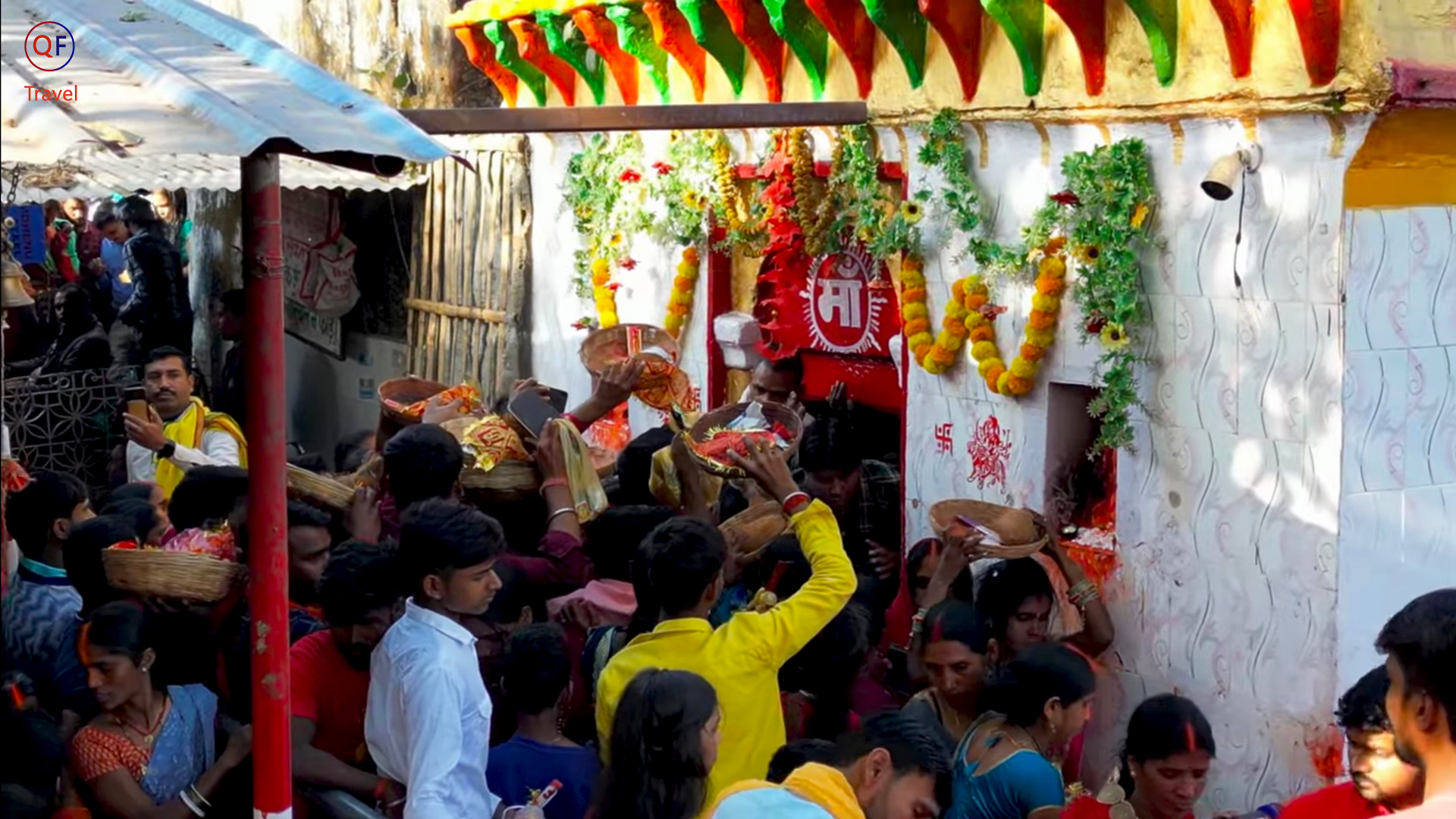
So let us begin our journey to Kolhua Hill to witness the divine form of the Mother Goddess and receive her blessings.
How to Reach Maa Kauleshwari Temple
To visit the temple, you first need to reach the Hunterganj block, which is 10.4 km from Chatra district.From Hunterganj, take the road via Ghaghri village, passing through Dantar village, which leads to the base of Kolhua Hill - the sacred abode of Maa.
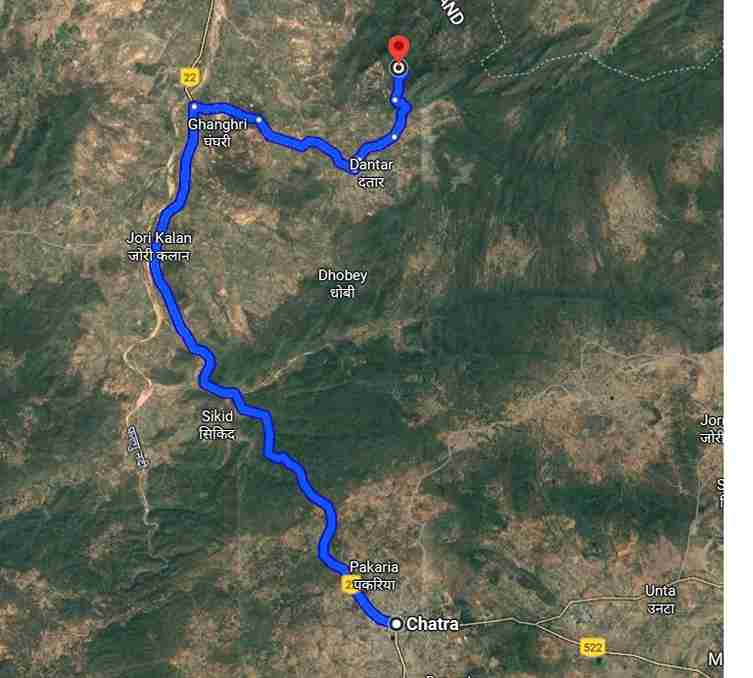
Jharkhand side- Chatra Distric→Trun Dumri Clan before Huntergunj Block→via Ghaghri and Dantar villege→Kolhua Pahad
Bihar Side→ Gaya→From GT Road Turn in Dobhi Road NH22 →Huntergunj→via Kedli Kalan Road→Koliua Pahad
Distance from various places
- From Chatra District - 35.4 KM
- From Huntergunj Block via Kedli Kalan Road - 10.4 KM
- From Huntergunj Block via NH22 Dumr)i kalan/Dumri khurd - 12.4 KM
- From Gaya via Dobhi Road (NH22 road)- 58.5 KM
- From Ranchi via Simaria Tundwa Road via Chatra - 166KM
- From Rnachi via Hazaribagh via Gidhaur via Chatra- 194 KM
By Road
The Road, which is reachable to Kauleshwari Temple is connected via National Highway NH-22, which links Chatra to Hunterganj from both directions- Chatra and GT Road (Grand Trunk Road).
You can take a bus from Chatra to Dhobhi and get down at Hunterganj. From Hunterganj, hire a private car or auto-rickshaw to reach the base of Kolhua Hill, where the temple is located.
By Train
From the Bihar side, the nearest railway station is Gaya, which is about 60 km away.
From Gaya, you can take a bus to Chatra via Hunterganj, and then hire a taxi or auto from Hunterganj to the temple. From the Jharkhand side, the nearest railway station is Hazaribagh Road.
By Air
The nearest airport is Birsa Munda Airport in Ranchi, about 166 km from the temple.
You can hire a taxi from the airport to reach Kolhua Hill. The journey takes approximately 5 hours by road.
After reaching the Temple
Vehicles can only go up to a certain point, almost 2Km before the temple. There’s no motor road up the hill, only a long flight of stairs, without any shade. If you visit during summer, the intense heat might make the climb more challenging.
You don’t need to carry offerings, prasad, and flowers from below, as everything is available at the top of the hill.
To reach the temple, you have to climb 1,200 steps (approx. 2 km). Be sure to carry a water bottle. It’s best to wear shoes or sandals, as the steps can become hot in the sun.
The stone-cut steps are steep and no shade. If you get tired, you can rest on the steps. Along the way, you'll see green hills and feel a peaceful atmosphere - perfect for capturing in your camera.
Once you reach the top, all your fatigue vanishes in front of the Goddess’s divine presence. You’ll experience a blissful feeling. Rest a while, then buy prasad from the shops nearby, and perform your worship.
You may also make a wish (mannat) before the Goddess. Her doors are always open for devotees. Even tribal communities worship Maa here with great devotion.
You are witnessing one of the 108 divine forms of Maa Sati, a rare spiritual blessing not granted to everyone.
What to do after offering prayers
Spectacular view from Akash Loachan
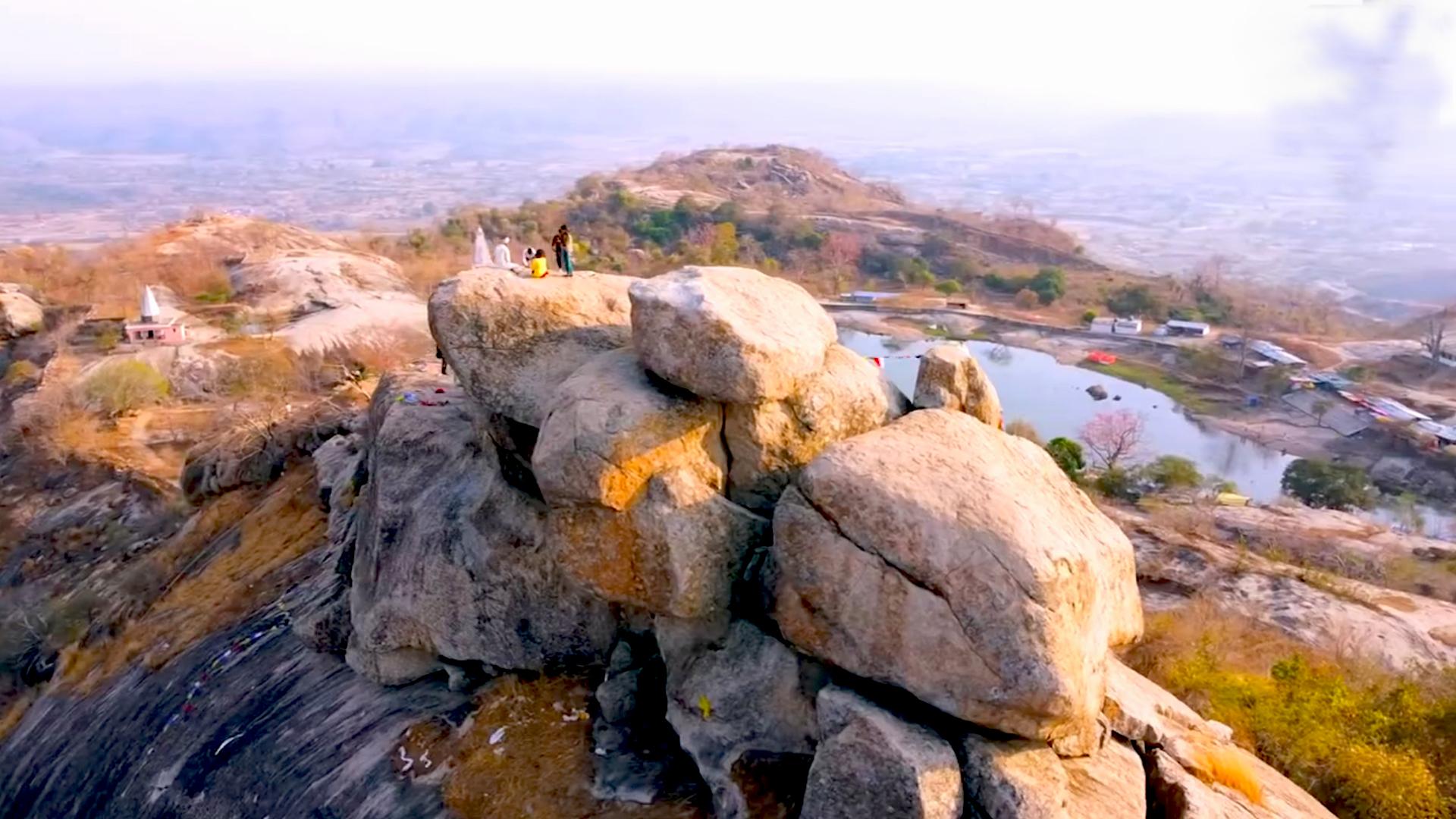
After offering prayers, you can visit Aksh Lochan, which is the highest point of the hill. There it is two big stones in which people climb for a great view of the hill, but it is dangerous, so I recommend that you please do not take risks only for adventures because life is precious.

Mandawa Mandai
It is a sacred place where people believe that Abhimanyu and Uttara's marriage happened
![]()
Bhim Bhaar
It is two giant stones that are stable on the ground with little area contact it is a myth that this stone was carried by Pandav's son Bhim, but the stone fell to the ground and divided into two parts
Jain Pilgrim Site
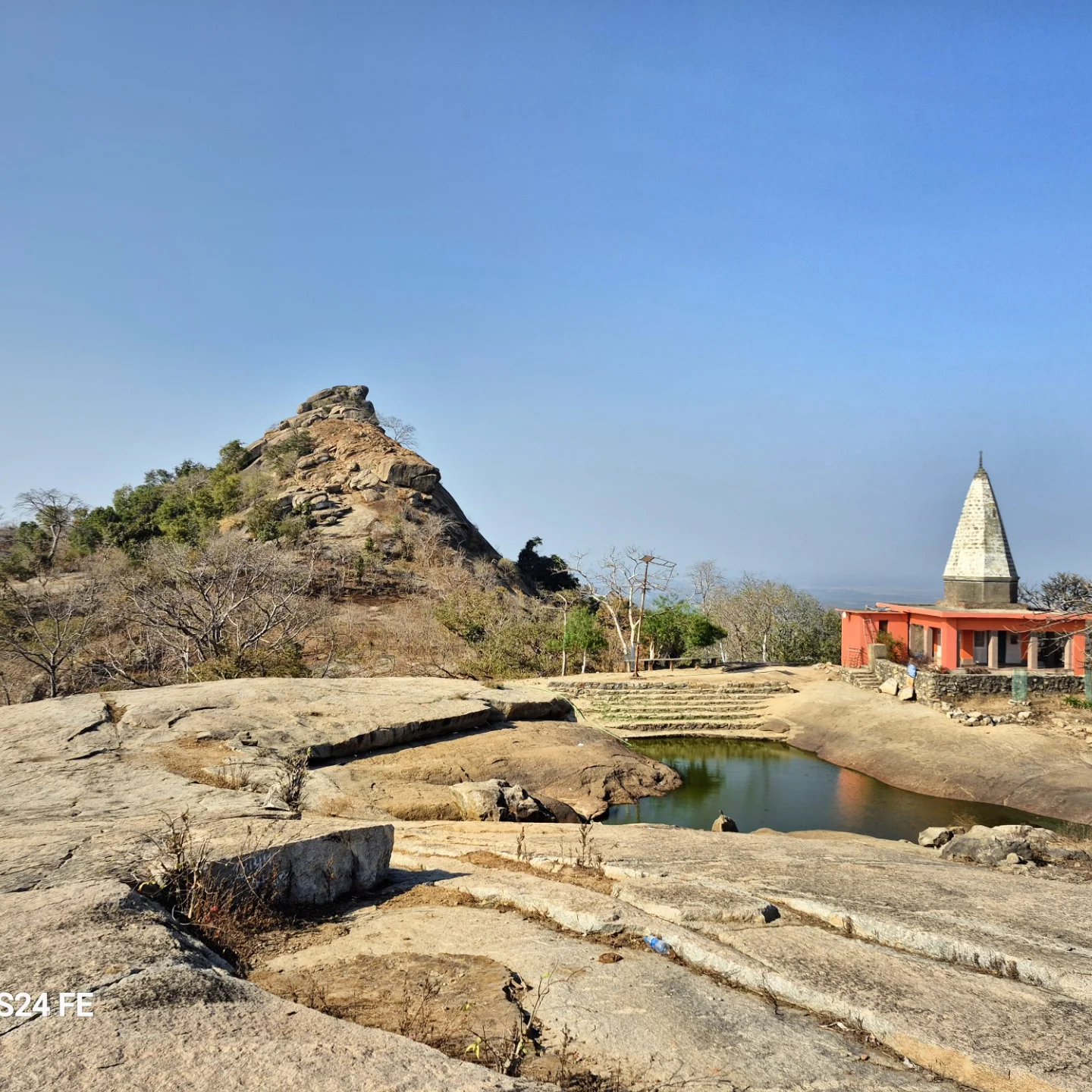
Next to the main temple, there is a Jain temple with footprints believed to be those of the 23rd Tirthankar, Bhagwan Parshvanath. This makes it an important pilgrimage site for Jain followers.
![]()
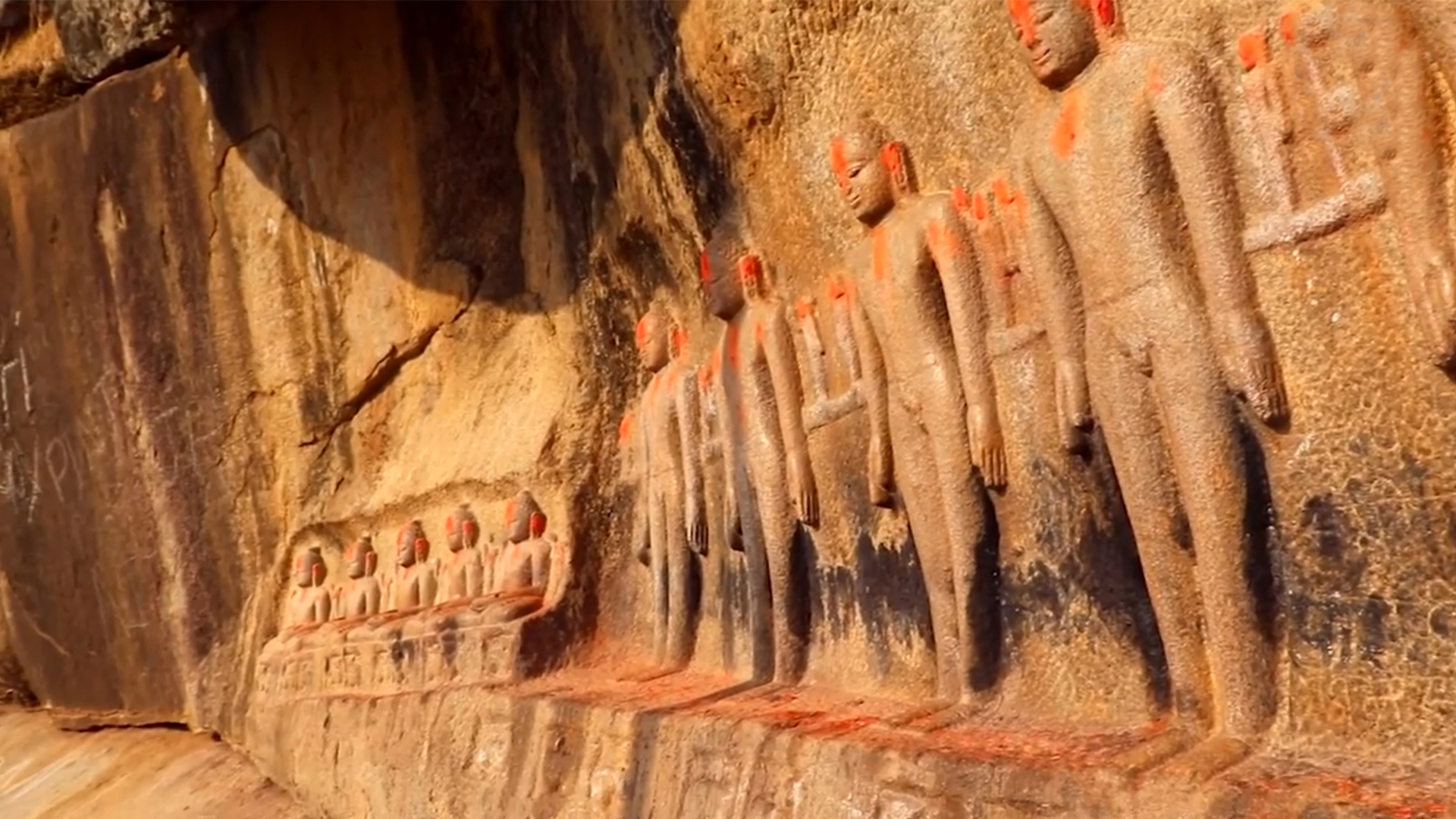
Buadh Pilgrim Site
There are also stone-carved images of Lord Buddha on the hill. It is believed that Lord Buddha meditated here for a few days and performed his tonsure (mundan) at this sacred site. As a result, many Buddhist devotees come here to meditate and perform their tonsure rituals.
Visit at Festival Time
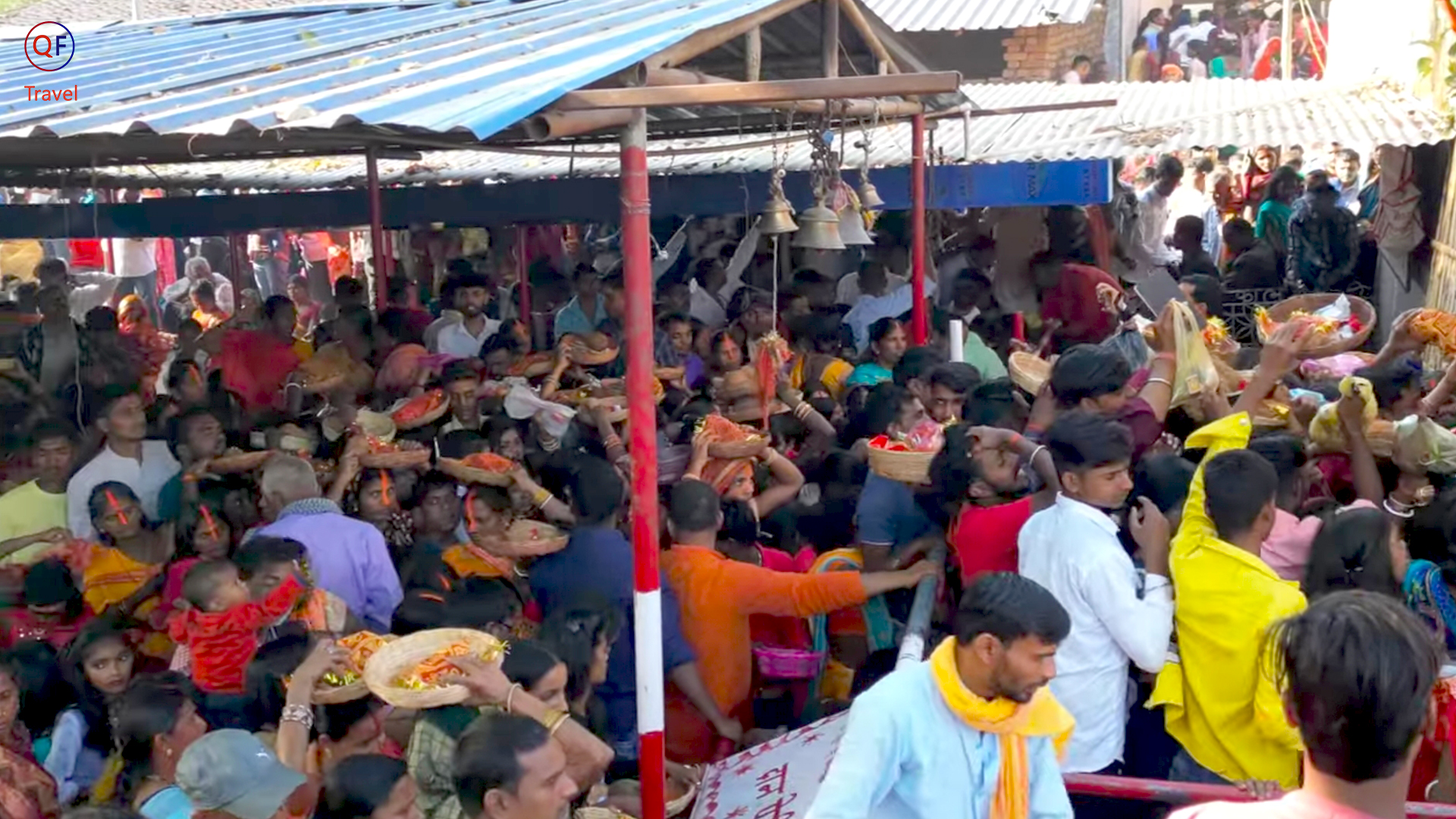
Festival season here starts around Chaitra Navratri, and the temple becomes especially crowded during Navratri and Durga Puja.
Query, may you ask?
How far is the climb from the parking to the temple?
This climb is estimated to be about 1.5–2 kilometers in length