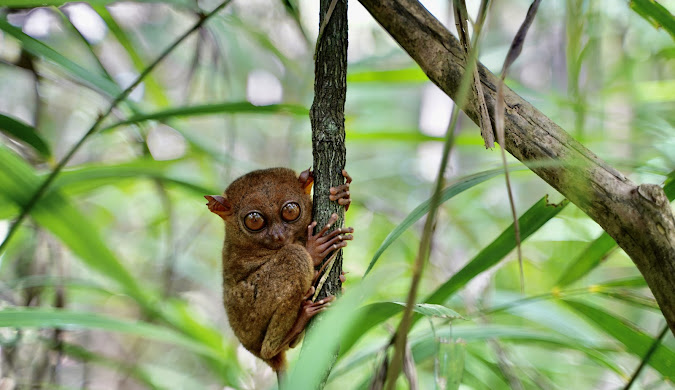
Near the town of Corella, in the Bohol region, lies the Philippine Tarsier Sanctuary, where the world’s smallest and oldest primates are found, known as tarsiers. Locally in the Philippines, they are called “maumag.”
importantPrimates are a group of mammals that include species like monkeys, apes, lemurs, and humans.
This is a rare species, known for its tiny size and large, alien-like eyes. People from around the world visit this sanctuary just to see these creatures in their natural habitat.
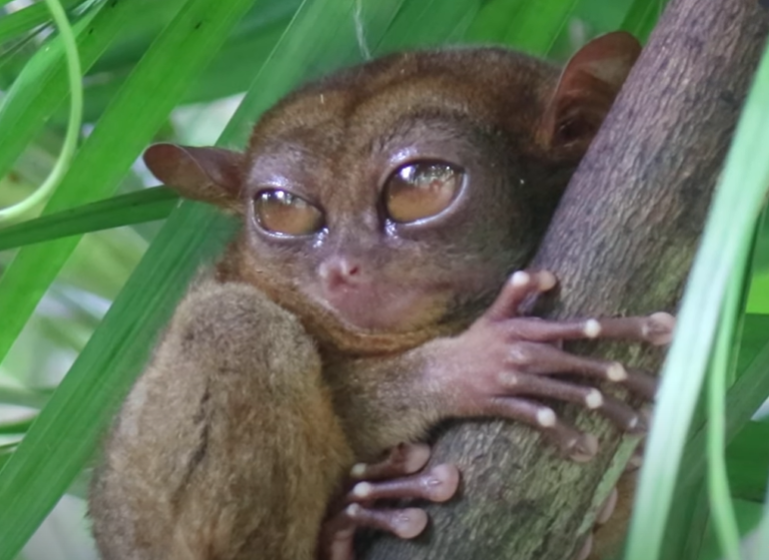
These animals, which resemble monkeys, are only 9 to 16 cm in size, and their tails are even longer than their body, usually 20 to 25 cm long. Their eyes are larger than their brain, allowing them to see clearly at night.
During the day, they rest quietly while hiding on bamboo stalks or small tree branches, and at night, they become active. Tarsiers can jump 1 to 2 meters in a single leap. They are carnivorous animals, feeding on insects like butterflies and grasshoppers.
Because their eyes are extremely light-sensitive, tourists are strictly prohibited from using camera flash. Tarsiers prefer to live alone and are very shy in nature. Keeping them in captivity or touching them can cause extreme stress, and in some cases, they may even commit suicide; that’s why tourists are not allowed to touch them.
Tarsiers have been living on Earth for nearly 45 million years, making them one of the oldest surviving primates in existence.
But now, their population is rapidly declining, and only a few thousand remain, mostly in Bohol and parts of Mindanao.
To protect them, the Philippine Tarsier Sanctuary was established, covering about 8.4 hectares of lush green forest where these animals are kept safe in their natural environment.
The sanctuary is managed by the Philippine Tarsier Foundation Inc., a non-profit organization.

Visit the Philippine Tarsier Sanctuary
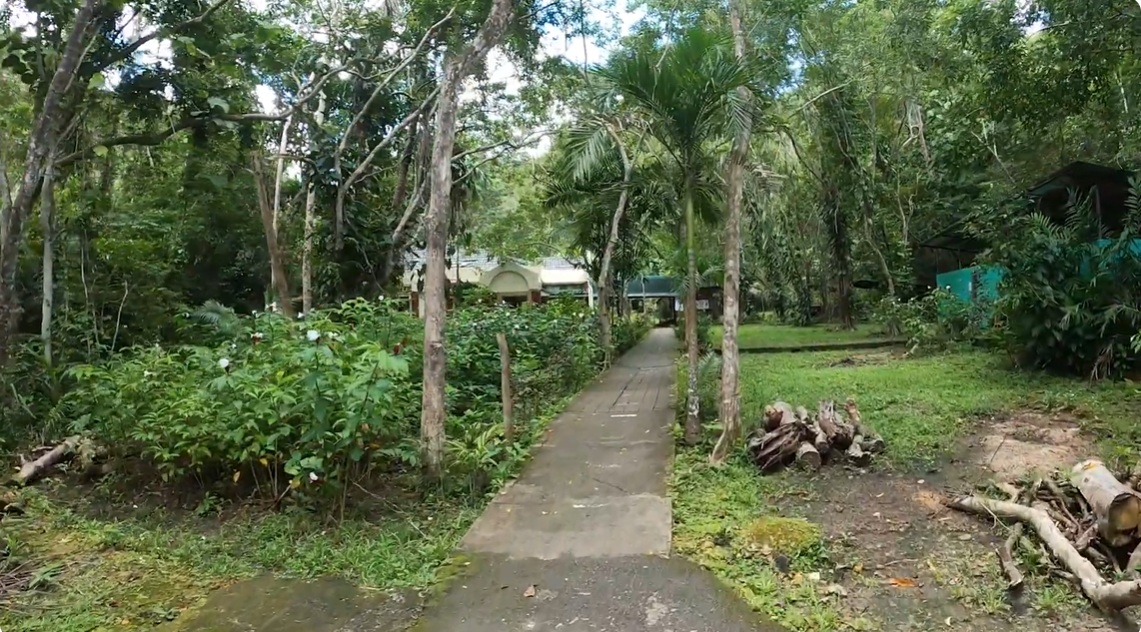
The sanctuary is located near Corella town, about 11 kilometers from Tagbilaran City.
It falls on the way from Tagbilaran to Carmen, via Loboc and Bilar. From the main road, the sanctuary is a little inside, but a road leads directly to the entrance.
You can rent a bike from Tagbilaran or use public transport like a jeepney to reach the sanctuary.
This is not a large place, the main attraction is the tarsier, and about 30 minutes to 1 Hour is enough to explore.
So, if you're planning to visit Loboc River Cruise or Chocolate Hills, this spot is perfect to include in your trip.
Entry, Ticket Price , and Timing
- Entry Ticket Price: 150 pesos
- The ticket includes a local trained guide who provides you with information about the tarsiers and helps you find them in the forest.
Because of how sensitive tarsiers are, strict guidelines are followed inside the sanctuary. Tourists are first given a briefing about the rules:
- Strictly remain silent - tarsiers rest during the day.
- Camera flash is not allowed - their eyes are light-sensitive, and flash may cause trauma.
- Touching is strictly prohibited.
- Photos are allowed, but only from a distance and without flash.
Time: Open daily (typically 8 AM – 4 PM)
Where to see a Tarsier?
Once inside, you will see tarsiers clinging to bamboo sticks or branches of small trees, resting quietly.
Since they live solitary, you’ll spot them one by one. In about an hour, you can expect to see 3 to 7 tarsiers. Sometimes, you might even spot a mother with her baby.
Tarsier Research Center and Souvenirs
There is also a Tarsier Research Center inside, where you can see their skeleton, learn about what they eat, and explore many more facts.
A small shop nearby offers local crafts and tarsier-themed teddy bears that you can purchase.
All the money you spend here, ticket, souvenirs, goes toward the protection and care of the tarsiers.
Queries you may ask
Is the Tarsier a Monkey?
No, it is not a monkey. It belongs to the primate group, which includes monkeys and other species like humans, chimpanzees, tarsiers, and lemurs.
Did Tarsiers live in the age of dinosaurs?
No, tarsiers did not live during the age of dinosaurs. Dinosaurs disappeared around 66 million years ago, while fossil evidence shows that tarsiers appeared about 45 million years ago.
Is the Philippines Tarsier Sanctuary and the Tarsier Conservation Area the Same Place?
No, the Philippine Tarsier Sanctuary and the Tarsier Conservation Area are two different places.
- The Tarsier Sanctuary is located in Corella. It is a natural, non-profit facility managed by the Philippine Tarsier Foundation and supported by the Department of Tourism. Its primary mission is tarsier conservation, research, and habitat protection, offering a more ethical and educational experience.
- On the other hand, the Tarsier Conservation Area is often referred to as being in Bilar, but it is actually closer to Loboc. This facility is privately owned, for-profit, and operates more like a zoo, where tarsiers are kept in small, semi-natural enclosures for tourists.
Why is Conservation of the Tarsier Needed?
Tarsier is a rare and delicate creature that has been placed under the "aggravated" conservation category, meaning scientists estimate that if current threats continue, up to 20% of the population could vanish within the next two decades.
The main reasons of decline is mainly due to:
- Deforestation - their forest homes are shrinking fast.
- Human settlement - expanding villages and roads are disturbing their habitat.
- Illegal trade - capturing tarsiers for pet markets or tourist shows causes huge stress and often death.