
Sonmer Temple, khunti: A unique 10 bhuji Maa Durga Manokamna Mandir
Post
Read in हिंदी

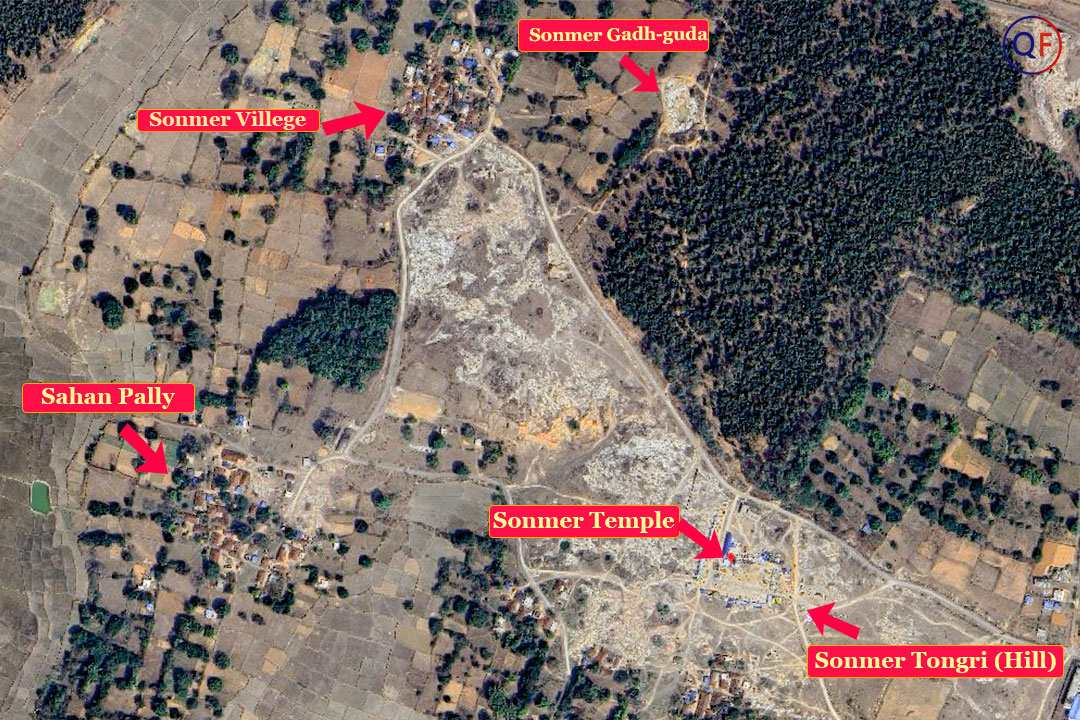
The Sacred Sonmer Temple is beautifully situated on a small hill (Tongri ) of Sonmer village near Karra block, about 40 km from the main road, Ranchi, and 13 km from Khunti town, where the 10 Bhuji Sonmer Mata Durga is present in her divine form.
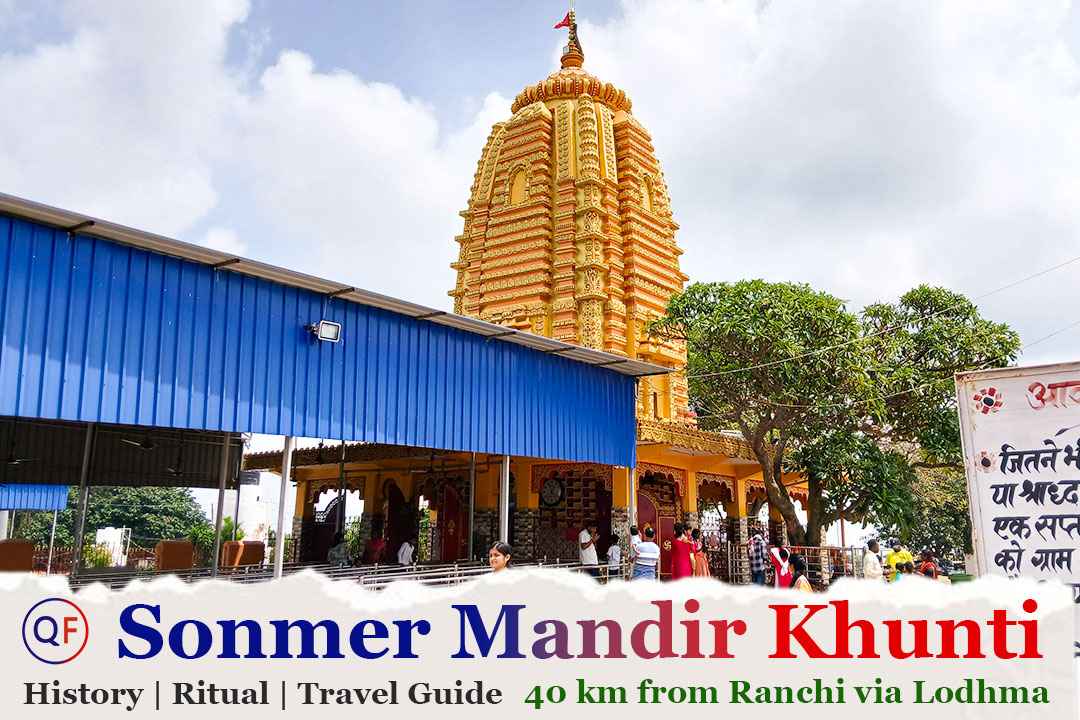
For the past 300 years, this temple has been an integral part of the religious and cultural life of Sonmer village and the surrounding region of Khunti, and today it has become a famous landmark in the Khunti district.
The pilgrims from Jharkhand and Bihar, and Odisha visit to offer prayers, perform rituals, seek blessings of sonmer mata Durga, and experience a connection with the sacred cosmic energy.
The temple, surrounded by serene natural beauty, radiates a spiritual aura that inspires devotion, inner peace, and a sense of divine protection.
Special About Temple
- Mantra chanting of Prayers in the Mundari language by tribal priests (Pahan), not in Sanskrit.
- Temple known for mannat, Unique sacrifice rituals.
- Buffalo sacrifice is not done on Dussehra, but on the full moon (Purnima), five days after Dussehra.
- Fair ("Dasai Jatra" Mela) is organized during the Sarad Purnima puja after five days of Dussehra.
Important: This sacred temple is also known as the Sonmer Manokamna Mandir, because here the practice of mannat (vows and wishes) is performed by devotees, and Maa is famous for blessing them by fulfilling their wishes.
Local people have strong faith in the Sonmer Temple. Whenever they face difficulties in life, they come here to pray to the goddess.
During Navratri, a large number of devotees visit the temple. After five days of Dussehra, on Ashwin Sarad Purnima (Full Moon), a grand festival is celebrated in the temple premises with great devotion, and bhainsa bali (buffalo sacrifice) is offered to Maa Durga, which is a tradition that has been continuing since the time of the Jariyagarh Nagvanshi dynasty.
So, let us learn more about the Rituals, beliefs, and history of the sacred Sonmer Temple, Khunti district.
Table of Contents
- Temple History
- Deity
- Religious and Cultural Significance of the Temple
- Architecture of the Temple
- Rituals & Worship
- Festivals & Fairs
- How to Reach Sonmer Temple
- guide to perform worship after reaching the temple
- My Visiting Experience from Ranchi
- Conclusion
- Query may you ask
Temple History
According to the official Facebook page of Jharkhand Tourism, this temple is around 300 years old.
It is believed that the Goddess first appeared in the gadh-gudha of the village. a villager late Chatur Shikhar was discovered the idol and began worshipping the Goddess. Later, around the year 1917, the idol was carried on a bullock cart and established on the Sonmer hill (Tongri).
At that time, the temple was just a small hut-like structure. Over time, the miraculous stories of Maa Durga’s grace spread among devotees, and deep faith of the people has made the renowned temple in Jharkhand.
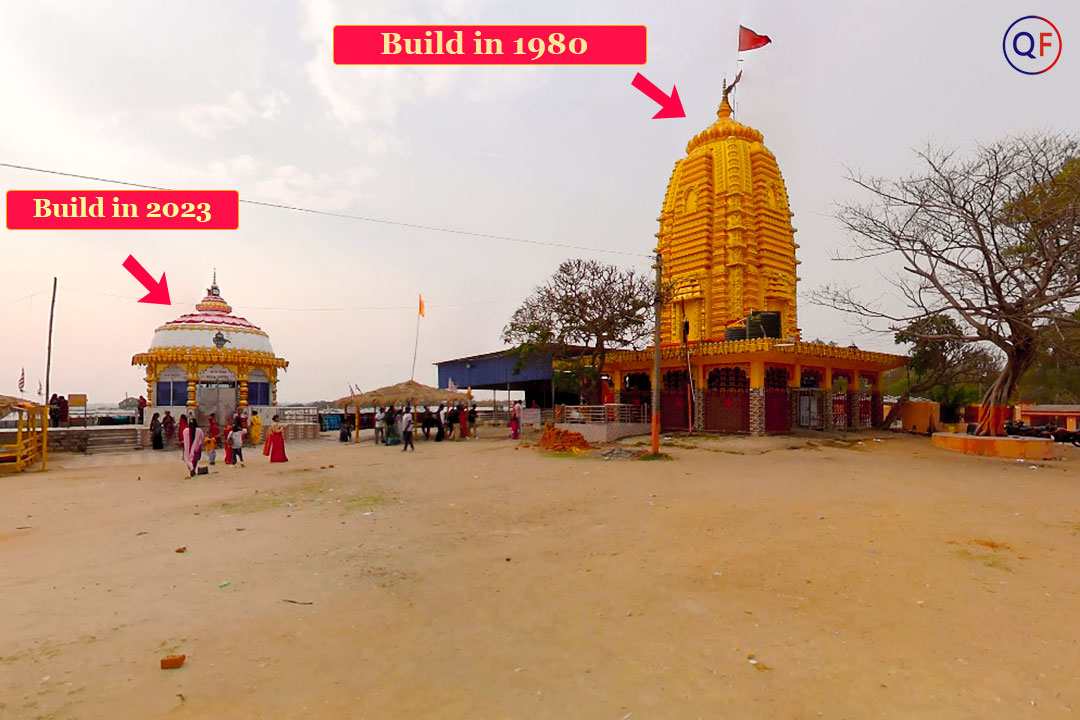
In 1980, with the collective effort of the villagers, a grand temple was constructed, which is designed in the Odisha temple style.
From the establishment of the temple till today, Chatur Shikhar and his descendants have continued to serve as the Pahan (traditional priests) and perform the worship of the Goddess.
Deity
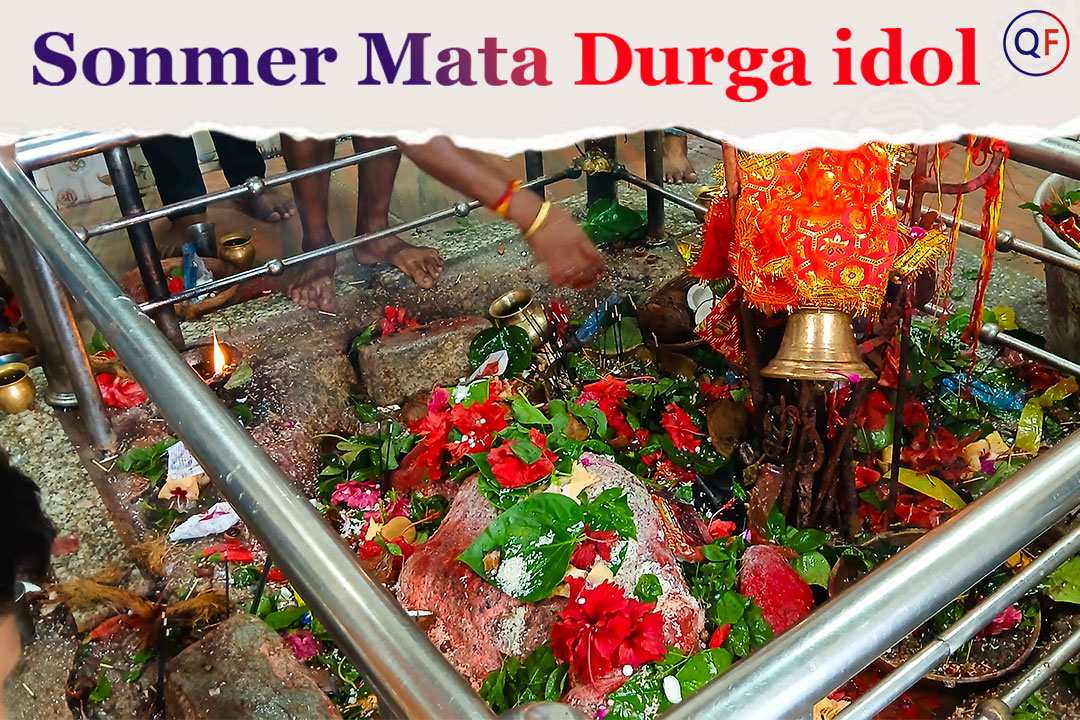
The idol installed in the temple is a deity of Maa Durga with ten arms (10 bhuja), so the temple is also known as the 10 Bhuji Maa Durga Mandir.
Relics of the broken idol
About ten years ago, a mentally unstable man destroyed the idol using a tangi (axe), Then, villagers immersed the broken parts of the idol in the river by following Hindu rituals, and the remaining portion of the idol is worshipped in the temple today.
The local people once considered installing a new idol, but the temple’s main pahaan (priest) denied this idea. His believes that one day Maa Durga will come again in her original form through the old idol.
Religious and Cultural Significance of the Temple
People from different communities, such as Sadan, Munda, Pahan, Dhal, and Badaik, came together and formed a committee to manage the temple smoothly and to perform regular worship and rituals. This reflects how the temple is unifying people among different groups. Here, not only the tribal people but also Hindus come to worship, creating a unique confluence of Hindu and tribal traditions.
One of the remarkable features of this temple is that mantras in the Mundari language. Since Mundari is the main language of the local area, and performing rituals in it gives people a deep closeness to their own culture, which holds great significance.
Sonmer is a small village with about only 200 households, yet because of the temple, it has gained wide recognition. Today, devotees from far-off places in Bihar, Odisha, and Jharkhand come here for darshan. Gradually, this temple is becoming a proud identity of Khunti district.
Architecture of the Temple
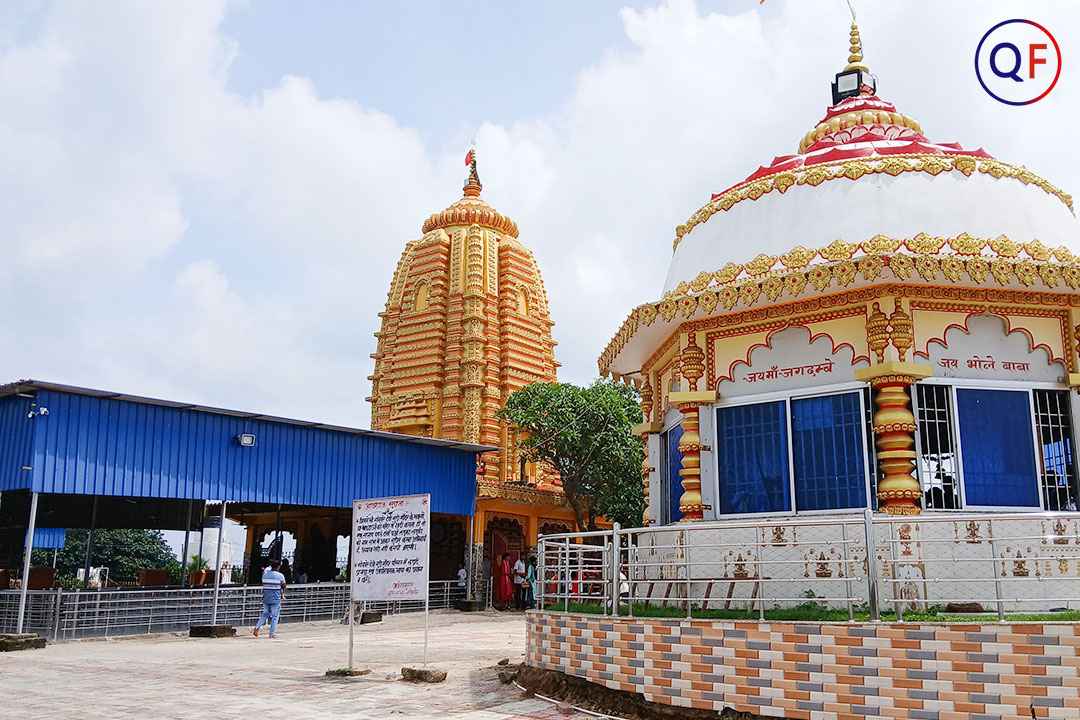
The Sonmer Temple is designed in the style of Kalinga architecture, which is a form of the Nagara style of North India, primarily seen in Jagannath Temple, Odisha.
In this style, the sanctum (garbhagriha) is crowned with a tall, curvilinear tower known as the Rekha Deula Shikhara.
Important: Jagannath Temple Puri and the Jagannath Temple of Ranchi are also examples of a Rekha Deula in the Kalinga architectural style. Deula is the Udiya word that means temple.
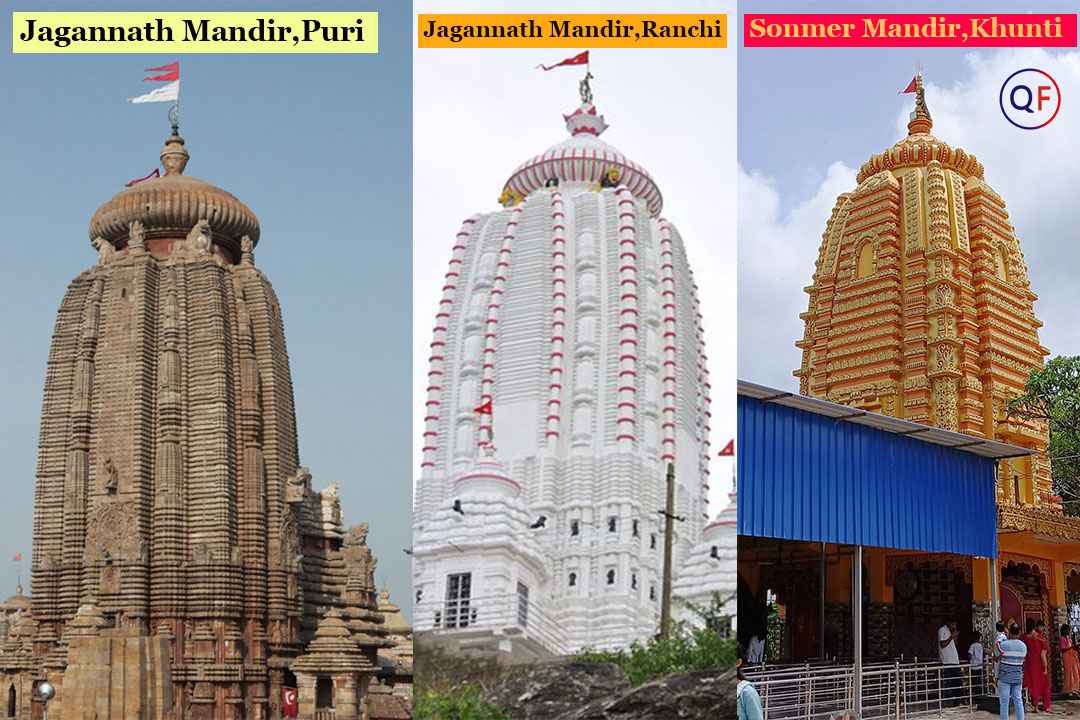
The shikhara of the Sonmer Temple follows this Rekha Deula tradition. At the very top is the mastaka (head portion), which is beautifully ornamented with the kalasha, amalaka, kapuri, and beki, forming a finely crafted ornamental complex.
The middle section (gandi) of the tower is decorated with delicate carvings and is painted in golden and deep golden colors, giving the temple a striking and graceful appearance.
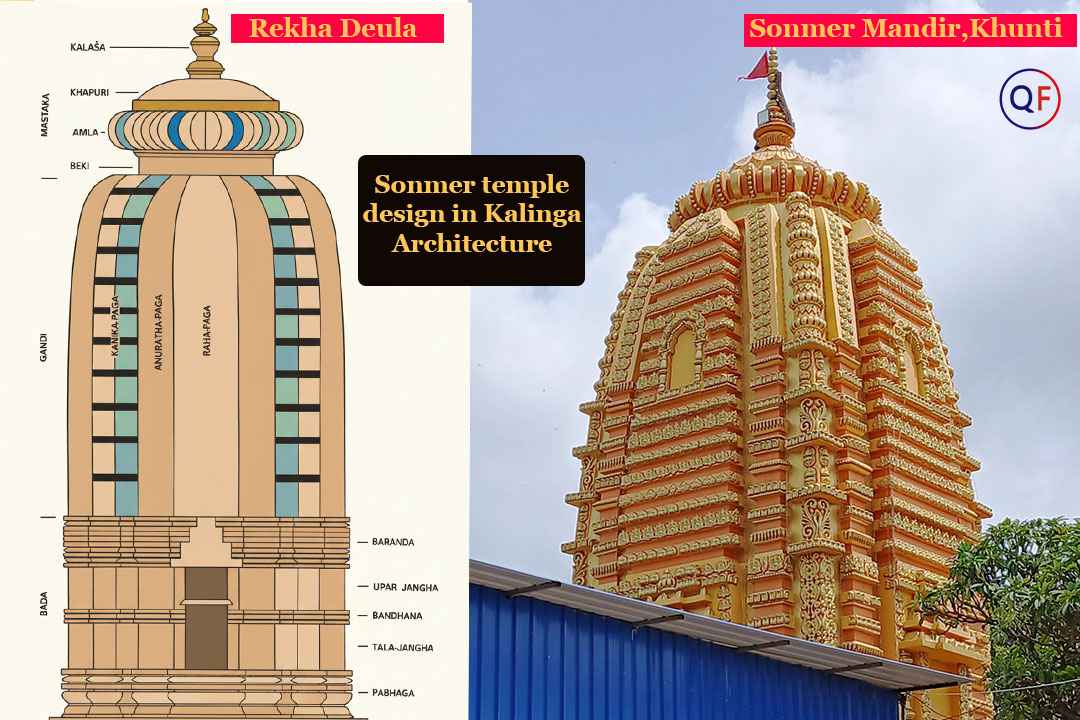
At the base lies the sanctum (garbhagriha), which was constructed over the original ancient shrine. Surrounding it is a circumambulatory path (pradakshina patha) where devotees can perform parikrama (ritual circumambulation).
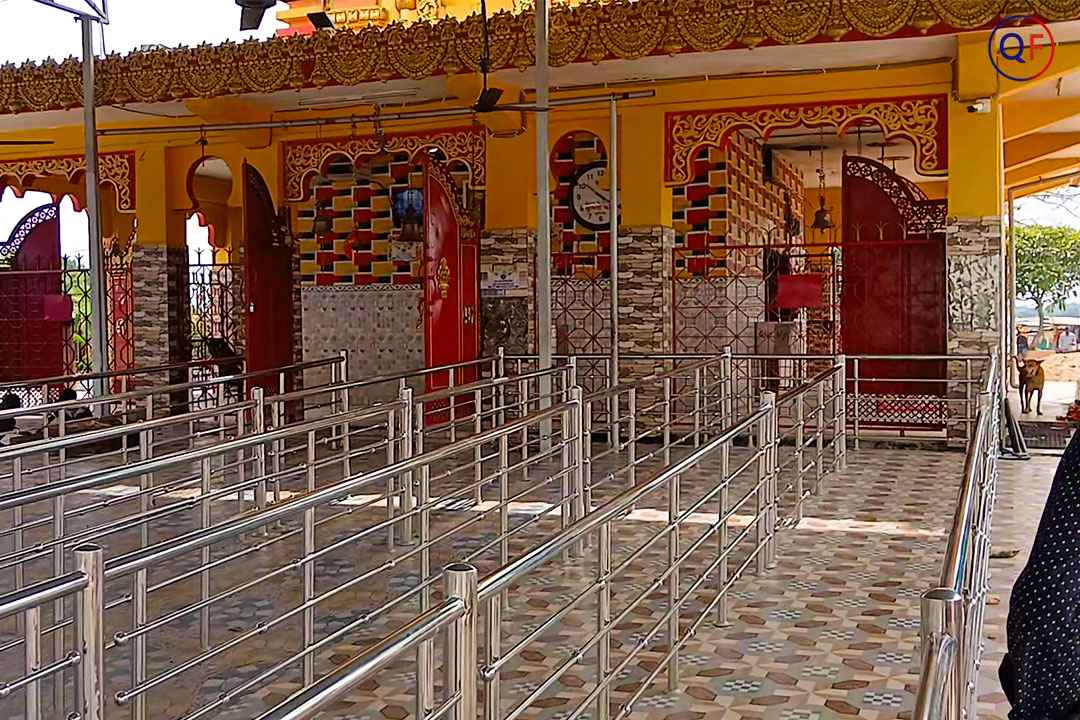
The temple has three entrances from different sides, all leading directly towards the main sanctum after just a few steps, making the divine place easily accessible to devotees.
Shiva Parvati Temple in the Complex
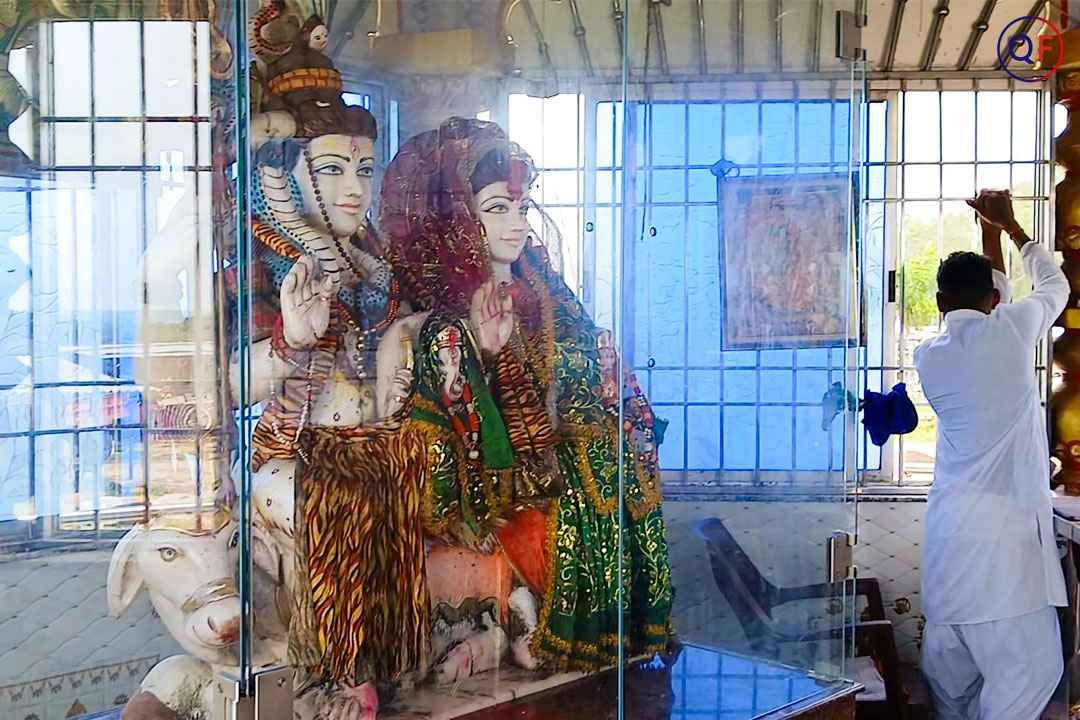
Within the temple premises, there is also a Shiva-Parvati Temple, which was constructed in 2023. It is located a short distance in front of the main temple.
This shrine is built in an octagonal circular shape, with beautifully carved designs and windows made of glass, adding to its charm. Though not very tall, the temple has an elegant appearance.
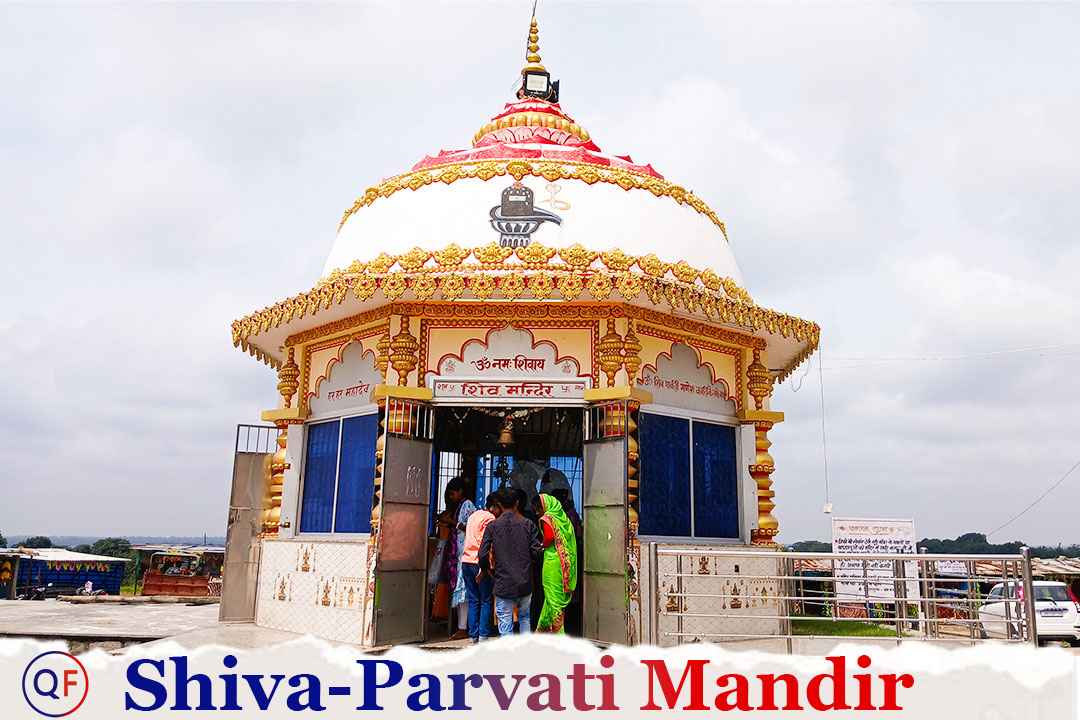
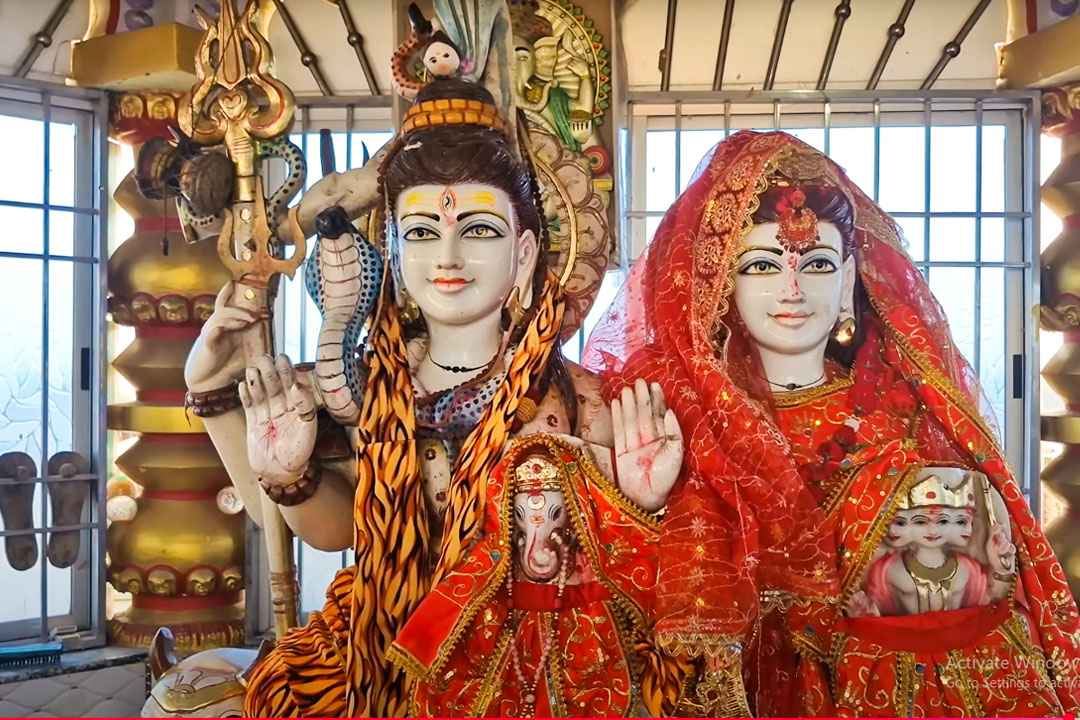
Inside, the idols of Lord Shiva and Goddess Parvati are enshrined. Devotees usually visit this temple after offering prayers to Sonmer Mata. Here too, all the worship rituals are performed by the temple priest (Pahan).
Ritual & Worship
Here, the most special aspect of the temple is that the chanting of mantras is not in Sanskrit, but in the local Mundari language, performed by the Munda tribal priests known as Pahan.
The Pahans who perform rituals here are the direct descendants of Chatur Shikhar, the man who first had the divine vision of the Goddess and helped establish her idol in the village.
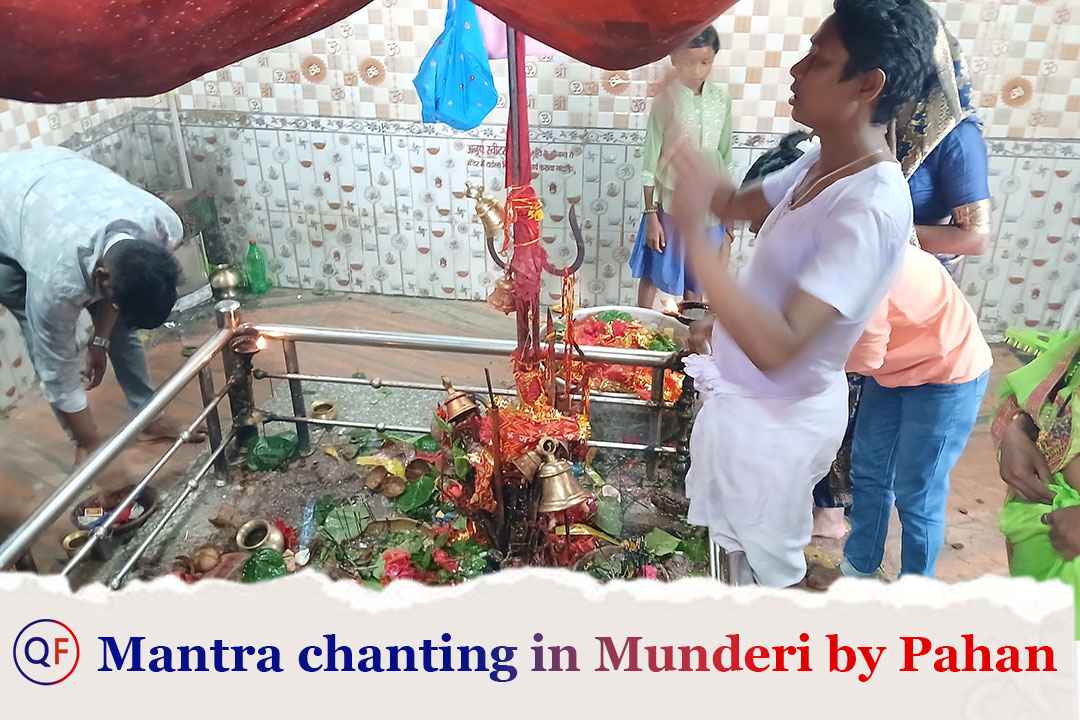
There are three main types of worship rituals at this temple:
1. Normal Puja (General Worship)
In Samanya Puja, devotees offer sweets, chunri (sacred cloth), and fruits like coconuts, ranging from 1 to 5 items depending on their devotion. They present their wishes before the Goddess through the Pahan.
2. Gakchhit (Mannat) puja
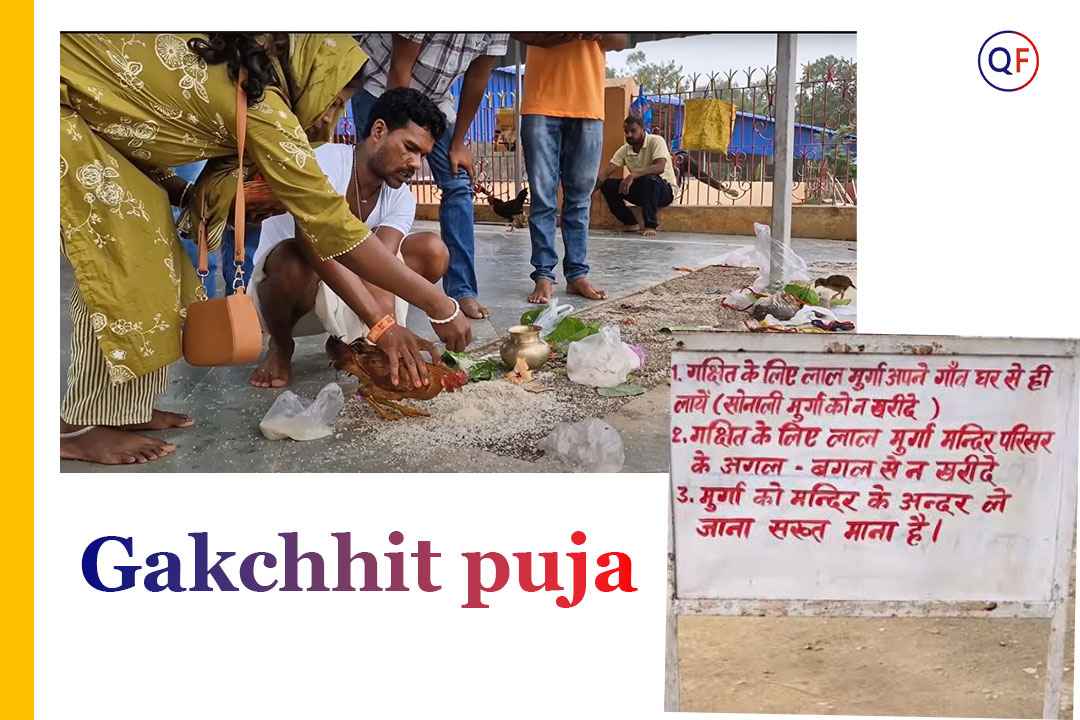
This is a mannat kind of worship, which is in the local language called gakshit. This Puja is performed in a very unique way. First, a devotee brings a red rooster (Lal Rangua Murga) along with puja items and rice grains in a plate to the Goddess’s courtyard. The Pahan recites mantras and invokes the deity while guiding the devotee’s wish.
Then, uncooked rice grains are fed to the rooster. It is believed that if the rooster eats the grains, the devotee’s wish will surely be fulfilled.
About the Roaster (Rangua Murga) use in Gakhhit Puja, there is also a guideline board in the temple. Taking the roaster inside is strictly prohibited.
3. Bali Puja (Sacrificial Worship)
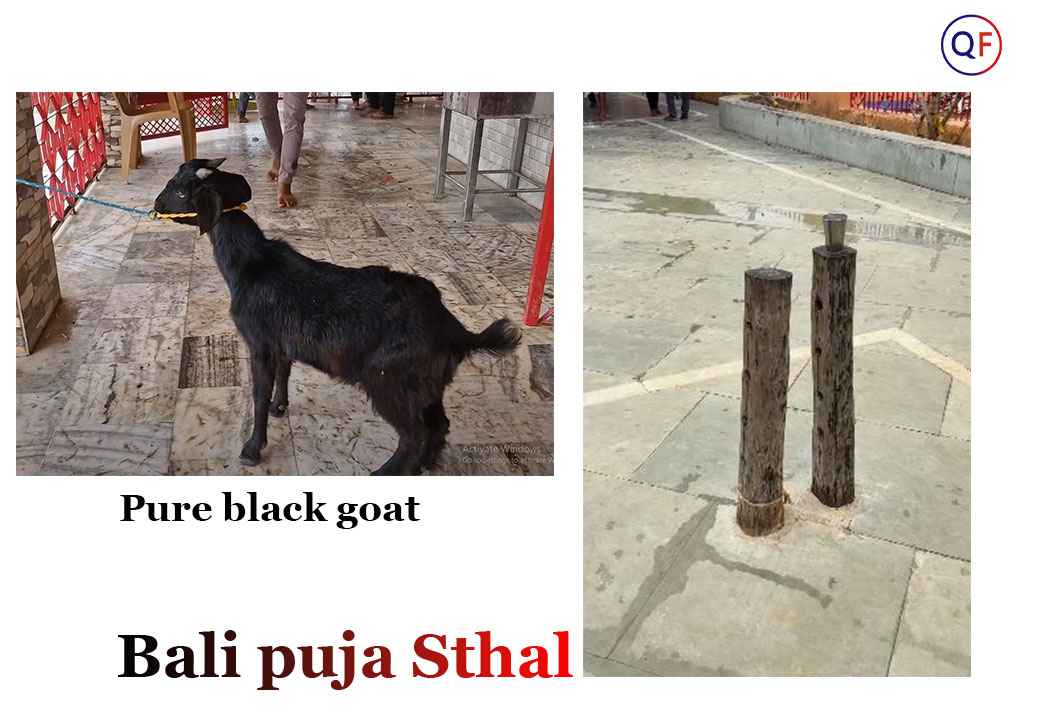
After the Gakchhit, once the wish comes true, the devotee must offer a completely pure black goat as a sacrifice to the Goddess.
Vehicle Puja (Vahan Puja)
Devotees also come here to perform puja for new vehicles. The priests of the temple conduct the puja for the vehicles.
Weddings (Shadi)
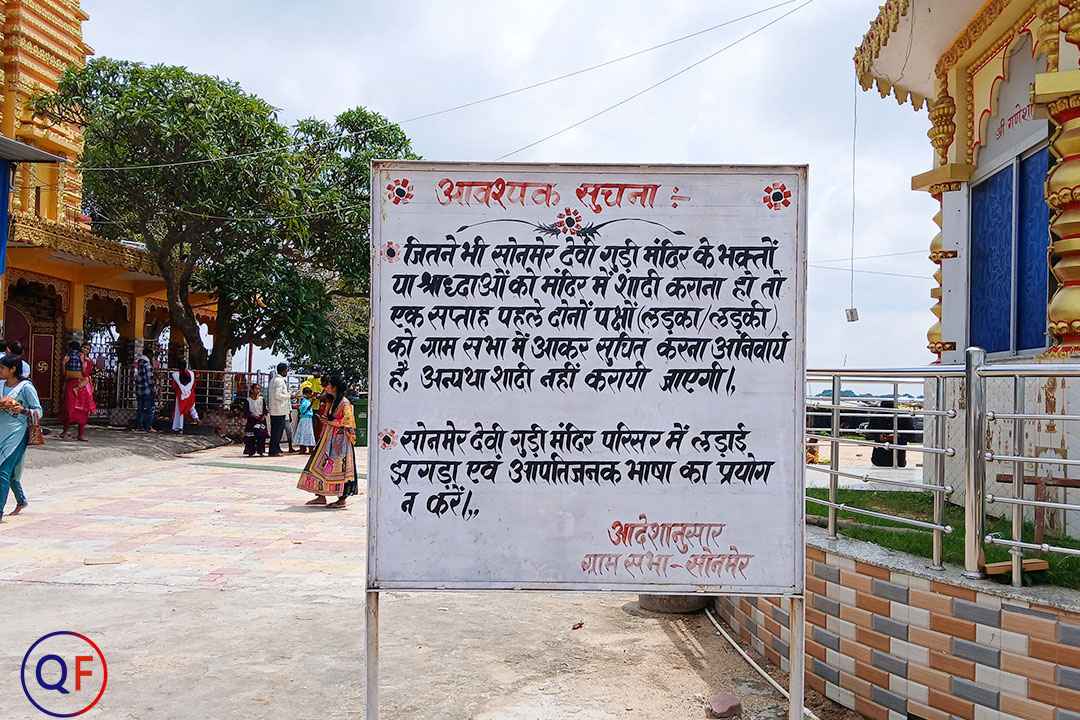
Auspicious events, such as weddings, are also conducted in the temple. However, the temple committee must be informed Gramsabha at least 7 days in advance. If prior notice is not given, permission to conduct the wedding will not be granted.
Visit the temple at least three times
The Pahans also say that whoever comes to Sonmer Manokamna Mandir for the first time must visit at least three times, as this pleases the Goddess and ensures her blessings remain forever.
Festivals & Fairs
During Chait and Ashwin Navratri, worship of the Goddess is performed here, but the main festival takes place on the full moon day after Dussehra. On this special day, the villagers conduct a grand worship of the Goddess, and a buffalo sacrifice is offered, which is considered a unique tradition of this temple.
Why the Festival is Celebrated After Dussehra - The Story Behind It
About 30 km from Khunti is Jariyagadh, where the Nagvashi clan of kings used to rule. Within Jariyagadh, there were around 700 villages, including Sonmer. The grand Durga Puja in Jariyagadh was very famous and celebrated with great enthusiasm.
On the day of Dussehra, the royal family used to offer a buffalo sacrifice to Maa Durga Chintamani, who is the kuldevi of the royal family. For this, a buffalo from the Chhatur Shikhar family in Sonmer village was sent to the Jarigadh.
Once, the buffalo from Sonmer could not be sent because there was an upcoming newborn baby at the Shikhar family’s house, and it was born around Dussehra. The king of Jariyagadh ordered that the buffalo sacrifice be performed on the full moon day in sonmer temple.
Since then, the tradition of the festival has been celebrated five days after Dussehra, and the buffalo offering is made to Sonmer Mata Durga. This tradition continues even today.
Two-day Fair (Dasai Jatra Mela)
For two days, a vibrant fair which is known as “Dasai Jatra” is organized by collective efort of defferent communities like Raiyat Badaik and Rajput of Sonmer village, which reflects the charm of rural life along with devotion and celebration in honor of the Goddess. During the rituals, prominent figures of the region, such as the village head (Mukhiya) and local legislators, also come to the temple to offer prayers and seek blessings.
Local writer Manisha Kumari beautifully describes the Dasai Mela of Sonmer as a vibrant and deeply cultural event.
The fair begins on the night of Sharad Purnima and continues for two days, attracting devotees and visitors from nearby villages.
During the festival, pahans and raiyats (village priests and representatives) from 22 padha (village groups) bring blue flags inscribed with their village names. The people of Sonmer village welcome them with great enthusiasm, and the flags are raised in a ceremonial display of unity and devotion.
A highlight of the fair is the traditional Dasai Dance, also known as Khondha (Group) Dance. Participants from villages like Cherwadag, Tuyu, Padgaon, Kudlum, and Kasira including men, women, and elders perform this age-old folk dance.
Their attire is striking and full of color:
Men wear peacock-feather crowns, garlands called Surli, carry mandar drums, tie iskat cloths around their waists, and wear sunglasses as part of their unique festive style.
Women dress in vibrant sarees, adorn their hair with ribbons and paper flowers, and wear necklaces made of colorful glass beads known as Hasli.
When the dancers reach the Jatra Taanḍ (festival ground) in full costume and begin their rhythmic dance at dawn, the atmosphere becomes enchanting. The crowd often joins in, dancing together in joy.
Dasai dance start from 4AM of flags ceremonial days and in days time fair turns into a bustling celebration filled with music, shops, rituals, and community togetherness
How to Reach Sonmer Temple, Khunti
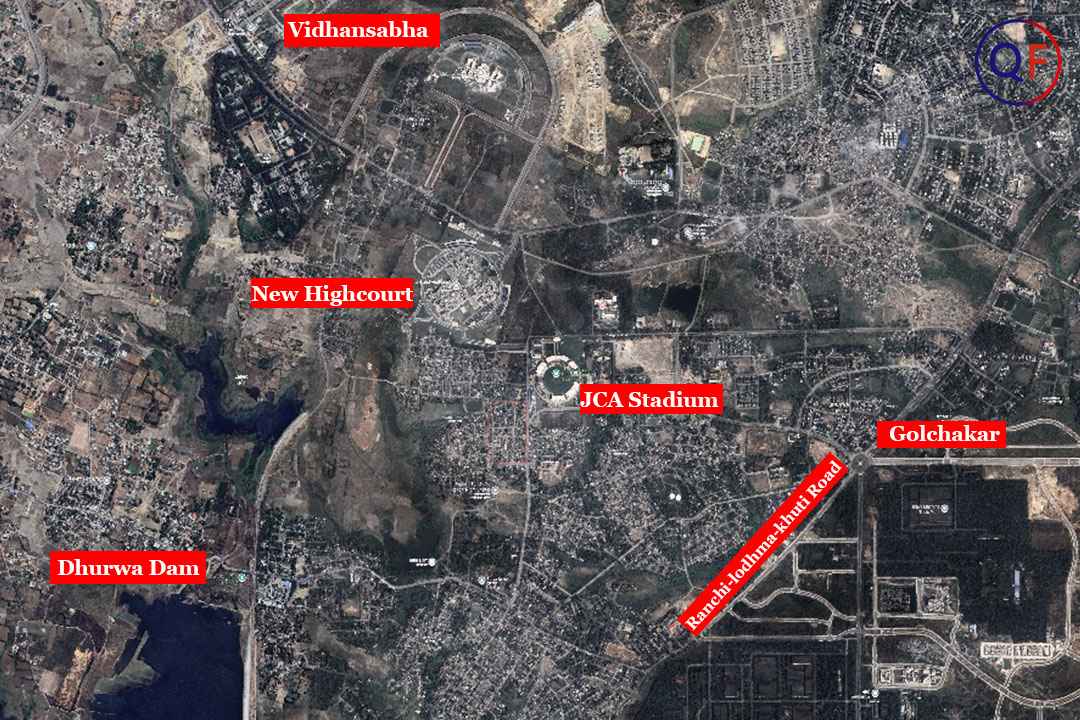
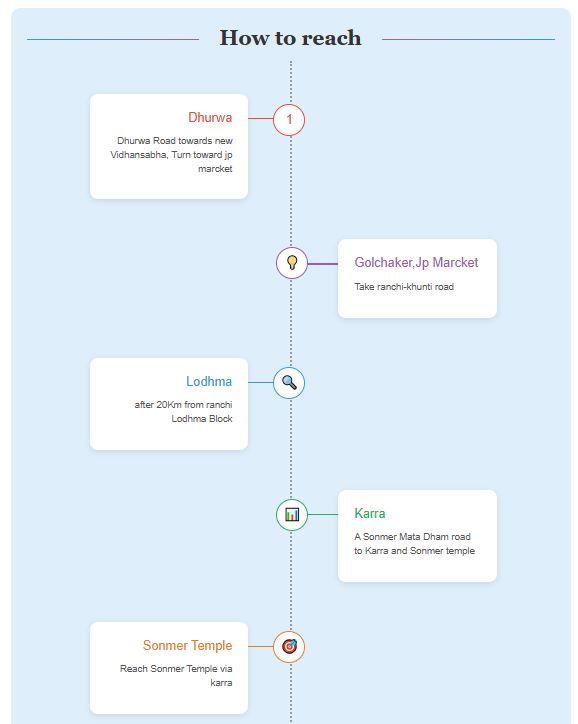
From Ranchi, take the Ranchi-Lodhma Road, which starts at Dhurwa Golchakkar, also known as Amar Shahid Thakur Vishwanath Shah Deo Chowk. From there, the Sonmer Temple is about 32 km away.
1. Reach Dhurwa Golchakkar
First, reach Birsa Chowk, continue straight on Dhurwa Road, pass Shahid Maidan (for the landmark), and keep going straight to reach Dhurwa Golchakkar.
2. From Dhurwa Golchakkar, take the Ranchi-Lodhma Road goes straight for 24 km
From Dhurwa Golchakkar, the straight Ranchi Lodhma road leads directly to Lodhma (you can also use Google Maps for easy navigation). A little ahead, you will see the Dhurwa Dam on the roadside, and the road continues beside it.
After about 13.2 km, you will cross the Lodhma block. Moving further straight for another 11 km, near Malgo village and about 5 km before Karra block, a connecting branches road from the main road that directly leads to Sonmer Temple, exactly 24 km from Dhurwa Golchakkar.
3. Take the branch Road and continue for 6 km
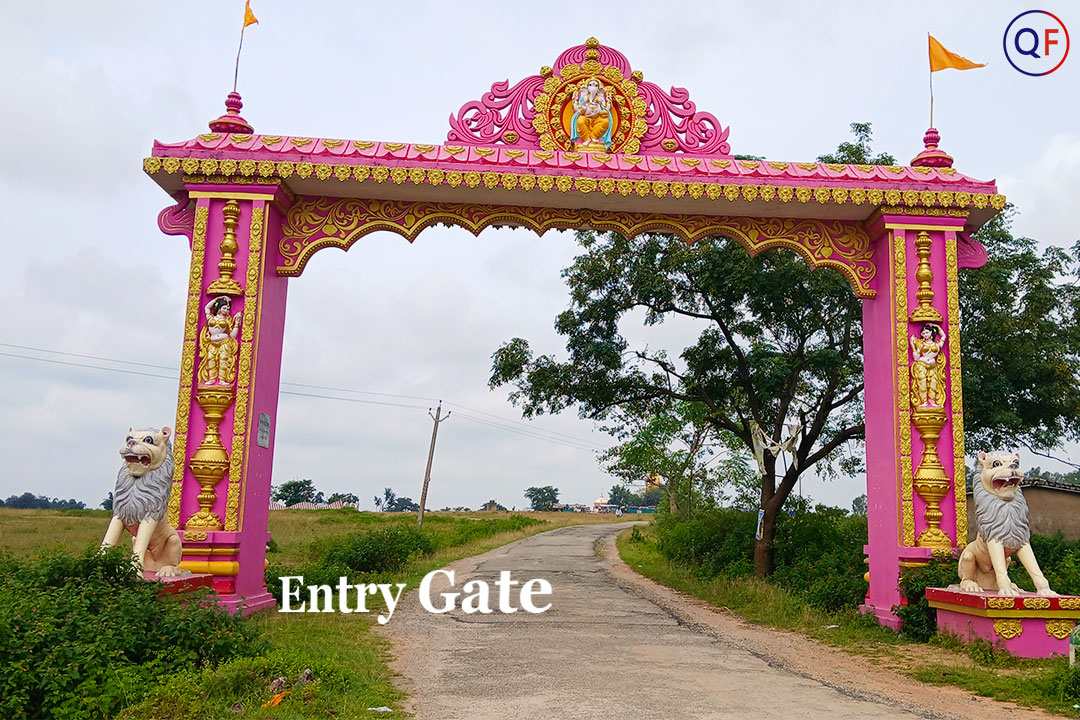
After taking the branch road, go straight for about 6 kilometers. On the way, you will pass through the villages of Urikel Chhotka, Nawa Toli, and Muchiakalang. After crossing these villages, you will reach the gate of the temple, and from there, just a few meters ahead, you will enter the temple premises.
From Ranchi Jagannathpur Vidhansabha to Dhurwa Golchakar,
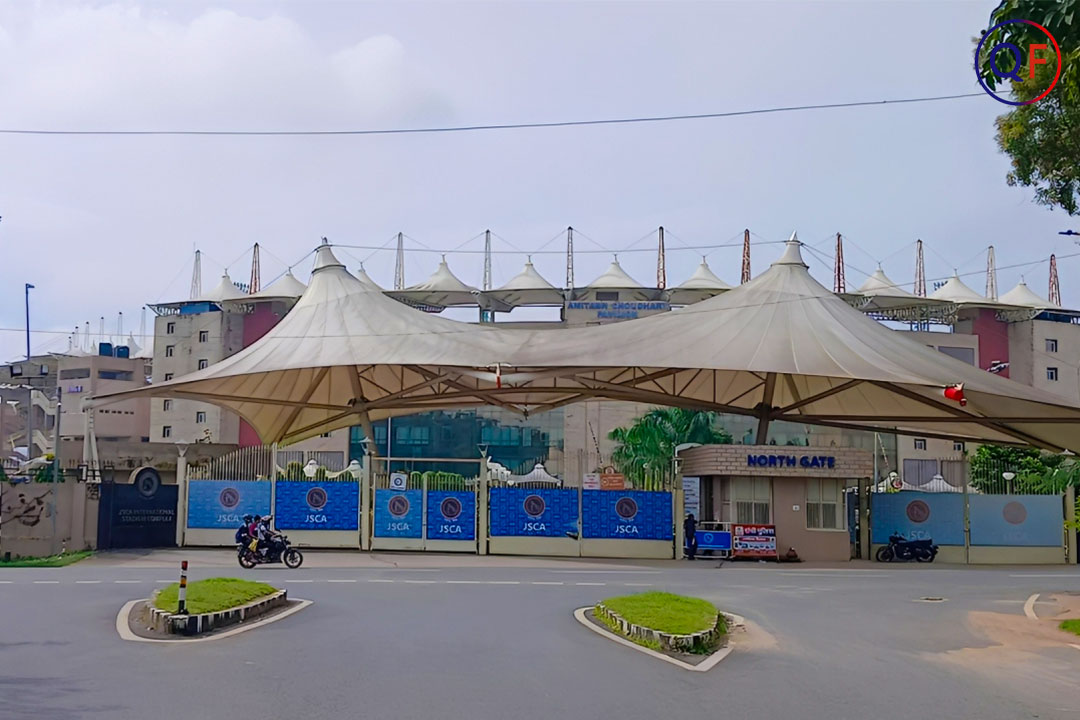
if you come from Nayasray or Jagannathpur, another route is you take the road to the left just before the New High Court and Vidhan Sabha towards JSCA Stadium. The road goes via JP Market and will take you up to the Dhurwa Golchakkar.
Transport Options
There is no direct public transport to the temple. You can reach by private car or bike. Alternatively, you can book a taxi from Ranchi to visit the temple.
Distance from Key Places
From Ranchi (JCA Stadium): 32 km
From Khunti: 13 km
From Lodhma: 12 km
From Karra: 7 km
Guide to perform worship after reaching the temple
After reaching the temple, the first step is to park your vehicle. The parking area is located right beside the temple, and there is no charge for parking.
Inside and outside the temple premises, there are many shops selling prasad where devotees can purchase offerings.
There are generally three types of prasad thalis available:
Normal Prasad Thali - includes coconut, chunri (sacred cloth), lachi dana (puffed sweets), incense sticks, and sindoor. Cost: ₹100.
Akshat Thali for Gakchhit & Bali Puja - Special puja thali includes uncooked rice and other puja things. Cost: around ₹120 to ₹150.
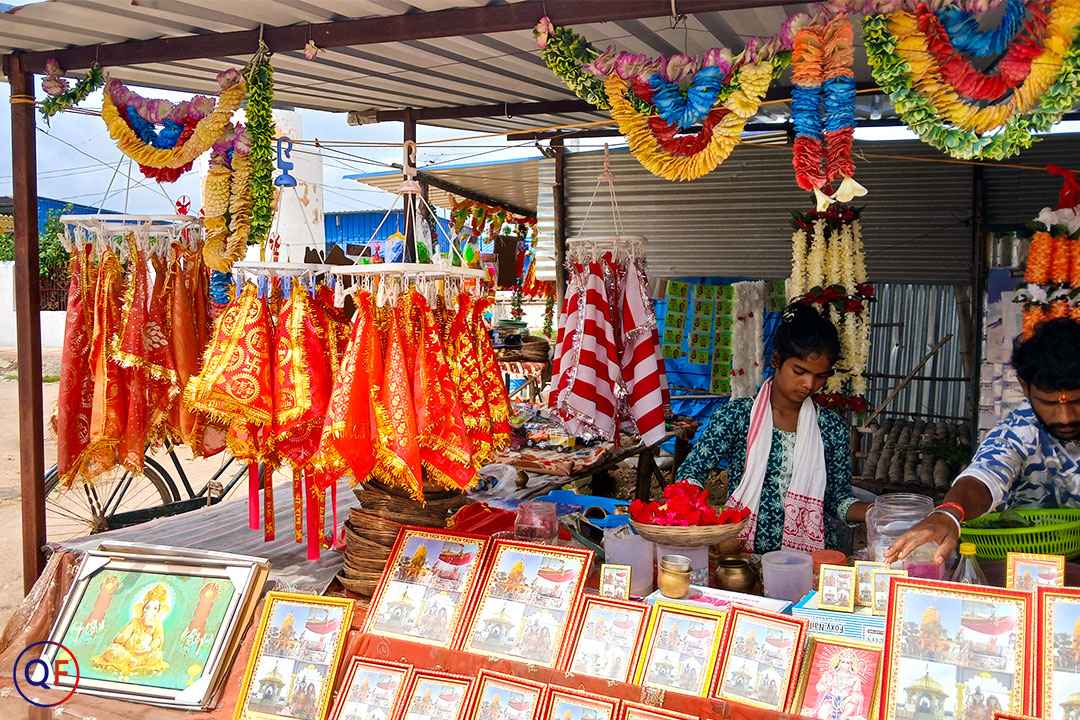
After buying the prasad, you can proceed directly towards the temple entrance. Since the temple often remains crowded, steel railings have been installed to help devotees form queues in an organized manner.
During Navratri, the crowd becomes especially large, and devotees may have to wait in line for darshan of the Goddess.
When the crowd is less, you can personally offer prasād and other worship items to Maa yourself; otherwise, you can request the pahan (priest) to perform it for you.
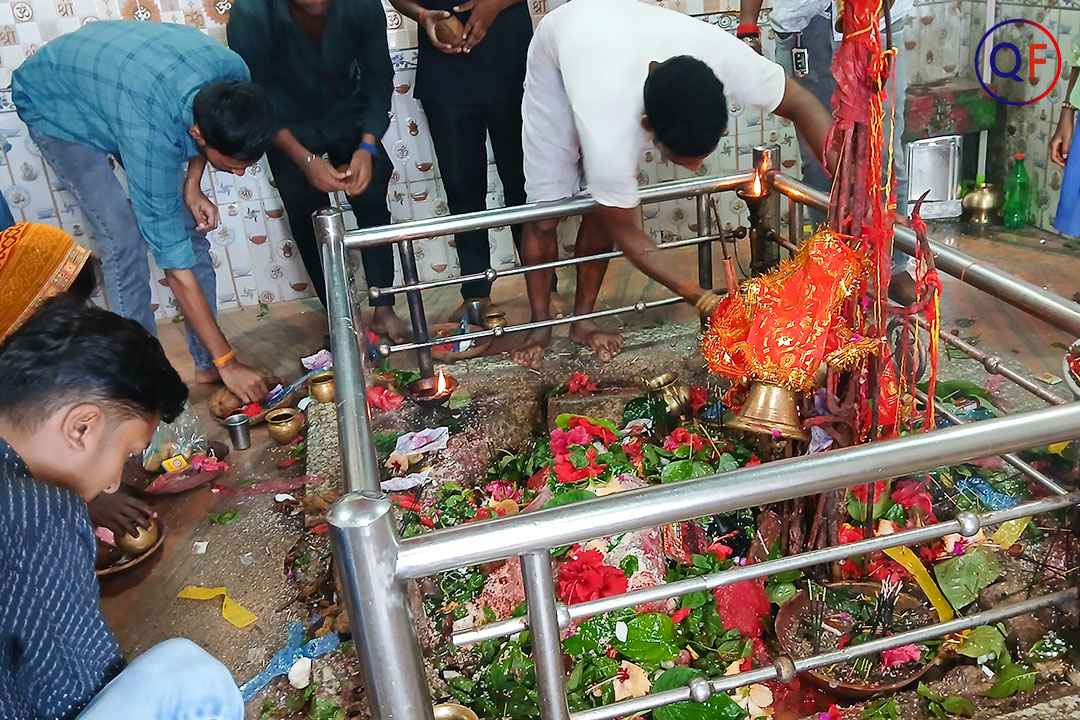
After that, at the exit gate, there are idols of Lord Shiva and Nandi performing puja there.
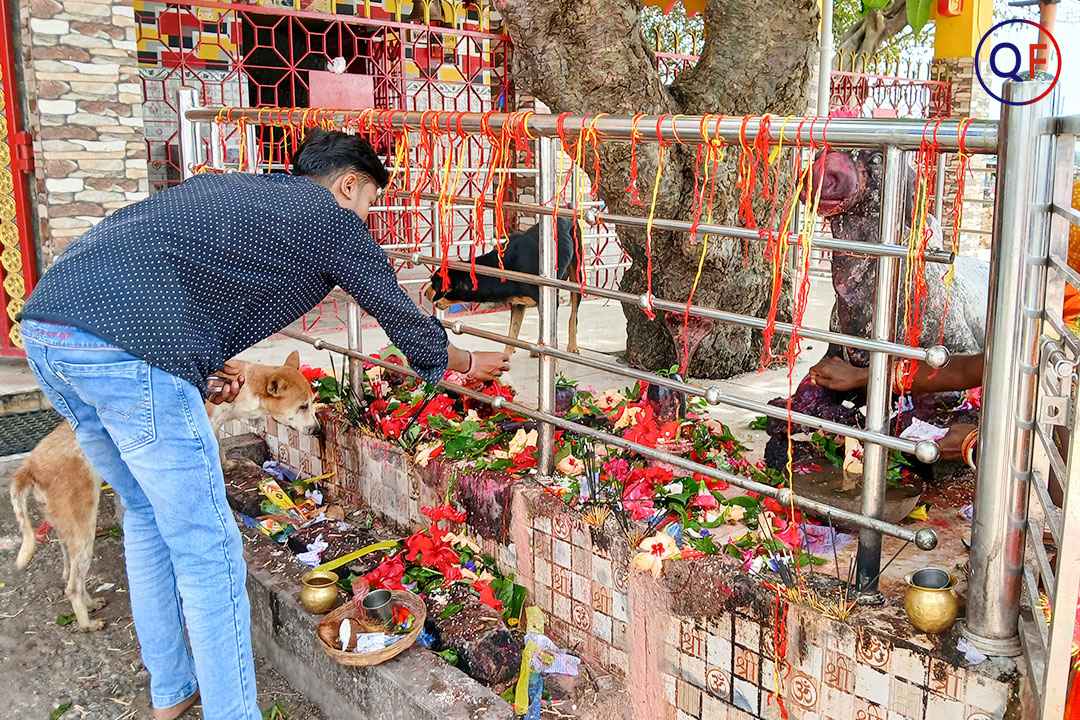
Just in front, you will find the Shiva temple; worship there as well. In this way, there are three main spots where you need to offer prayers. After completing these steps, the detailed puja vidhi (worship ritual) will be completed.
My Visiting Experience at Sonmer Temple from Ranchi
We started our bike journey from Ranchi, passing the New High Court, JSCA Stadium, and then the Golchakkar, from where we took the Ranchi-Khunti road via Lodhma. from here beginning of our real journey.
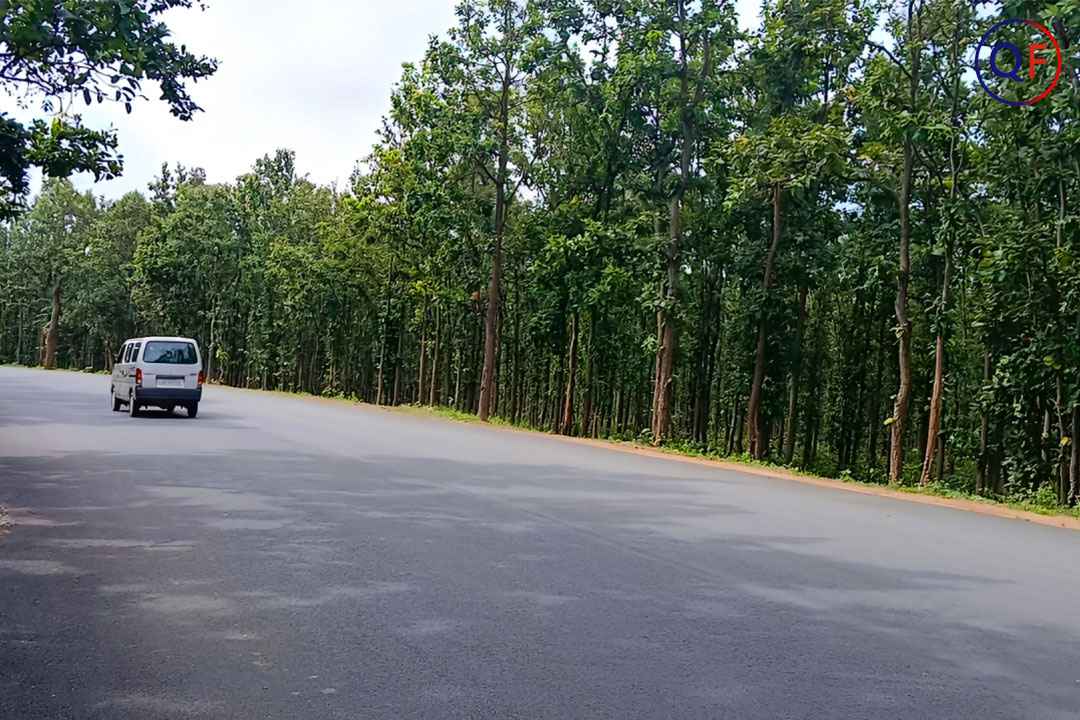
The road is very good. Along the way, there were small forests and colorful flowering trees that tempted us to stop, but since our goal was to visit Maa Sonmer,
After 21 km, we reached Lodhma block, a small town where the simple daily life of the villagers is visible. Life here seems very grounded, yet on their faces, one can see contentment and simplicity. Even with so little, people live with joy and happiness.
From Lodhma, we continued to Karra village, which is just a short distance from the temple. On the way, we saw mud houses, houses made of cloth, and tribal paintings on walls, reflecting the simplicity of life and the hidden joys in it. This showed that the excitement and happiness of life exist not only in cities but also in villages.
5 km before Karra, there is a board for Maa Sonmer Mandir Dham, which guides visitors directly to the temple.
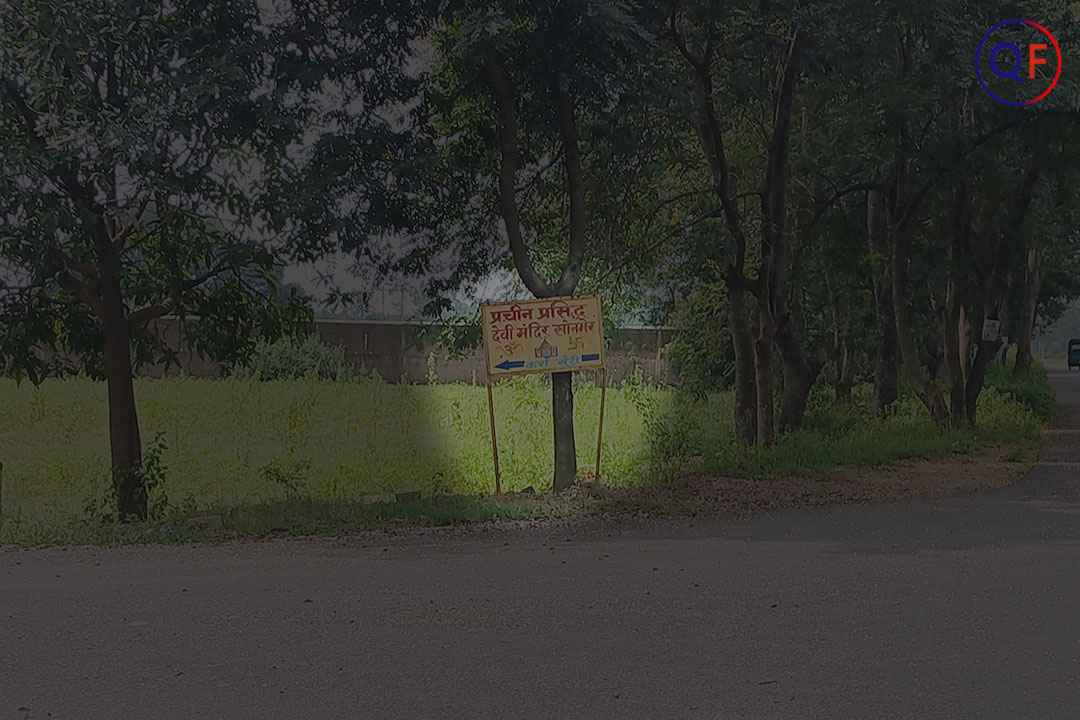
This narrow road passes between lush green trees on both sides, with the fragrance of the village soil in the air. Walking here, it feels like you're lost in the moment, yet everything around seems natural and alive.
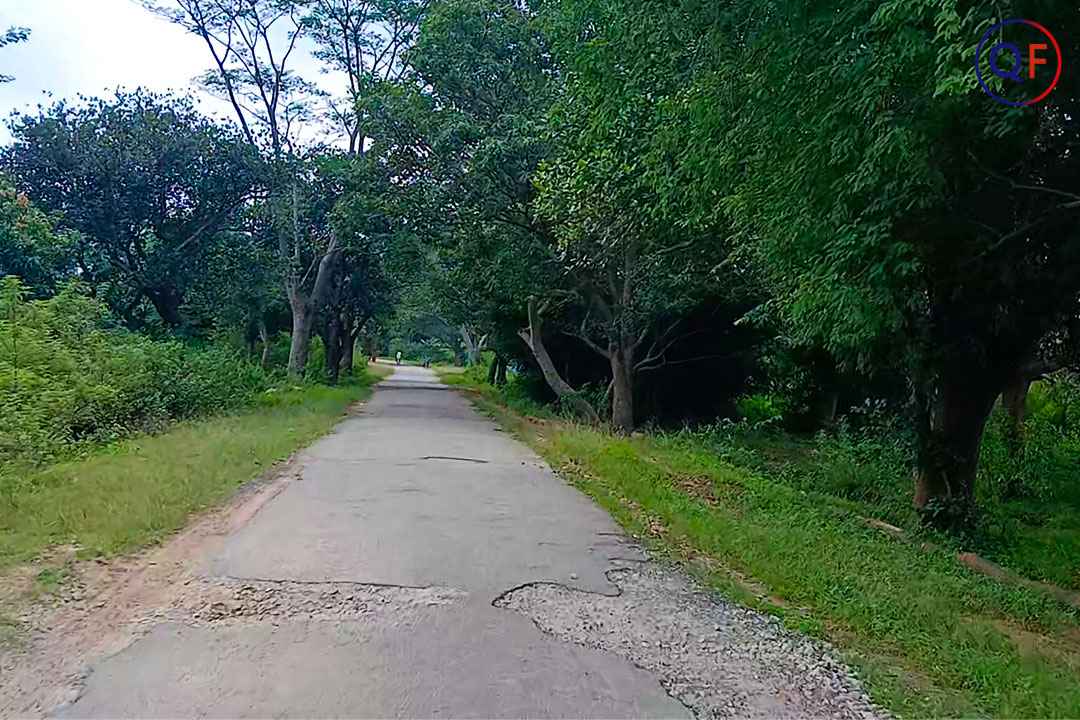
We were just moving forward. On one side, there was the excitement in our minds, wondering when the temple would appear, and on the other, the fresh fragrance of the soil was enchanting us. We just wished to keep walking, to feel every moment, and to treasure it forever in our camera
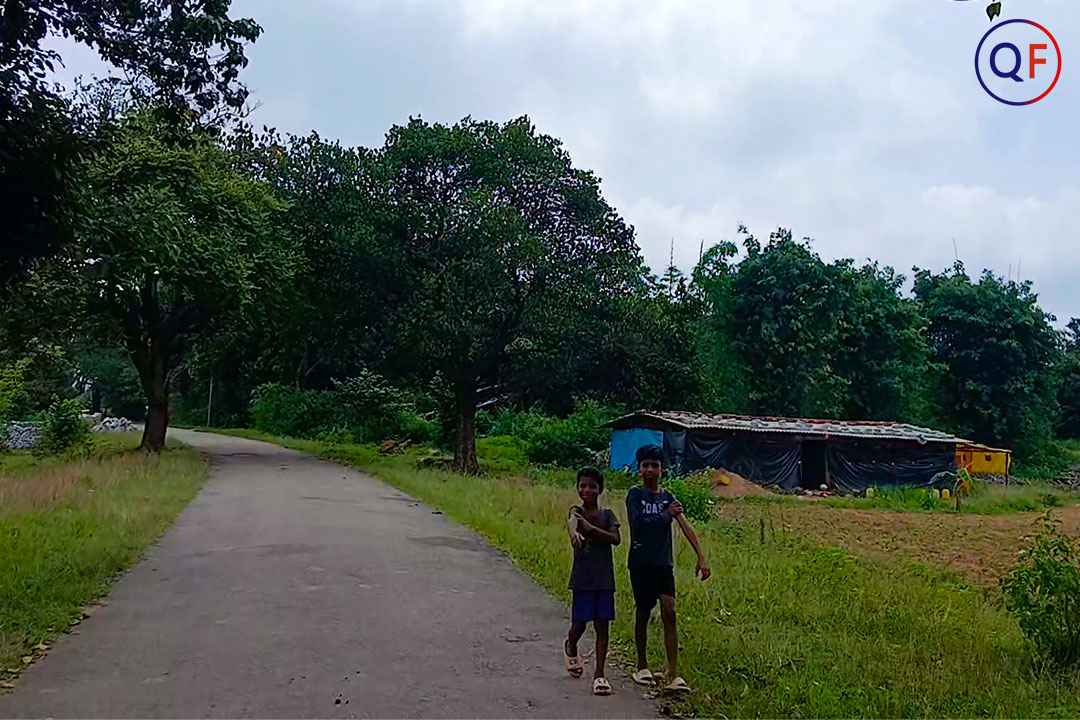
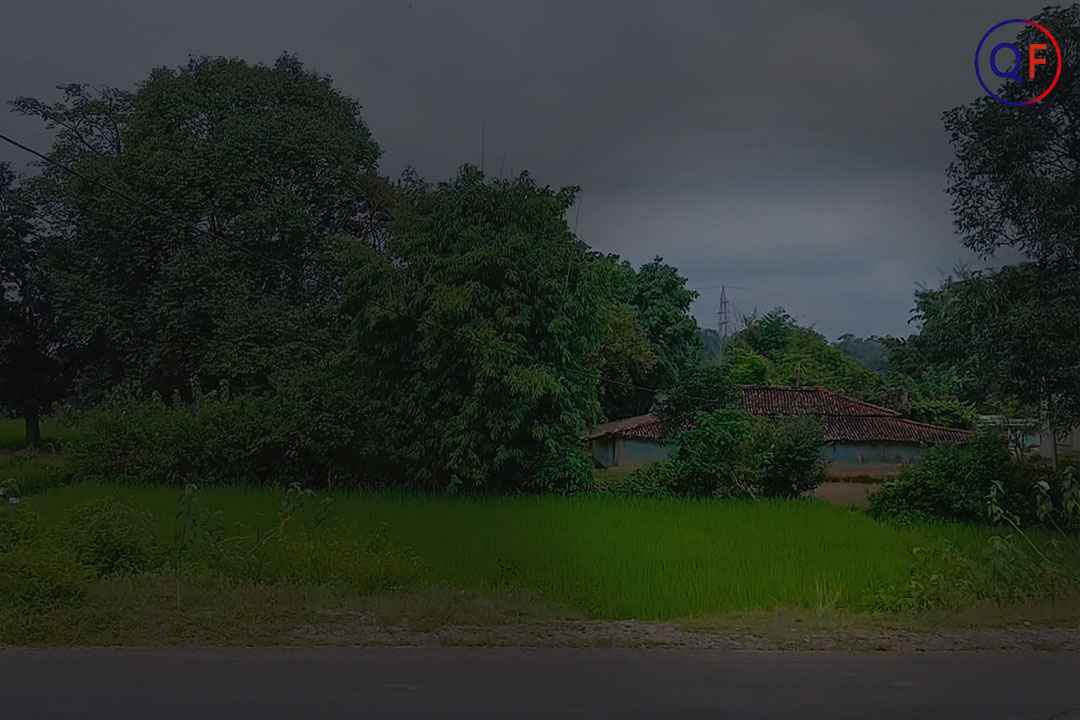
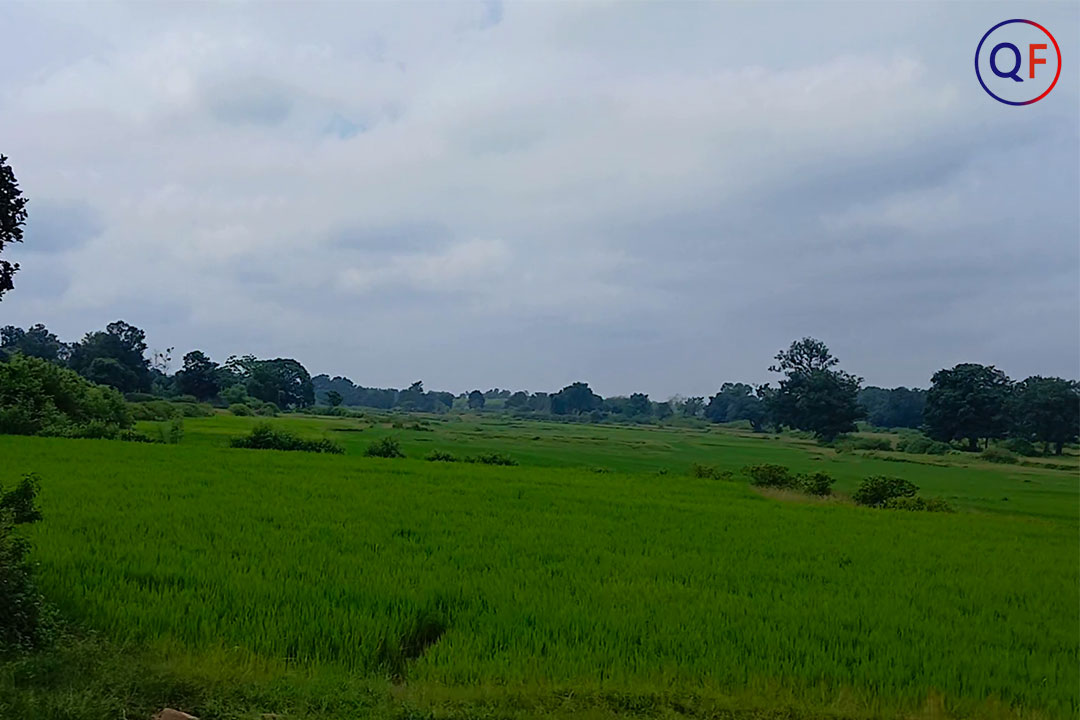
These lush green paddy fields stretch as far as the eye can see, yet it feels like everything is right here
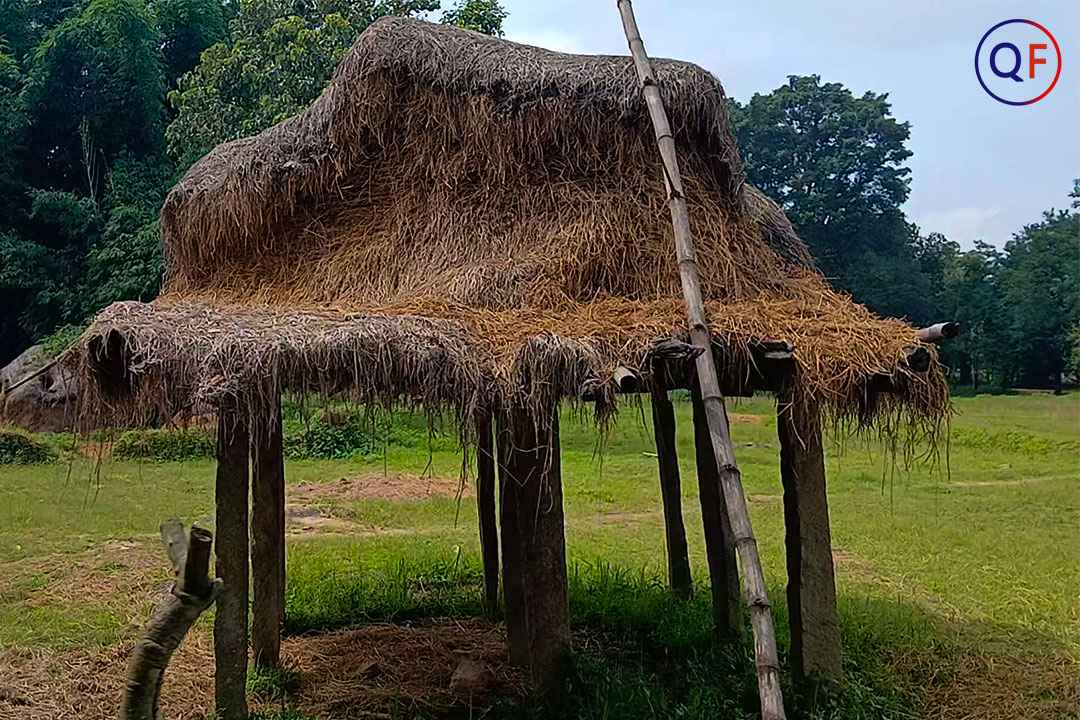
A little further ahead, in Karra, we saw what is called a thatched-roof hut. It is a type of hut made with dried stalks of paddy on top. These huts are used as homes for pet animals, like cows and buffalo, and dried stalks are also used to feed them fodder.
Before reaching the temple, we saw the main gate, which was very beautiful and grand. A little ahead, we reached Maa Sonmer Temple.
When we first saw the architecture of the temple, it reminded us of Jagannath Temple in Ranchi. Later, we learned that the temple was built by artists from Odisha.
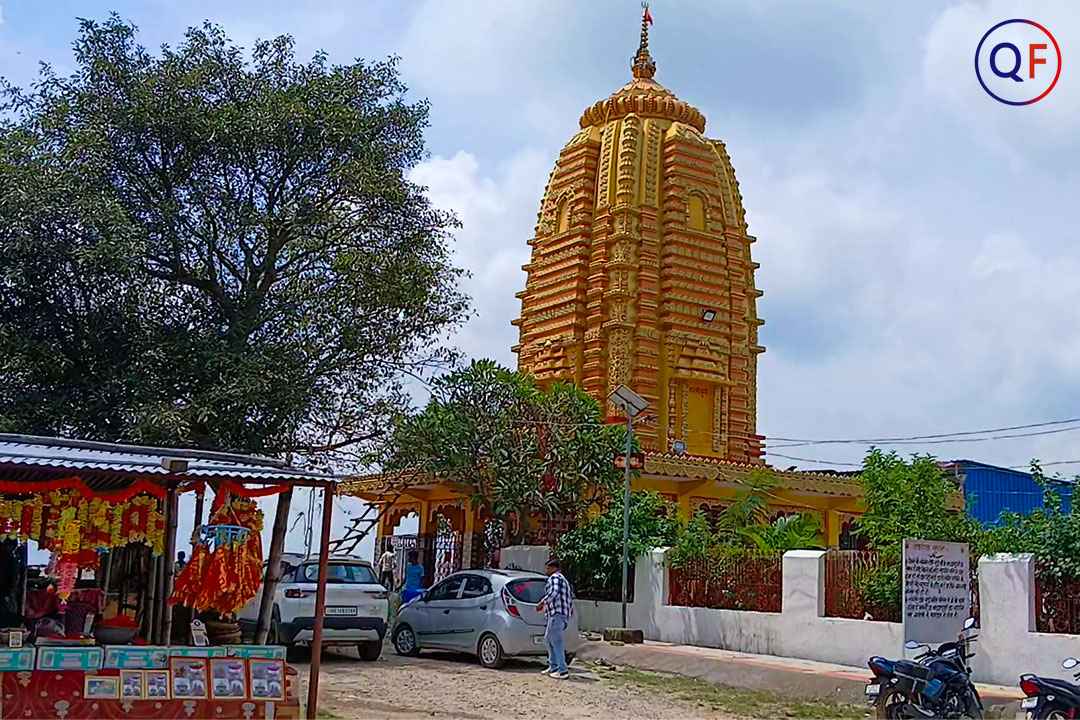
We parked our bike; there is no parking fee here.
For the worship, we went to the prasad shops. What I liked here was that the shopkeepers do not insist on taking a prasad thali. You can choose and buy offerings according to your wish.
We bought a Normal Puja Thali for ₹100, which included coconut, chunri (sacred cloth), lachi dana (puffed sweets), sindoor, incense sticks, etc.
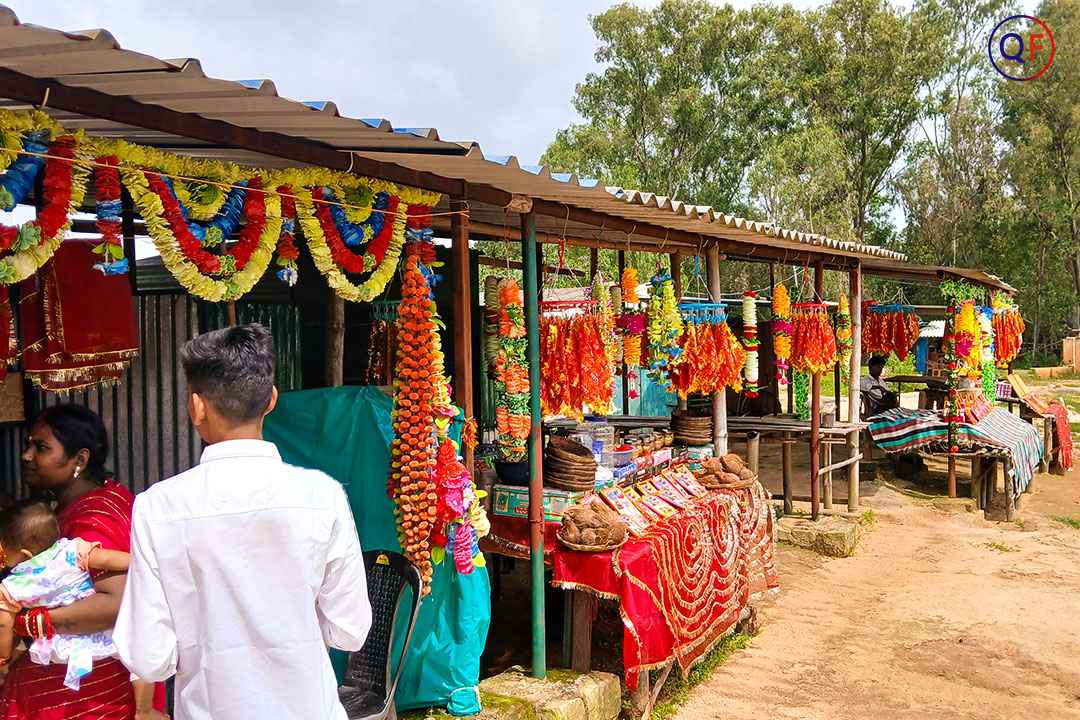
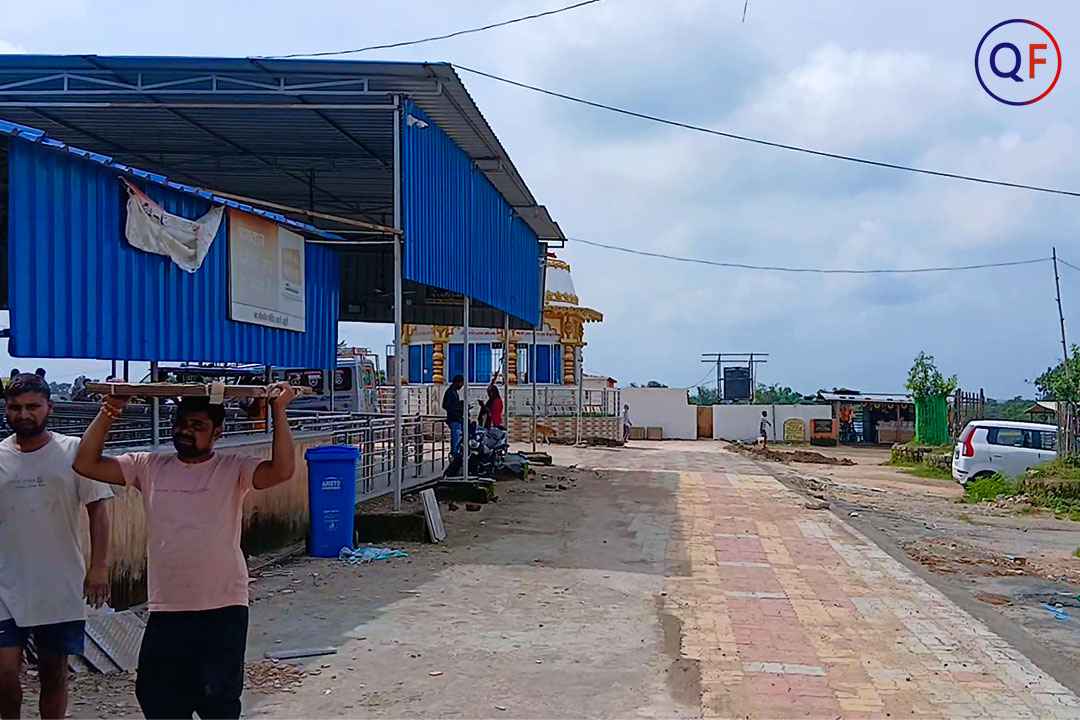
A footpath has been built from the parking area to the temple, which looks like it was constructed recently. Additionally, construction work was also underway in the temple complex.
In front of the temple’s main gate, steel railings are installed to help manage the queue of devotees.
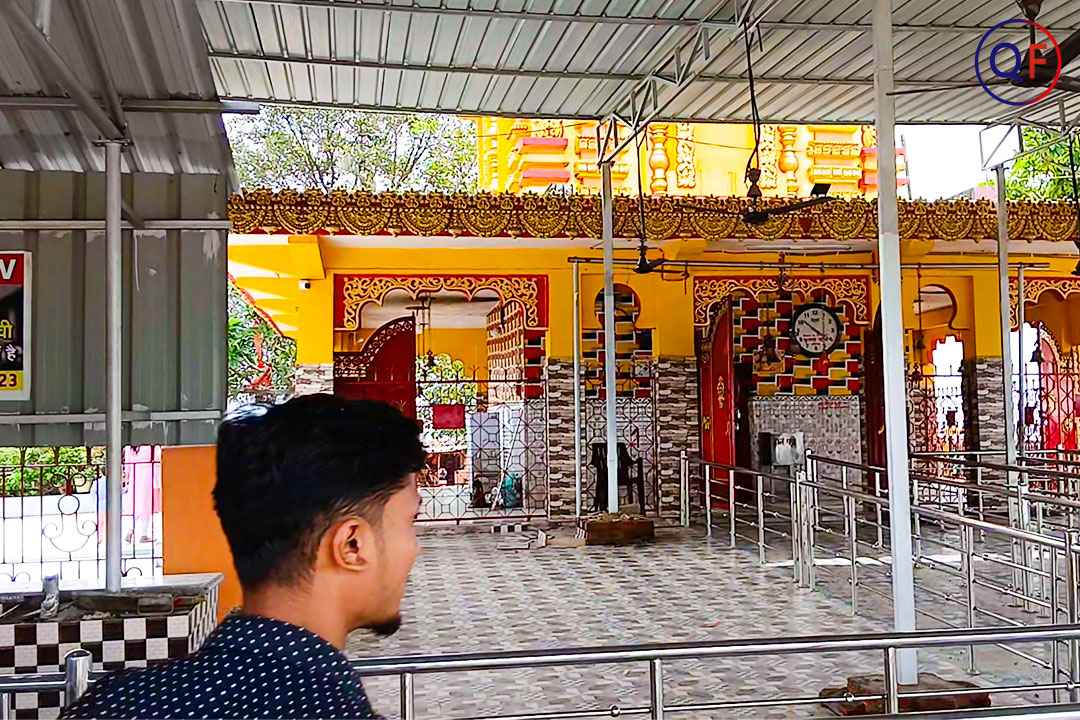
We visited on a Sunday around noon, and there weren’t many devotees, only about 15-20 people, so we could perform darshan and puja of Maa Sonmer very comfortably.
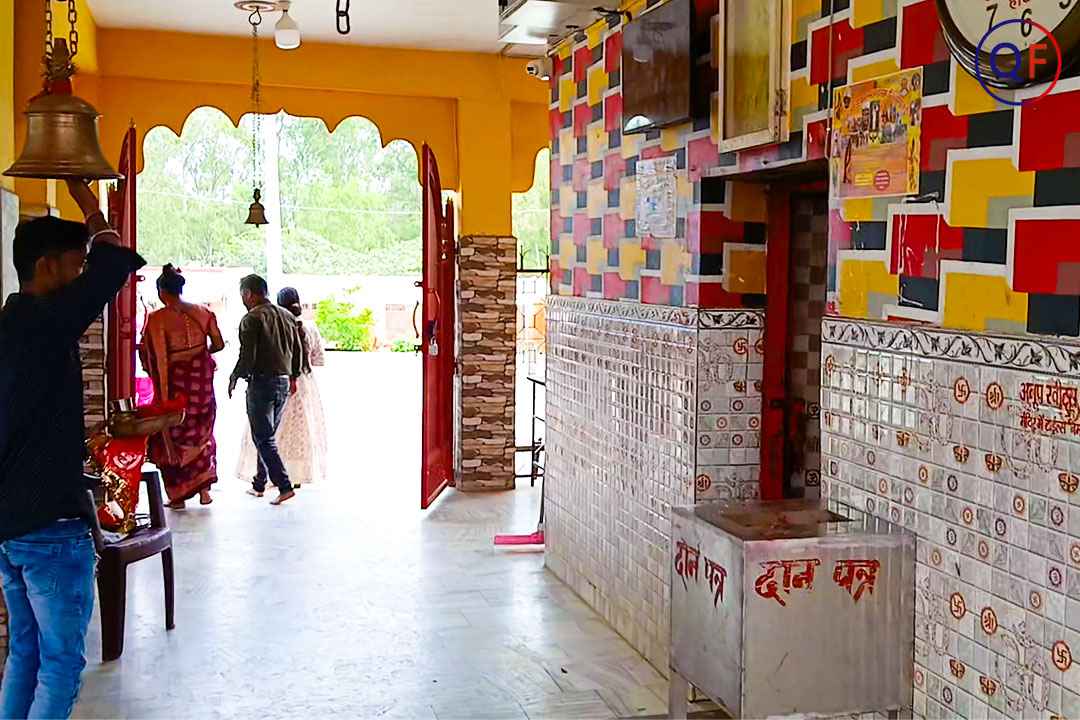
We offered prayers to Maa, presented prasad, and also broke and offered a coconut. Then the Shiva linga and Nandi puja, and after the Shiva-parvati mandir puja.
photo of worship I already uploaded, so I did not upload here
After offering puja, we spoke with some local people and learned about the beliefs and history related to this temple. Truly, this temple and its surroundings are very delightful. Thinking that we will surely come here again, we left for Ranchi to return home.
Frequently Asked Questions (FAQs) about Sonmer Temple
1. How to reach Sonmer Temple, Khunti?
Sonmer Temple is located near Sonmer village in Karra block of Khunti district, Jharkhand. From Ranchi, you can reach the temple by road via Khunti. Private vehicles, shared jeeps, and buses are available.
2. Can I visit Sonmer Temple by bus?
Yes, local buses from Ranchi and Khunti travel towards Karra block. From Karra, you may need to take an auto or local transport to reach Sonmer village.
3. What is most special about the temple?
Most special about the Sonmer temple is the mantra chanting in the Munderi language, which is performed by a tribal priest, pahan.
Bhaisa bali and dasai jatra mela celebrating after five days of Dussehra, which has continued for centuries from the Jariyagadh Nagvanshi dynasty time, the rulers of Khunti district.
The temple is known for the Gachhit Puja (mannat) among the villagers
4. Which deity is worshipped in the temple?
The presiding deity is Maa Durga (Dasabhuja form, locally called 10 Bhuji Maa Durga or Sonmer Mata).
5. How old is Sonmer Temple?
The temple’s deity was discovered about 300 years ago. The present temple structure was built in 1980, but the site has been a place of worship for centuries.
6. How famous is Sonmer Temple?
It is an important regional pilgrimage site in Khunti district. The temple is deeply rooted in both Hindu and tribal traditions, attracting devotees from nearby villages and towns, especially during festivals.
7. Is it a Hindu temple or a tribal puja sthal?
It is regarded as both a Hindu temple dedicated to Maa Durga and also a tribal sacred site, as local Pahan priests perform rituals alongside Hindu traditions.
8. How far is Sonmer Temple from Ranchi?
The temple is around 32-40 km from Ranchi (depending on the route) and about 13 km from Khunti town.
9. Are there any good hotels nearby?
Khunti town has a few budget and mid-range lodging options. For more comfortable stays, Ranchi city (about 1 hour away) offers better hotels and guest houses.
10. What are the temple timings?
Generally, the temple is open for devotees from 6:00 AM to 6:00 PM. Timings may vary during festivals.
11. What is the best time to visit?
The temple can be visited year-round, but the best time is during Navratri and Durga Puja, especially the unique celebration five days after Dussehra, when special rituals and Dasai jatra fairs are held.
12. How can I donate to the temple?
Donations can be offered directly at the temple premises to the temple committee or priests. At present, there is no official online donation system.
“Sonmer Temple is not only a place of devotion but also a center of cultural heritage and living traditions. If you have visited this sacred temple, we invite you to share your experiences and memories in the comments below”.
--JAI SONMER MATA DURGA
important --About Author- QueryFlag Travel - Branch of Queryflag | Explore Places Across the World. Written by Vinay Kumar Chabuey, Write for Travel, Tech, History, Biography